 Expoplanet Invest Brief
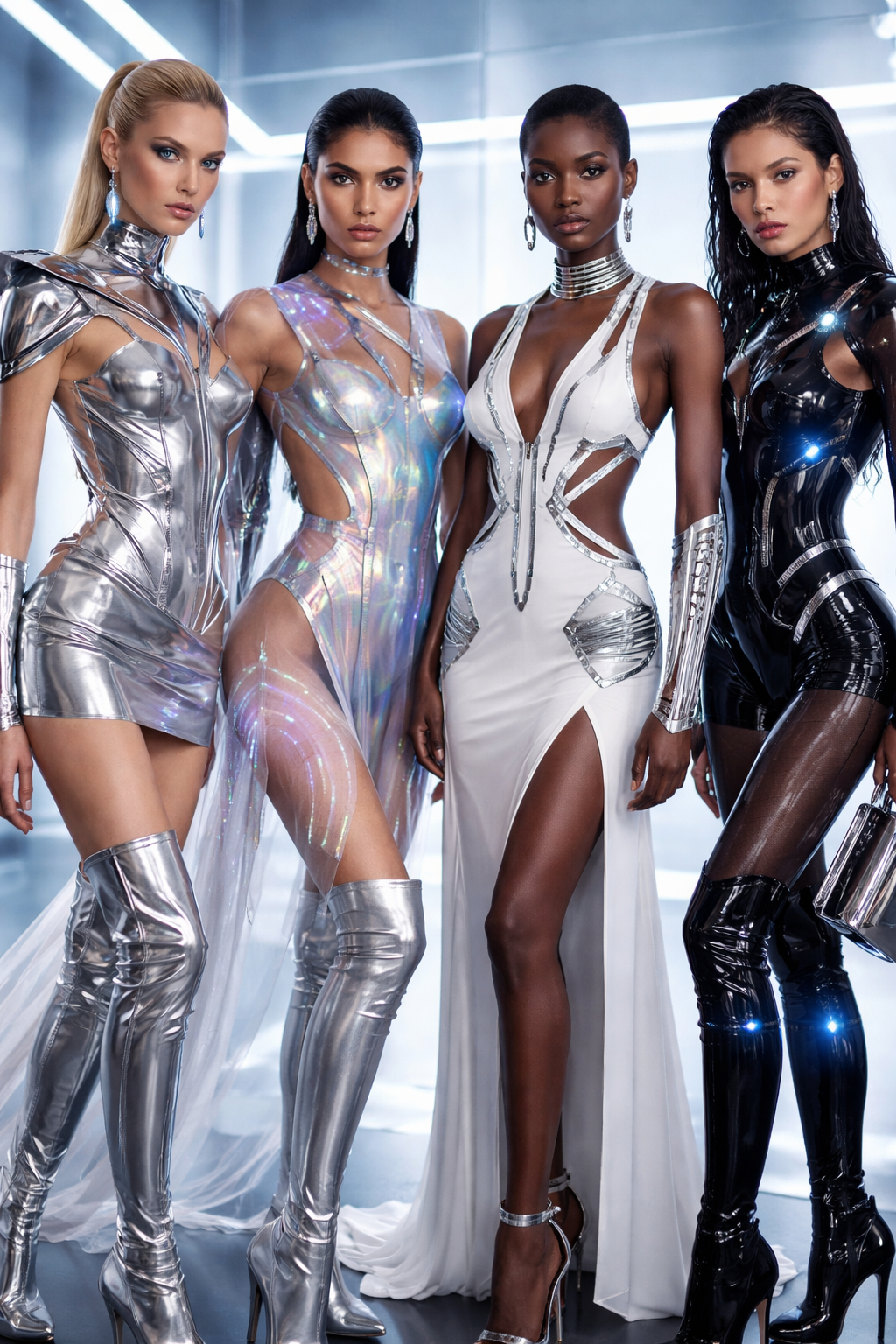
Digital Fashion & Showrooms
Future Fashion is not a clothing brand.
It is a digital fashion operating system that redesigns how fashion is created, presented, sold, experienced, and scaled in the post-physical economy.
We merge AI design, on-demand production, immersive digital showrooms, and global e-commerce into a single integrated ecosystem.
Fashion becomes data-driven, experiential, sustainable, and borderless.
1. Digital-First Fashion Creation
Future Fashion begins in the digital layer.
- AI-assisted design systems generate garments, accessories, cosmetics, and wearables
- Rapid concept-to-visual cycles (minutes, not months)
- Continuous experimentation without physical waste
- Real-time adaptation to trends, demand signals, and cultural shifts
Designs are validated digitally before any physical production occurs.
Result:
Zero overproduction. Zero dead stock. Maximum creative freedom.
2. Immersive Digital Showrooms
Traditional fashion stores are static.
Future Fashion showrooms are living digital environments.
Our showrooms can be accessed via:
- Web (desktop & mobile)
- Large immersive screens
- Virtual & augmented reality
- Hybrid physical–digital spaces
Inside a Future Fashion showroom:
- Collections are presented in 3D
- Garments can be viewed on avatars or real-time body simulations
- Users explore styles, materials, colors, and variations interactively
- Brands tell stories, not just display products
Showrooms become experiential media, not retail shelves.
3. Virtual Fashion Stands & Events
Future Fashion integrates seamlessly with:
- Virtual fairs
- Digital expos
- Hybrid fashion weeks
- Corporate and brand events
Each brand or designer can deploy:
- A permanent virtual stand
- Temporary themed collections
- Limited drops
- Interactive launches and presentations
This allows:
- Global reach without logistics
- Continuous exposure instead of seasonal events
- Direct interaction between brand and consumer
Fashion becomes always-on, not seasonal.
4. AI-Driven Personalization
Every user experiences a different showroom.
The system adapts to:
- Body type
- Style preferences
- Cultural context
- Budget range
- Past interactions
AI curates:
- Personalized collections
- Style recommendations
- Outfit combinations
- Accessory and cosmetic matching
This transforms fashion from mass retail into mass personalization.
5. On-Demand & Localized Production
When a product is ordered:
- Production is triggered on demand
- Manufactured by partner facilities closest to the user
- Delivered directly, reducing costs and emissions
Benefits:
- No inventory risk
- Lower environmental impact
- Faster fulfillment
- Scalable globally without owning factories
Fashion becomes distributed, intelligent, and sustainable.
6. Digital + Physical Integration
Future Fashion is fully hybrid:
- Digital garments and physical garments coexist
- Products can exist first as digital assets
- Physical versions are optional extensions, not requirements
Use cases include:
- Digital-only fashion for avatars and virtual spaces
- Limited physical editions
- NFT-linked authenticity and ownership
- Phygital products (digital identity + physical item)
Fashion enters the experience economy.
7. Global Commerce & Brand Autonomy
Each designer or brand operates with:
- Full creative autonomy
- Centralized technology and infrastructure
- Global reach without global overhead
Future Fashion handles:
- Platform
- Technology
- Showrooms
- Payments
- Analytics
- Traffic generation
Creators focus on design and identity, not logistics.
8. Sustainable by Architecture, Not Marketing
Sustainability is not a slogan.
It is embedded in the system design.
- Digital validation before production
- On-demand manufacturing
- Minimal transportation
- No unsold inventory
- Reduced material waste
Future Fashion aligns creativity with planetary limits.
9. The New Fashion Economy
Future Fashion represents a shift:
- From stores → to immersive spaces
- From seasons → to continuous evolution
- From stock → to intelligence
- From consumption → to experience
Fashion becomes:
Digital. Intelligent. Experiential. Scalable. Sustainable.
Future Fashion
Digital Fashion & Showrooms
Designing the human interface of the future.
FUTURE FASHION
Digital Fashion & Immersive Showrooms
Luxury · AI · Experience Economy
Executive Positioning (Investor Lens)
Future Fashion is a next-generation fashion infrastructure, not a brand.
It operates as a digital-first fashion operating system that unifies:
- AI-driven design
- Immersive digital showrooms
- On-demand production
- Global commerce
- Data-based personalization
The platform replaces legacy fashion economics (inventory, seasons, physical retail dependency) with a scalable, asset-light, high-margin experiential model.
Fashion transitions from product logistics to experience intelligence.
Market Context & Strategic Opportunity
The global fashion ecosystem exceeds USD 3 trillion annually, yet remains structurally inefficient:
- Overproduction and dead stock
- Long design-to-market cycles
- High retail overhead
- Low personalization
- Unsustainable environmental footprint
Future Fashion addresses these inefficiencies architecturally, not cosmetically.
This is a systemic redesign, not a digital add-on.
Core System Architecture
1. AI-Native Fashion Creation Layer
Design begins digitally and intelligently.
- AI-assisted generation of garments, accessories, cosmetics, and wearables
- Rapid iteration cycles (concept → visualization → validation in hours)
- Continuous trend sensing and adaptive design logic
- Zero material waste during ideation
Investor value:
- Reduced design cost
- Faster time-to-market
- Infinite experimentation without physical risk
2. Immersive Digital Showrooms (Core UX Layer)
Traditional retail is replaced by immersive fashion environments.
Showrooms are:
- 3D
- Interactive
- Narrative-driven
- Always online
Accessible via:
- Web & mobile
- Large immersive screens
- VR / AR
- Hybrid physical-digital spaces
Users do not “browse products”.
They enter a fashion universe.
Investor value:
- Higher engagement time
- Brand differentiation
- Global reach without physical expansion
3. UX Flow – User Journey Architecture
UX is designed as an experience sequence, not a catalog.
UX Flow Diagram (Conceptual):
Entry Point
   ↓
Immersive Brand World
   ↓
AI-Curated Personal Collection
   ↓
3D Garment Interaction
   ↓
Avatar / Body Simulation
   ↓
Customization (materials, colors, variants)
   ↓
Purchase or Save-to-Profile
Each step increases emotional attachment and conversion probability.
4. Virtual Fashion Stands & Events (Expoplanet Integration)
Future Fashion integrates directly into Expoplanet via:
- Permanent virtual brand stands
- Limited-edition drops
- Virtual fashion shows
- Hybrid launch events
Brands gain continuous presence, not time-bound exposure.
Investor value:
- Recurring revenue streams
- Event monetization
- Platform stickiness
5. AI Personalization Engine
Every showroom experience is unique per user.
AI adapts in real time to:
- Body data
- Style preferences
- Cultural context
- Budget thresholds
- Behavioral signals
This transforms fashion from mass retail into mass individualization.
Investor value:
- Higher conversion rates
- Lower return rates
- Long-term customer lifetime value (LTV)
6. On-Demand & Distributed Production Model
No inventory. No forecasting risk.
Production is:
- Triggered only after purchase
- Executed by geographically optimized partners
- Delivered directly to the customer
System Diagram (Simplified):
Digital Order
   ↓
AI Routing Engine
   ↓
Nearest Qualified Manufacturer
   ↓
Production on Demand
   ↓
Direct Delivery
Investor value:
- Capital efficiency
- Reduced operational risk
- Scalable globally without factories
7. Digital–Physical Hybrid (Phygital Strategy)
Future Fashion operates across three product states:
- Digital-only fashion (avatars, metaverse, media)
- Physical-only fashion (on-demand luxury pieces)
- Phygital assets (digital identity + physical item)
This unlocks:
- New luxury scarcity models
- Authentication & provenance
- Digital ownership layers
Investor value:
- New asset classes
- Premium positioning
- IP leverage
8. Commerce, Analytics & Intelligence Layer
Future Fashion centralizes:
- Payments
- Analytics
- Demand prediction
- Performance tracking
Brands receive real-time insights:
- What designs convert
- Where demand emerges
- Which markets scale faster
Fashion becomes measurable, optimizable, and predictive.
9. Sustainability by System Design
Sustainability is not a marketing layer.
It is a structural consequence of the model.
- No overproduction
- Minimal logistics
- Localized manufacturing
- Reduced material waste
This aligns luxury with planetary constraints, not against them.
Strategic Advantages (Investor Summary)
- Asset-light, scalable infrastructure
- High-margin digital-first economics
- Strong differentiation vs legacy fashion
- Compatible with luxury, premium, and avant-garde positioning
- Fully integrable into Expoplanet’s ecosystem
Vision Statement
Future Fashion is not about clothing.
It is about designing the future human interface.
Fashion becomes:
- Experiential
- Intelligent
- Personalized
- Sustainable
- Borderless
FUTURE FASHION
Digital Fashion & Immersive Showrooms
Luxury, redesigned as a system.