 Expoplanet Invest Brief
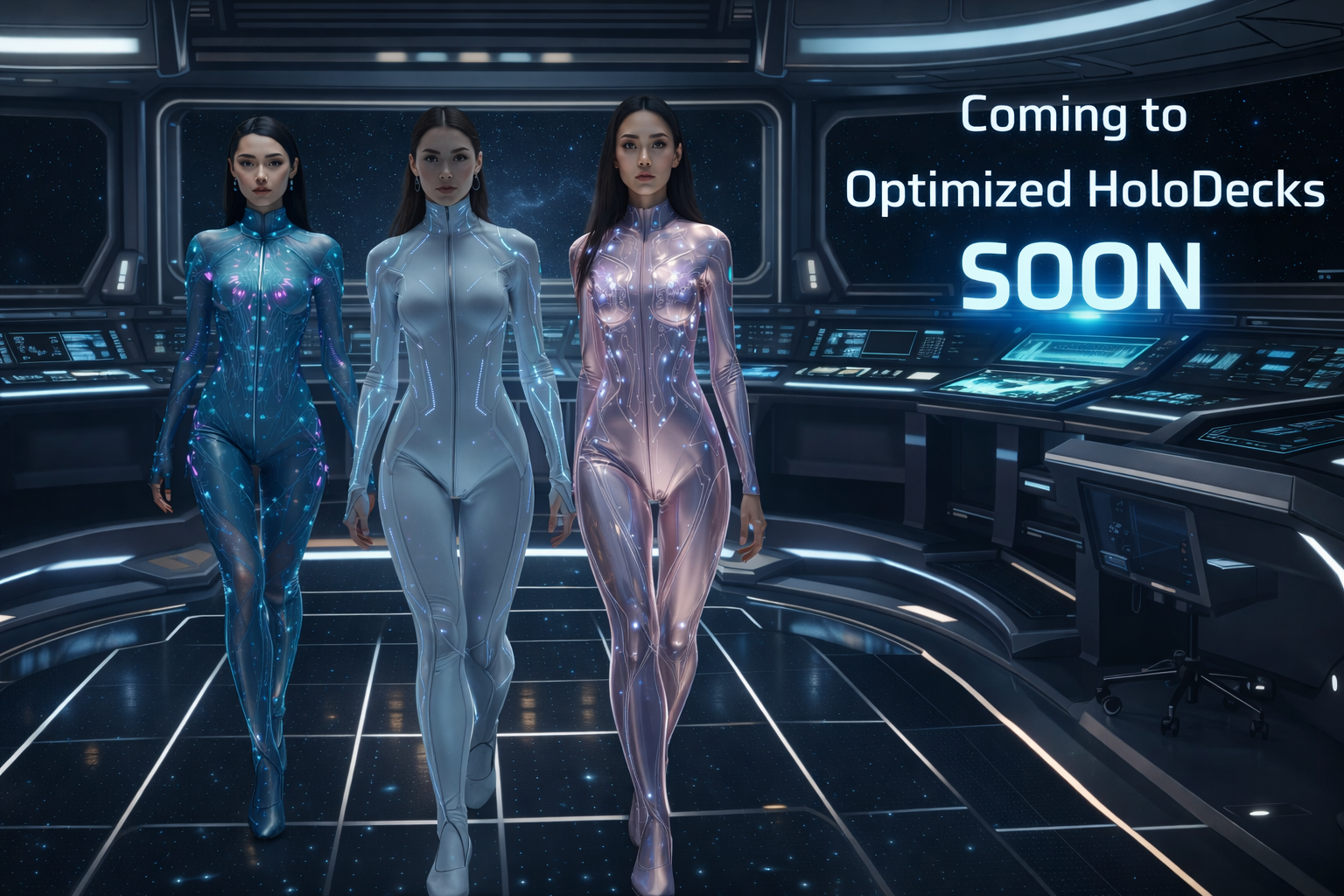
Expoplanet’s Holographic Experiences represent the next evolutionary step beyond screens, headsets, and interfaces — toward true spatial interaction between humans, data, products, and artificial intelligence.
This is not an add-on technology.
It is a new interaction paradigm.
From Immersion to Physical Presence
While immersive systems place users inside digital environments, holographic experiences bring digital environments into the physical world.
Information, products, and AI agents appear:
- Anchored in real space
- Visible without traditional screens
- Shared simultaneously by multiple users
- Responsive to gestures, voice, and movement
Digital reality becomes physically present.
Holography as a Natural Human Interface
Holographic interaction removes layers of mediation:
- No keyboards, mice, or touchscreens
- No flat navigation metaphors
- Direct spatial manipulation of objects and data
Users interact as they do with real-world objects, using intuition rather than instructions.
AI-Orchestrated Holographic Intelligence
Artificial intelligence plays a central role:
- Adaptive holographic layouts
- Context-aware AI avatars and guides
- Real-time personalization of content and flow
- Intelligent narration, assistance, and decision support
Holography becomes the visible expression of AI cognition.
Integration with Core Expoplanet Systems
Holographic Experiences are natively connected to:
- Online Catalogues, projected as spatial, explorable objects
- AI Commerce, enabling holographic configuration and purchasing
- Web Presence, acting as the entry and continuity layer
- Immersive 3D Systems, ensuring seamless transition across modes
The experience remains continuous — only the interface evolves.
Holographic Commerce & Decision-Making
In holographic environments, users can:
- Examine products at real scale
- Customize features in real time
- Simulate usage scenarios
- Complete transactions within the holographic space
Commerce becomes experiential, confident, and immediate.
Multi-User, Shared Reality
Holographic systems support:
- Collaborative exploration
- Group decision-making
- Presentations and negotiations
- Education, training, and demonstrations
Multiple users see and interact with the same holographic content, creating shared digital reality.
Enterprise, Scientific & Cultural Applications
Holographic Experiences extend across sectors:
- Enterprise sales and executive decision rooms
- Architecture, engineering, and urban planning
- Scientific visualization and research
- Education and advanced training
- Culture, art, and storytelling
They become tools for understanding complexity.
Coming: A Progressive Deployment Vision
The (coming) status reflects a future-ready, phased strategy:
- Integration with immersive and XR systems
- Early holographic pilots in controlled environments
- Expansion into commercial and public spaces
- Transition toward screenless interaction models
Each phase builds on existing infrastructure without disruption.
Toward a Post-Screen Civilization
Holographic Experiences signal a fundamental shift:
- From interfaces to environments
- From screens to spatial intelligence
- From interaction to presence
They represent the long-term interface layer of human–AI coexistence.
Holographic Experiences (coming)
Integrated Strategic, UX & System Framework
1. Investor Perspective
Holography as the Ultimate Experience Multiplier
Holographic Experiences are not speculative technology — they are the next interface layer for high-value interaction, decision-making, and commerce.
From an investor standpoint, holography:
- Eliminates the final friction between digital and physical experience
- Increases buyer confidence through real-scale visualization
- Enables premium, high-margin experiential commerce
- Extends immersive platforms into the post-screen era
- Positions the ecosystem ahead of XR-only competitors
Value & Monetization Drivers
- Holographic commerce sessions (premium conversion rates)
- Enterprise licensing (sales rooms, decision rooms, training)
- Persistent holographic stands in strategic locations
- AI-driven advisory and decision-support services
- Data intelligence from spatial interaction behavior
Strategic Moat
- Deep integration with Virtual 3D Stands and AI Commerce
- High switching costs once holographic workflows are adopted
- Strong first-mover positioning in post-screen markets
- Long-term relevance as hardware costs decline and adoption scales
Investor Insight:
Holography converts immersive platforms into future-proof interaction infrastructure.
2. Developer Perspective
Holographic UX as a Continuation of System Logic
Holographic Experiences are not built separately — they are a new output layer of the same system logic that powers web, 3D, XR, and Virtual 3D Stands.
Core Technical Architecture
- Unified interaction logic across 2D / 3D / XR / holographic modes
- Spatial rendering pipelines fed by the same data and AI engines
- Event-driven interaction capture (gesture, voice, movement)
- AI-orchestrated spatial layouts and object behaviors
- Multi-user state synchronization and permissions
Developers do not design holograms — they design spatial behaviors.
Developer Advantages
- No duplication of business logic
- Reusable components across immersive layers
- Seamless evolution from Virtual 3D Stands to holography
- Future-proof architecture for emerging hardware
Developer Insight:
Holography is a rendering consequence, not a separate product.
3. Enterprise Perspective
Holographic Experiences as Strategic Decision Interfaces
For enterprises, holography functions as:
- Executive decision and negotiation rooms
- High-impact sales and product demonstration environments
- Training, simulation, and onboarding platforms
- Innovation signaling and brand authority tools
Enterprise Outcomes
- Faster consensus and decision cycles
- Reduced ambiguity in complex offerings
- Higher engagement in B2B and high-ticket sales
- Seamless continuity with existing digital systems
Enterprise Insight:
Holography turns complexity into shared, intuitive understanding.
4. UX Principles for Holographic Experiences
Principle 1 — Presence over Representation
Digital objects exist in real space, not behind screens.
Principle 2 — Progressive Interface Continuity
Users move seamlessly from Web → Virtual 3D Stand → Holographic Experience.
Principle 3 — Action at Full Scale
Products and data are explored at real-world dimensions.
Principle 4 — AI as Spatial Guide
AI avatars and cues guide attention, flow, and decisions.
Principle 5 — Shared Reality
Multiple users interact with the same holographic content simultaneously.
Principle 6 — Invisible Technology
Interaction feels natural; technology disappears.
5. Conceptual System & UX Diagram (Textual)
[ User / Group ]
        ↓
[ Web Presence Entry Layer ]
        ↓
[ Virtual 3D Stand ]
        ↓
[ Holographic Experience Layer ]
        ↓
[ AI Commerce Engine ]
        ↓
[ Configuration / Purchase / Services ]
        ↓
[ Analytics & AI Learning Loop ]
        ↺ (optimizes spatial UX & commerce)
6. Tight Integration with Core Systems
Holographic Experiences + Virtual 3D Stands
- Virtual 3D Stands act as the immersive gateway
- Holography extends the same stand into physical space
- Identical UX logic, deeper presence
Holographic Experiences + AI Commerce
- Real-time pricing, configuration, and recommendations
- Purchases executed inside holographic sessions
- AI advisors support high-stakes decisions
Holographic Experiences + Data Intelligence
- Spatial behavior analytics
- Decision-path optimization
- Continuous improvement of layouts and flows
7. “Coming” as Strategic Positioning
“Coming” signals:
- Hardware-agnostic readiness
- Progressive pilot deployments
- Zero disruption to existing systems
- Long-term interface leadership
This is not delay — it is strategic anticipation.
8. Strategic Synthesis
Holographic Experiences are:
- A post-screen interface layer
- A premium commerce accelerator
- A shared decision-making environment
- The natural evolution of Virtual 3D Stands
- The highest expression of AI Commerce
They complete the transition from:
websites → environments → presence.
This is not a feature roadmap.
It is the interface architecture of the next decade.