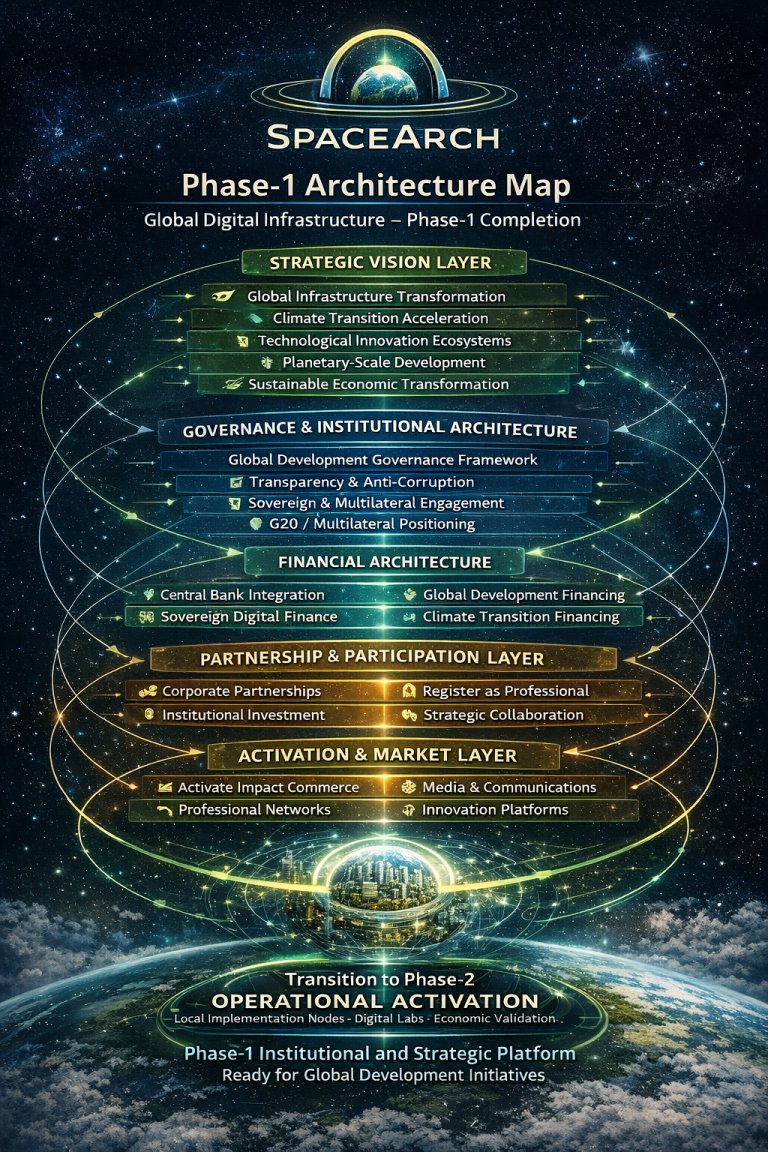

A Hybrid Sovereign Infrastructure Model
(Institutional Strategic Framework – Executive Version)
1️⃣ Executive Definition
The Domus Urban Overlay Network (DUON) is a distributed, building-based digital infrastructure model designed to create:
- Autonomous local connectivity
- Edge computing capacity per building
- Urban mesh interconnection
- Scalable regional and international integration
The system is deployed as a hybrid overlay layer over existing telecommunications infrastructure, rather than replacing it.
This model reduces capital intensity while maximizing operational sovereignty.
2️⃣ Strategic Architecture Overview
Layer 1 — Building Edge Layer (Autonomous Local Network)
Each building integrates:
- Edge server (micro data center node)
- Segmented internal network
- Secure WiFi / mesh antennas
- IoT and services management layer
- Power backup redundancy
Function:
- Operates independently from external internet
- Supports intranet services, payments, access control, media, IoT
- Maintains continuity during external outages
This creates a resilient micro-cloud per building.
Layer 2 — Urban Interconnection Layer
Buildings are interconnected through:
- Fiber infrastructure (leased Metro Ethernet / L2/L3 circuits)
- Dark fiber when available
- Carrier-neutral transport agreements
The interconnection is logically controlled by SpaceArch/Domus routing policies.
Result:
- Metropolitan Autonomous Network (MAN)
- Distributed redundancy
- Reduced dependency on single carriers
- Scalable expansion by district
Layer 3 — Network Sovereignty Layer
Progressive integration:
Phase A
- Controlled upstream transit provider
- Managed exit to global internet
Phase B
- Autonomous System Number (ASN)
- Multi-carrier routing
- BGP control policies
Phase C
- Participation in local Internet Exchange Points (IXP)
- Direct peering with regional networks
- CDN cache deployment at edge nodes
This enables cost reduction, latency optimization, and resilience.
Layer 4 — International Peering & Strategic Connectivity
Once scale is achieved:
- Multi-homed international transit
- Selective peering agreements
- Content caching agreements
- Strategic data exchange participation
The system transitions from “consumer of connectivity” to “participant in global routing”.
3️⃣ Hybrid Overlay Principle
The model does not attempt to rebuild telecommunications infrastructure from scratch.
Instead, it:
- Utilizes existing duct and fiber infrastructure
- Leases transport where efficient
- Controls routing, edge, security, and services internally
- Maintains architectural independence
This drastically reduces CAPEX and accelerates deployment.
4️⃣ Strategic Advantages
Operational Resilience
- Local continuity even if external internet fails
- Distributed infrastructure
- Reduced single-point-of-failure exposure
Economic Efficiency
- Lower deployment cost compared to greenfield networks
- Gradual expansion by district
- Modular scalability
Digital Sovereignty
- Controlled routing policies
- Reduced external dependency
- Data localization capacity
Urban Integration
- Compatible with smart city systems
- Supports IoT, security, fintech, content delivery
- Enables local economic digitalization
5️⃣ Institutional Deployment Model
Stage 1 — Pilot Cluster
- 3–10 buildings
- Local services operational
- Performance metrics collection
Stage 2 — District Expansion
- Fiber interconnection
- Urban routing node
- Edge caching introduction
Stage 3 — City-Level Integration
- ASN activation
- Multi-carrier transit
- IXP integration
Stage 4 — Regional / International Scaling
- Replicable franchise architecture
- Standardized governance model
- Centralized monitoring + distributed execution
6️⃣ Governance & Risk Framework
Critical components:
- Zero-trust segmentation architecture
- Centralized Network Operations Center (NOC)
- Firmware and patch governance
- SLA management with transport providers
- Regulatory compliance (spectrum, right-of-way)
This is a managed infrastructure, not an informal mesh network.
7️⃣ Economic Logic
The model is supported by:
- Per-building service subscription
- Connectivity optimization savings
- Smart infrastructure integration
- Fintech and digital service revenue layers
- Content caching and distribution agreements
The network becomes both:
- Infrastructure
- Platform
8️⃣ Institutional Positioning
The Domus Urban Overlay Network is positioned as:
A modular, hybrid digital infrastructure system transforming buildings into distributed urban edge nodes, enabling resilient connectivity, operational sovereignty, and scalable city-level digital integration.
It is neither a telecom competitor nor a mere property automation system.
It is a strategic digital urban layer.
9️⃣ Strategic Observation
The viability of this model depends not on technological feasibility — which is proven — but on:
- Execution discipline
- Regulatory alignment
- Incremental scaling
- Financial sustainability
Infrastructure sovereignty is achieved progressively, not ideologically.
DOMUS URBAN OVERLAY NETWORK
Technical Annex
ASN, BGP & Routing Architecture Framework
1️⃣ Autonomous System Strategy
1.1 ASN Acquisition Model
The Domus Urban Overlay Network (DUON) operates under a dedicated Autonomous System Number (ASN) registered through the appropriate Regional Internet Registry (RIR):
- LACNIC
- ARIN
- RIPE NCC
ASN ownership enables:
- Independent BGP routing control
- Multi-homing capability
- Traffic engineering policies
- Peering autonomy
- Sovereign IP allocation governance
The ASN becomes the routing identity of the DUON network.
2️⃣ Routing Architecture Model
The routing model is structured across three hierarchical layers:
2.1 Edge Layer (Building Nodes)
Each building operates:
- Internal L2 segmentation (VLAN / VXLAN)
- Local L3 gateway
- Private IP addressing (RFC1918)
- Secure tunneling toward aggregation node (IPsec / GRE / MPLS)
No public BGP sessions occur at building level.
Edge node responsibilities:
- Service isolation
- IoT segmentation
- QoS enforcement
- Local DNS caching
- Failover continuity (island mode)
2.2 Aggregation Layer (Urban Core Nodes)
Urban aggregation routers operate:
- iBGP within DUON ASN
- OSPF or IS-IS as IGP (intra-domain routing)
- Route reflectors (for scalability)
Functions:
- Route propagation between buildings
- Traffic engineering
- Failover handling
- Policy enforcement
- Netflow / telemetry export
Topology model:
- Spine–Leaf for high-density zones
- Ring redundancy for district interconnect
- Dual-core redundancy per city
2.3 Border Layer (External Connectivity)
Border routers (BRs) handle:
- eBGP sessions with upstream providers
- eBGP sessions with IXPs
- Peering with CDNs or private networks
Recommended configuration:
- Dual upstream transit providers (minimum)
- Distinct physical paths
- RPKI validation enabled
- Strict prefix filtering
- Max-prefix enforcement
3️⃣ BGP Policy Framework
3.1 Multi-Homing Policy
Objectives:
- Traffic optimization
- Cost control
- Redundancy
- Latency management
Techniques:
- Local Preference control
- MED (Multi-Exit Discriminator)
- AS-Path prepending
- Community tagging
Outbound routing:
- Latency-based optimization
- Cost-weighted policy
- CDN-directed preference
Inbound routing:
- Controlled advertisement of prefixes
- Selective prepending for traffic shaping
- Geographical load balancing
3.2 Route Security
Mandatory:
- RPKI origin validation
- IRR registration
- Prefix filtering
- Bogon filtering
- Anti-hijack monitoring
Optional:
- BGP monitoring services
- Route leak detection automation
- Blackhole routing for DDoS mitigation
4️⃣ IP Addressing Architecture
4.1 Address Allocation
DUON operates:
- Provider Independent (PI) IPv4 block
- Native IPv6 allocation
Building addressing strategy:
- Private IPv4 internal segmentation
- Public IPv4 NAT gateway at aggregation
- Native IPv6 per building where feasible
Long-term objective:
- IPv6-first architecture
- NAT reduction
- Direct service exposure under controlled firewall rules
5️⃣ IXP Participation Model
DUON may connect to:
- CABASE
- DE-CIX
- LINX
Participation benefits:
- Lower transit costs
- Reduced latency
- Direct peering with regional ISPs
- CDN interconnection
Policy:
- Open peering policy for CDNs
- Selective peering for networks above defined traffic thresholds
- Mandatory route filtering
6️⃣ Traffic Engineering Model
6.1 Internal Traffic
- Building-to-building traffic remains internal (no transit usage)
- MPLS/EVPN overlays recommended
- QoS tiers:
- Critical services
- Business priority
- Residential
- Guest
6.2 External Traffic
Traffic categories:
- Transit-bound
- IXP-peered
- CDN-cached
- Blackhole (DDoS mitigation)
Analytics:
- Netflow/IPFIX export
- Capacity monitoring
- Peak forecasting
- Cost optimization tracking
7️⃣ CDN & Edge Caching Integration
At aggregation nodes:
- Deploy cache servers (Akamai / Cloudflare / Google Global Cache or equivalent)
- Reduce outbound bandwidth consumption
- Improve content delivery latency
This transforms DUON from bandwidth consumer into regional distribution node.
8️⃣ High Availability & Redundancy
Minimum redundancy model:
- Dual border routers
- Dual aggregation cores
- Fiber ring topology
- UPS + generator backup
- Automatic failover via BGP convergence
Target uptime:
- 99.95% urban cluster
- 99.99% core layer
9️⃣ NOC & Governance
Centralized Network Operations Center responsibilities:
- BGP monitoring
- SLA compliance tracking
- DDoS mitigation coordination
- Firmware lifecycle governance
- Capacity planning
- Incident response protocol
Security operations:
- Log aggregation (SIEM)
- Traffic anomaly detection
- Automated route validation
🔟 Deployment Progression Model
Phase 1 — Single upstream / no ASN
Phase 2 — ASN + dual transit
Phase 3 — IXP participation
Phase 4 — CDN edge deployment
Phase 5 — Multi-city interconnection under single ASN
Phase 6 — International peering fabric
Strategic Technical Conclusion
The DUON routing model:
- Does not require reconstruction of physical telecom infrastructure
- Operates as a sovereign overlay layer
- Scales from district cluster to city-wide network
- Transitions progressively from private overlay to global routing participant
The architecture is technically standard-compliant, institutionally deployable, and operationally scalable.
DOMUS URBAN OVERLAY NETWORK
Cost Model – 10 Building Cluster
(Pilot Urban Node Deployment)
1️⃣ Deployment Assumptions
Cluster size:
- 10 residential / mixed-use buildings
- Average 40–60 units per building
- Total end-users: ~400–600 units
- One aggregation core node
- Single city district footprint
Architecture includes:
- Building edge node per building
- Fiber interconnection (leased Metro Ethernet)
- One aggregation router pair
- Single upstream transit (initial phase)
- NOC light monitoring
2️⃣ CAPEX (Initial Investment)
2.1 Per Building (Edge Node Equipment)
| Component | Estimated Unit Cost (USD) |
|---|---|
| Edge server (mid-tier rackmount or micro data server) | $2,500 |
| Enterprise firewall/router | $1,200 |
| Managed PoE switch | $900 |
| WiFi 6/6E access points (4–6 per building avg.) | $2,000 |
| Rack + cabling + UPS | $1,200 |
| Installation & configuration | $1,000 |
Subtotal per building: ≈ $8,800
For 10 buildings:
$88,000
2.2 Aggregation Layer (Urban Core)
| Component | Estimated Cost (USD) |
|---|---|
| Dual aggregation routers (carrier-grade) | $18,000 |
| Core switches (redundant) | $12,000 |
| Small rack + cooling | $6,000 |
| Redundant UPS + power systems | $8,000 |
| Initial BGP setup & engineering | $6,000 |
Aggregation CAPEX: ≈ $50,000
2.3 Network Integration & Fiber Activation
| Component | Estimated Cost (USD) |
|---|---|
| Metro Ethernet setup fees (10 links) | $10,000 |
| Cross-connect fees | $4,000 |
| Legal / regulatory / ASN registration (if included early) | $5,000 |
Network Activation: ≈ $19,000
2.4 Total CAPEX – 10 Building Cluster
| Category | Amount |
|---|---|
| Edge Nodes (10 buildings) | $88,000 |
| Aggregation Core | $50,000 |
| Network Activation | $19,000 |
TOTAL INITIAL CAPEX ≈ $157,000
(Contingency reserve 10% recommended → ~$173,000)
3️⃣ OPEX (Monthly Operating Costs)
3.1 Fiber & Transport
| Item | Monthly Cost |
|---|---|
| Metro Ethernet (10 buildings, avg $500 each) | $5,000 |
| Upstream Transit (1–2 Gbps committed) | $2,500 |
Transport subtotal: ≈ $7,500
3.2 Power & Hosting
| Item | Monthly Cost |
|---|---|
| Aggregation node electricity | $800 |
| Backup power maintenance | $300 |
Subtotal: ≈ $1,100
3.3 Technical Operations
| Item | Monthly Cost |
|---|---|
| NOC light (outsourced monitoring) | $2,000 |
| Maintenance / field technician reserve | $1,500 |
Subtotal: ≈ $3,500
3.4 Total Monthly OPEX
| Category | Amount |
|---|---|
| Transport | $7,500 |
| Power | $1,100 |
| Operations | $3,500 |
TOTAL OPEX ≈ $12,100 / month
4️⃣ Revenue Model Example
Assume:
- 400 active users (conservative scenario)
- Average service fee: $25/month per unit
Monthly gross revenue:
400 × $25 = $10,000
This does NOT yet cover OPEX.
Sustainable Scenario
Assume:
- 500 active users
- Average blended revenue (connectivity + services): $40/month
500 × $40 = $20,000/month
Net before depreciation:
$20,000 – $12,100 = $7,900 margin
5️⃣ Break-Even Analysis
If margin ≈ $8,000/month:
CAPEX ≈ $157,000
Break-even ≈ 20 months
With higher ARPU ($45–$50 blended), break-even can drop to 14–16 months.
6️⃣ Cost Optimization Levers
- CDN caching → reduces transit cost
- ASN + IXP participation → reduces upstream dependency
- Shared aggregation for 20–30 buildings
- Bulk fiber negotiation
- Franchise model for deployment CAPEX distribution
- Edge virtualization (lower hardware footprint)
7️⃣ Strategic Interpretation
The 10-building cluster:
- Is economically viable only if services go beyond “basic WiFi”
- Requires blended digital service model
- Benefits significantly from scale (15+ buildings improves margin sharply)
Critical observation:
Transport costs are the main pressure point.
Control over transit and peering improves margins dramatically.
8️⃣ Sensitivity Scenarios
| Scenario | Users | ARPU | Monthly Revenue | Margin |
|---|---|---|---|---|
| Conservative | 400 | $25 | $10,000 | Negative |
| Balanced | 500 | $40 | $20,000 | $7,900 |
| Optimized | 600 | $45 | $27,000 | $14,900 |
9️⃣ Institutional Conclusion
A 10-building cluster is:
- A viable pilot scale
- Not optimal for maximum margin
- Best used as proof-of-concept before scaling to 25–50 buildings
Scale improves:
- Transit economics
- Equipment amortization
- Negotiation leverage
- CDN partnerships
- Regulatory standing
DOMUS URBAN OVERLAY NETWORK
Financing Structure Framework
Debt vs Equity vs Franchise Model
1️⃣ Capital Requirement Reference
For clarity, we use the previously defined 10-building cluster:
- CAPEX baseline ≈ $160,000–$175,000
- Break-even target: 18–24 months
- Expansion trigger: positive EBITDA for 3 consecutive quarters
The financing structure must:
- Preserve operational control
- Maintain scalability
- Avoid overleveraging early cash flow
- Enable replication by district
2️⃣ Model A — Debt Financing
Structure
- Bank loan or private credit line
- 24–48 month amortization
- Fixed or variable interest
- Equipment as collateral
- Possibly partial building-owner guarantee
Example Scenario
Loan: $170,000
Interest: 10–14% (regional SME typical range)
Term: 36 months
Monthly payment ≈ $5,500–$6,000
Impact on Operations
If EBITDA ≈ $8,000/month:
After debt service → ≈ $2,000 residual free cash flow.
Advantages
- Retain 100% ownership
- No equity dilution
- Predictable cost structure
- Accelerates deployment
Risks
- Fixed monthly obligation
- Pressure during early adoption
- Sensitive to ARPU underperformance
- Interest rate exposure
Institutional Assessment
Debt is optimal when:
- Demand is validated
- Building agreements are secured
- ARPU is realistic and tested
- OPEX is predictable
Debt is high-risk during experimental phase.
3️⃣ Model B — Equity Financing
Structure
- Angel investor or small fund
- Equity stake in cluster SPV (Special Purpose Vehicle)
- 15–35% equity typical
- Capital used for CAPEX
Example Scenario
Investor contributes: $200,000
Equity stake: 30% in local cluster entity
If EBITDA scales to $10,000/month:
Annual EBITDA ≈ $120,000
Investor share (30%) ≈ $36,000/year
Implied simple return ≈ 18%
Advantages
- No fixed repayment pressure
- Lower early cash flow stress
- Strategic partner possible
- Faster scaling potential
Risks
- Dilution of ownership
- Governance complexity
- Exit expectations
- Profit distribution obligations
Institutional Assessment
Equity is optimal when:
- Rapid scaling is desired
- Network expansion requires aggressive CAPEX
- Strategic telecom or infrastructure partner available
4️⃣ Model C — Franchise / Distributed CAPEX Model
Structure
Each building or cluster partner:
- Pays installation fee
- Funds local hardware
- Pays recurring service fee to central network operator
- Revenue share model
Example Structure
Per building:
Installation fee: $9,000
Service fee to DUON core: $800/month
Local revenue retained by franchise partner
If 10 buildings franchise-funded:
Central entity CAPEX = minimal
Core infrastructure only ≈ $50,000
Advantages
- Very low capital requirement centrally
- Rapid scaling
- Distributed risk
- Cash flow positive early
Risks
- Quality control complexity
- Operational inconsistency
- Governance enforcement required
- Brand risk if mismanaged locally
Institutional Assessment
Franchise model aligns with:
- Modular urban deployment
- Coworking-style expansion logic
- Asset-light strategy
- Multi-city scalability
It fits particularly well with SpaceArch’s cloud-first, distributed governance philosophy.
5️⃣ Hybrid Financing Strategy (Recommended)
The most stable institutional path:
Phase 1 – Pilot (10 buildings)
- 30–50% equity seed
- Minimal debt
- Strong service validation
Phase 2 – District Expansion (25–50 buildings)
- Debt introduced after EBITDA stabilization
- Limited equity top-up if needed
Phase 3 – Multi-District Scaling
- Franchise deployment
- Central ASN and core funded by retained earnings
6️⃣ Comparative Summary
| Factor | Debt | Equity | Franchise |
|---|---|---|---|
| Ownership retention | High | Medium | High |
| Early risk | High | Medium | Low |
| Cash flow pressure | High | Low | Low |
| Scalability | Moderate | High | Very High |
| Governance complexity | Low | Medium | High |
| CAPEX central burden | High | Medium | Low |
7️⃣ Strategic Insight
At small scale (10 buildings):
Franchise or equity-supported pilot is safer.
At medium scale (25–50 buildings):
Debt becomes efficient due to predictable recurring revenue.
At city scale:
Hybrid model is strongest:
- Centralized routing core (equity + retained earnings)
- Distributed edge nodes (franchise-funded)
- Transit negotiated at scale
8️⃣ Financial Stability Rule
The network must never:
- Service debt with speculative ARPU
- Overcommit before transport contracts are secured
- Expand faster than NOC governance capacity
Infrastructure businesses fail from overexpansion, not from slow growth.
9️⃣ Institutional Conclusion
The Domus Urban Overlay Network is best financed through:
- Controlled pilot equity
- Transition to structured debt after validation
- Progressive franchise scaling
This preserves sovereignty while accelerating deployment.
DOMUS URBAN OVERLAY NETWORK
36-Month Cash Flow Projection
10-Building Pilot Cluster
1️⃣ Base Assumptions
Deployment
- 10 buildings
- 500 potential residential/commercial units
- Activation ramp over 6 months
Financial
- CAPEX: $170,000
- OPEX: $12,100/month (fixed baseline)
- Average ARPU (blended connectivity + services): $40/month
- Target stabilized user base: 500 users
- Adoption ramp:
| Month | Active Users |
|---|---|
| 1 | 120 |
| 2 | 200 |
| 3 | 280 |
| 4 | 350 |
| 5 | 420 |
| 6 | 500 |
| 7–36 | 500 steady |
2️⃣ Revenue Ramp (Months 1–6)
Revenue = Users × $40
| Month | Users | Revenue |
|---|---|---|
| 1 | 120 | $4,800 |
| 2 | 200 | $8,000 |
| 3 | 280 | $11,200 |
| 4 | 350 | $14,000 |
| 5 | 420 | $16,800 |
| 6 | 500 | $20,000 |
3️⃣ Monthly EBITDA (Before Debt)
OPEX fixed: $12,100
| Month | Revenue | OPEX | Net Cash Flow |
|---|---|---|---|
| 1 | $4,800 | $12,100 | -$7,300 |
| 2 | $8,000 | $12,100 | -$4,100 |
| 3 | $11,200 | $12,100 | -$900 |
| 4 | $14,000 | $12,100 | +$1,900 |
| 5 | $16,800 | $12,100 | +$4,700 |
| 6 | $20,000 | $12,100 | +$7,900 |
Breakeven (operational) achieved around Month 4.
4️⃣ Stabilized Phase (Months 7–36)
Users steady at 500
Revenue = $20,000/month
OPEX = $12,100
Monthly Net = $7,900
Total months in stabilized phase = 30 months
Total Net Cash Flow (30 months):
$7,900 × 30 = $237,000
5️⃣ Total 36-Month Cash Flow Summary
First 6 Months (Ramp)
Total Net (Months 1–6):
(-7,300 -4,100 -900 +1,900 +4,700 +7,900)
= +$2,200 cumulative
(Operational losses are absorbed by CAPEX funding)
Months 7–36
= $237,000
Total 36-Month Net Operating Cash Flow
= $2,200 + $237,000
= $239,200
6️⃣ CAPEX Recovery
Initial CAPEX: $170,000
Recovered by approximately Month 22–24.
By Month 36:
Net surplus after CAPEX:
$239,200 – $170,000
= $69,200 free cash surplus
7️⃣ Cash Flow Curve Interpretation
Year 1:
- Ramp and stabilization
- Minimal net positive
- Risk concentration period
Year 2:
- Strong positive free cash flow
- CAPEX fully amortized
Year 3:
- Pure cash generation phase
- Cluster becomes expansion engine
8️⃣ Sensitivity Scenario
If ARPU increases to $45:
Revenue at 500 users = $22,500
Monthly Net = $10,400
36-month cumulative net:
≈ $320,000+
CAPEX recovery at Month 18–20.
9️⃣ Debt Scenario Adjustment
If financed with $6,000/month debt service:
Stabilized net:
$7,900 – $6,000 = $1,900
Breakeven delayed to ~Month 30.
Conclusion:
Debt should only be introduced after user base stabilization.
🔟 Institutional Conclusion
The 10-building DUON pilot:
- Becomes cash flow positive by Month 4
- Recovers CAPEX by Year 2
- Generates moderate surplus by Year 3
- Is economically viable if ARPU ≥ $38 and user base ≥ 450
Primary financial pressure point:
Transport and transit costs.
Scale significantly improves economics.
DOMUS URBAN OVERLAY NETWORK
Expansion Reinvestment Strategy
36–60 Month Scaling Blueprint
1️⃣ Strategic Objective
The reinvestment strategy must:
- Protect operational stability
- Accelerate controlled expansion
- Avoid overleveraging
- Preserve routing sovereignty
- Increase EBITDA margin at scale
Expansion is not geographic growth alone.
It is margin amplification through density.
2️⃣ Capital Allocation Principles
Rule 1 — Cash Flow First
No expansion until:
- 3 consecutive positive EBITDA quarters
- Minimum 6 months OPEX reserve secured
Rule 2 — Reinvestment Ratio
Recommended allocation of monthly net profit (after OPEX and debt service):
| Allocation Category | % of Net Profit |
|---|---|
| Expansion CAPEX Fund | 50% |
| Reserve & Risk Buffer | 20% |
| Core Infrastructure Upgrade | 15% |
| Technology Optimization | 10% |
| Governance / Compliance | 5% |
This prevents liquidity stress while enabling progressive scaling.
3️⃣ Expansion Model Phases
Phase 1 — Cluster Consolidation (10 → 15 Buildings)
Objective:
- Improve density within same district
- Reuse aggregation core
- Increase ARPU and transit efficiency
Cost per additional building (no new core required):
≈ $9,000–$10,000
Return improves because:
- Core OPEX remains nearly fixed
- Transport cost per user decreases
- EBITDA margin expands
Phase 2 — District Expansion (15 → 25–30 Buildings)
Trigger:
- Utilization > 70%
- Transit utilization > 60%
- Stable 12-month retention rate
Investment required:
- Additional aggregation redundancy
- Transit bandwidth increase
- Optional CDN cache deployment
This is where margin increases materially.
Phase 3 — Multi-District Replication
Once 25–30 buildings stabilized:
Create:
- Second aggregation cluster
- Same ASN
- Same governance framework
- Shared NOC
Capital can now be partially financed by retained earnings.
4️⃣ Margin Amplification Logic
At 10 buildings:
Transit is 35–40% of OPEX.
At 25 buildings:
Transit per user drops significantly due to:
- Higher negotiation leverage
- CDN caching
- IXP peering
Margin can increase from ~35% to 45–50%.
Scale improves economics non-linearly.
5️⃣ Reinvestment Timing Model (Illustrative)
Year 1:
- Stabilize pilot cluster
- Accumulate reserve
Year 2:
- Add 5 buildings (self-funded)
- Increase user density
Year 3:
- Expand to 25 buildings
- Activate ASN + IXP participation
Year 4–5:
- Second district
- Franchise or hybrid funding model
6️⃣ Capital Recycling Strategy
After CAPEX recovery (≈ Month 22–24):
Cluster becomes internal financing engine.
Options:
- Self-financed organic growth
- Debt leverage using stable EBITDA
- Franchise deployment (CAPEX externalized)
Institutional discipline suggests:
Never allocate more than 60% of cumulative retained earnings into expansion.
Maintain liquidity cushion.
7️⃣ Risk-Controlled Scaling Framework
Before each expansion step:
✔ Utilization stress-test
✔ ARPU validation
✔ Churn analysis
✔ Transport renegotiation
✔ Security audit
✔ Power redundancy review
Expansion without operational audit increases fragility.
8️⃣ Strategic Growth Path Comparison
| Strategy | Risk | Speed | Control | Capital Intensity |
|---|---|---|---|---|
| Self-funded organic | Low | Moderate | High | Low |
| Debt accelerated | Medium | High | High | Medium |
| Franchise-driven | Low–Medium | Very High | Medium | Very Low |
Hybrid model recommended after validation phase.
9️⃣ Long-Term Value Creation
Reinvestment creates value in 4 dimensions:
- Physical network density
- Routing autonomy (ASN leverage)
- Negotiation power with carriers
- Platform monetization layer
At scale, DUON becomes:
- Infrastructure asset
- Recurring revenue platform
- Digital urban backbone
🔟 Institutional Conclusion
Expansion must follow:
Stability → Density → Sovereignty → Replication
Not the reverse.
The network becomes financially powerful only after the second density threshold (≈ 25 buildings).
Discipline in reinvestment is more important than speed of expansion.
DOMUS URBAN OVERLAY NETWORK
Deployment Cost Model
1 km² Urban Grid (Dense Environment)
1️⃣ Baseline Urban Assumptions
To model correctly, we must define density.
Urban Density Assumptions (Typical Latin American / European mid-density zone)
- 1 km² area
- ~80–120 buildings
- Average 40 units per building
- Total units: ~3,500–4,500
- Existing fiber present on main streets
- Power infrastructure stable
We model conservatively:
100 buildings per km²
2️⃣ Architecture Assumptions
For 1 km² deployment:
- 100 Building Edge Nodes
- 4 Aggregation Core Nodes (quadrant topology)
- Fiber Metro Ethernet leased per building
- Dual upstream transit
- IXP participation ready
3️⃣ CAPEX Model
3.1 Edge Layer (100 Buildings)
Per building average CAPEX ≈ $8,800
100 × $8,800 =
$880,000
3.2 Aggregation Layer (4 Quadrant Nodes)
Each quadrant:
- Dual routers
- Core switching
- Rack + UPS
- Initial engineering
Estimated per quadrant ≈ $50,000
4 × $50,000 =
$200,000
3.3 Core Interconnection & Fiber Activation
- Metro Ethernet setup (100 endpoints)
- Core cross-connects
- Redundant inter-core fiber paths
- ASN registration
- IXP onboarding
Estimated:
$120,000
3.4 NOC Setup (Initial Scaling)
- Monitoring systems
- Route monitoring
- Security stack
- Initial SIEM
Estimated:
$75,000
4️⃣ Total CAPEX – 1 km² Grid
| Category | Amount |
|---|---|
| Edge Nodes | $880,000 |
| Aggregation | $200,000 |
| Fiber & Activation | $120,000 |
| NOC Setup | $75,000 |
TOTAL ≈ $1,275,000
(Contingency 10% → $1.4M recommended capital envelope)
5️⃣ Monthly OPEX (1 km²)
5.1 Transport & Transit
Metro Ethernet (avg $450 per building)
100 × $450 = $45,000
Transit (5–10 Gbps blended capacity) ≈ $8,000
Subtotal: $53,000
5.2 Power & Hosting
Core sites + redundancy ≈ $6,000
5.3 Technical Operations
- NOC team (scaled) ≈ $12,000
- Maintenance reserve ≈ $8,000
Subtotal: $20,000
6️⃣ Total Monthly OPEX
| Category | Amount |
|---|---|
| Transport | $53,000 |
| Power | $6,000 |
| Operations | $20,000 |
TOTAL OPEX ≈ $79,000 / month
7️⃣ Revenue Potential per 1 km²
Assume:
- 4,000 units total
- 65% adoption rate
- 2,600 active users
- Blended ARPU $40
Revenue:
2,600 × $40 =
$104,000 / month
8️⃣ EBITDA Estimate
Revenue: $104,000
OPEX: $79,000
Net ≈ $25,000/month
Annual ≈ $300,000
9️⃣ CAPEX Recovery
CAPEX ≈ $1.3M
At $25,000/month net:
Breakeven ≈ 52 months (4.3 years)
🔟 Margin Improvement Levers
This is baseline. It improves significantly if:
- CDN caching reduces transit by 30–40%
- IXP participation reduces transit cost
- ARPU increases to $45–50
- Building density exceeds 100/km²
- Metro fiber negotiated at bulk discount
Example:
If ARPU = $45
Revenue = $117,000
Net ≈ $38,000
Breakeven ≈ 34 months
1️⃣1️⃣ Strategic Interpretation
At 1 km² scale:
- Edge CAPEX dominates (≈70%)
- Transport is primary OPEX pressure
- Density is key profitability driver
- Margin improves non-linearly with scale
Overlay model significantly lowers cost compared to greenfield ISP trenching.
1️⃣2️⃣ Competitive Context
Traditional fiber ISP deployment per 1 km² can exceed:
$3M–$6M including trenching and civil works.
Satellite deployment has no urban grid CAPEX but high per-user hardware cost and central CAPEX concentration.
DUON occupies a middle ground:
Moderate CAPEX
High control
Density-driven economics
Institutional Conclusion
1 km² deployment is:
- Capital-intensive but feasible
- Economically viable at >60% adoption
- Stronger when bundled with services beyond connectivity
- Best financed via hybrid capital structure
Scale is essential for economic strength.
DOMUS URBAN OVERLAY NETWORK
Comparative ROI vs Real Estate Investment
Capital Allocation Analysis
1️⃣ Baseline Capital Comparison
We compare:
Scenario A — DUON 1 km² Deployment
- CAPEX ≈ $1.3M
- EBITDA stabilized ≈ $300,000/year (conservative baseline)
- Breakeven: 3.5–4.5 years (depending on ARPU)
Scenario B — Real Estate Residential Portfolio
- Capital invested: $1.3M
- Average urban rental yield: 4–7% gross (typical mature urban market)
- Net yield after maintenance, vacancy, taxes: 3–5%
2️⃣ Annual Return Comparison
DUON (Base Case)
Annual EBITDA ≈ $300,000
ROI ≈ 23% (before taxes)
Even if adjusted for reinvestment and contingency:
Net effective ROI ≈ 15–20%
Real Estate (Rental Model)
If net yield = 4%
$1.3M × 4% =
$52,000 per year
ROI ≈ 4%
3️⃣ Cash Flow Dynamics
Real Estate
- Stable but low-growth cash flow
- Limited scalability per asset
- Appreciation dependent on market cycle
- Illiquid asset
DUON
- Higher volatility early
- Strong scaling effect
- Revenue grows with density
- Expansion possible from retained earnings
- Infrastructure asset class valuation
DUON behaves more like a digital utility than passive real estate.
4️⃣ Appreciation & Asset Valuation
Real Estate
Value based on:
- Comparable sales
- Cap rate compression
- Urban appreciation cycles
Moderate upside over 10–15 years.
DUON
Valuation based on:
- EBITDA multiple (5x–12x typical infrastructure multiple)
- User base growth
- Strategic telecom acquisition potential
- Platform expansion (IoT, fintech, smart city)
Example:
If EBITDA reaches $400,000/year
At 8x multiple → $3.2M valuation
Capital appreciation potential > 2× original investment.
5️⃣ Risk Profile Comparison
| Risk Type | DUON | Real Estate |
|---|---|---|
| Market cycle | Moderate | Moderate |
| Regulatory | Moderate | Low |
| Technology | Present | Minimal |
| Vacancy / churn | User churn | Tenant vacancy |
| Liquidity | Medium | Low |
DUON has operational risk but higher growth leverage.
Real estate has lower volatility but limited upside.
6️⃣ Scalability
Real Estate:
- Each new building requires full capital
- Linear growth
DUON:
- Core infrastructure reused
- Marginal cost per building declines
- Non-linear margin growth
This creates exponential scaling potential once density threshold reached.
7️⃣ Capital Efficiency
If DUON achieves:
- 25% stabilized ROI
- 4-year payback
- 8x EBITDA valuation multiple
Effective IRR can exceed 25–30%.
Real estate IRR rarely exceeds 8–10% in mature markets.
8️⃣ Strategic Interpretation
Real estate is:
- Wealth preservation asset
- Low-growth, stable yield vehicle
DUON is:
- Infrastructure growth asset
- Active management required
- Higher return potential
- Platform expansion optionality
They belong to different capital allocation philosophies.
9️⃣ Hybrid Strategy Consideration
Optimal strategy may be:
- Real estate provides stability and collateral
- DUON provides growth engine
- DUON network enhances value of managed properties
- Smart building premium increases rental value
Integration creates synergy.
🔟 Institutional Conclusion
For equal capital allocation:
| Metric | DUON | Real Estate |
|---|---|---|
| Annual Net ROI | 15–25% | 3–5% |
| Scalability | High | Low |
| Operational complexity | High | Low |
| Upside potential | Significant | Moderate |
| Liquidity | Medium | Low |
DUON offers materially higher ROI potential but requires disciplined execution and governance.
Real estate offers stability and inflation protection.
DOMUS URBAN OVERLAY NETWORK
Competitive Comparison Framework
DUON vs Traditional ISPs vs Satellite Models
1️⃣ Structural Architecture Comparison
| Dimension | DUON (Overlay Model) | Traditional ISP | LEO Satellite Model |
|---|---|---|---|
| Infrastructure Ownership | Hybrid overlay | Full physical infra | Space + ground stations |
| Last-Mile Control | Building-level edge | Telco-owned | User terminal-based |
| Backhaul | Leased fiber / negotiated | Owned backbone | Satellite-to-ground |
| Routing Sovereignty | ASN-controlled | ASN-controlled | Centralized operator |
| Deployment Model | Modular by building | Regional rollouts | National/global |
2️⃣ Capital Intensity
Traditional ISP
- High CAPEX (fiber trenching, poles, ducts)
- Long payback periods
- Heavy regulatory burden
- Significant maintenance workforce
Satellite Model
- Extremely high CAPEX (launch, constellation, spectrum)
- Global footprint required for profitability
- Hardware dependency (user terminals)
- Centralized infrastructure control
DUON
- Low to moderate CAPEX
- Uses existing ducts/fiber
- Edge nodes distributed
- Incremental deployment possible
Strategic Insight:
DUON reduces infrastructure burden by avoiding trenching and spectrum licensing at large scale.
3️⃣ Operational Model
Traditional ISP
- Pure connectivity provider
- High churn competition
- Price-sensitive market
- Limited service differentiation
Satellite Provider
- Connectivity access provider
- Best suited for remote areas
- Higher latency than fiber
- Hardware dependency
DUON
- Connectivity + Edge Services
- Smart building integration
- IoT, security, fintech, local digital services
- Network acts as platform
DUON competes less on raw bandwidth and more on ecosystem integration.
4️⃣ Economic Model Comparison
| Factor | DUON | Traditional ISP | Satellite |
|---|---|---|---|
| ARPU Source | Connectivity + services | Connectivity only | Connectivity only |
| Transport Cost | Negotiated | Owned backbone | Centralized |
| Scalability | Modular | Capital-intensive | Global-scale required |
| Density Advantage | High | High | Low (uniform pricing) |
5️⃣ Latency & Performance
- Fiber ISP: lowest latency
- DUON (fiber overlay): equivalent local latency
- Satellite (LEO): low but higher than terrestrial fiber
For dense urban environments:
Fiber-based overlay outperforms satellite.
Satellite is strongest in rural/underserved areas.
6️⃣ Resilience & Redundancy
Traditional ISP:
- Centralized core points
- Regional outage risk
Satellite:
- Space redundancy
- Ground station dependency
DUON:
- Distributed building edge nodes
- Local island-mode continuity
- Reduced single-point-of-failure risk
DUON offers local service continuity even during upstream disruption.
7️⃣ Regulatory Complexity
Traditional ISP:
- Telecom licensing
- Infrastructure permits
- Spectrum compliance
Satellite:
- National spectrum agreements
- Landing rights
- Import/export controls
DUON:
- Operates as managed network overlay
- Lower regulatory threshold if structured properly
- Must comply with telecom and data protection rules
Overlay strategy reduces regulatory exposure.
8️⃣ Competitive Vulnerabilities
DUON Risks
- Transport cost dependency
- Requires building agreements
- Requires disciplined NOC governance
- Brand risk if franchise model poorly controlled
ISP Risks
- Infrastructure heavy
- Slow deployment
- Price war vulnerability
Satellite Risks
- High capital burn
- Hardware cost sensitivity
- Regulatory exposure
- Urban performance disadvantage
9️⃣ Strategic Positioning Matrix
| Market Type | Best Model |
|---|---|
| Dense urban with existing fiber | DUON / ISP |
| Rural or remote | Satellite |
| Smart building ecosystems | DUON |
| National consumer broadband | ISP |
| Disaster resilience | Hybrid DUON + Satellite |
🔟 Institutional Strategic Insight
DUON is not designed to replace traditional ISPs or satellite operators.
It operates as:
- A sovereignty-enhancing overlay
- A smart building integration layer
- A localized digital infrastructure platform
It extracts value from density rather than geographic reach.
Traditional ISPs scale by territory.
Satellite scales by global footprint.
DUON scales by urban node density.
1️⃣1️⃣ Long-Term Competitive Moat
DUON’s moat is not bandwidth.
It is:
- Building-level integration
- Edge service bundling
- Distributed routing control
- Platform monetization
- Density-driven economics
If executed with discipline, DUON becomes:
A digital urban infrastructure asset class rather than a retail ISP.
HYBRID DIGITAL–URBAN INFRASTRUCTURE FUND
Structure Framework
Digital Network + Real Estate Synergy Model
1️⃣ Strategic Thesis
The fund invests in:
- Urban Digital Infrastructure (DUON)
- Income-Generating Real Estate Assets
- Smart Building Integration Layer
Objective:
- Combine stable real estate cash flow
- With high-growth digital infrastructure returns
- Under one integrated asset platform
This creates:
Yield stability + Infrastructure growth + Urban technology premium
2️⃣ Structural Architecture
Recommended structure:
Fund Vehicle (Top Level)
Limited Partnership (LP structure)
- General Partner (GP): Operating manager (SpaceArch / DUON operator)
- Limited Partners (LPs): Institutional investors, family offices, sovereign investors
Under the fund:
Two core SPVs (Special Purpose Vehicles)
SPV 1 — Real Estate Portfolio
Holds:
- Residential/mixed-use buildings
- Long-term rental assets
- Income-stable properties
Revenue:
- Rental income
- Asset appreciation
Risk profile:
- Low–medium
- Collateral-backed
SPV 2 — DUON Infrastructure Entity
Holds:
- Network hardware
- ASN rights
- Core routing assets
- Service contracts
- Edge nodes
Revenue:
- Connectivity subscription
- Digital service layer
- Smart infrastructure premium
Risk profile:
- Medium
- Higher ROI potential
3️⃣ Capital Allocation Model
Example $10M Fund:
| Allocation | % | Capital |
|---|---|---|
| Real Estate | 60% | $6M |
| DUON Infrastructure | 35% | $3.5M |
| Reserve / Liquidity | 5% | $0.5M |
This provides:
- Stability anchor
- Growth engine
- Operational buffer
4️⃣ Return Profile Modeling
Real Estate
Net Yield: 4–6%
$6M × 5% = $300,000/year
DUON Infrastructure
Projected ROI: 15–25%
$3.5M × 20% ≈ $700,000/year
Blended Fund Return
Total annual return:
$1M
Blended ROI ≈ 10%
But with upside optionality:
If DUON scales or is acquired:
Infrastructure multiple increases total fund IRR significantly.
5️⃣ Strategic Synergies
The model strengthens both sides:
Real Estate Benefits
- Increased property value via smart infrastructure
- Reduced churn
- Premium rental positioning
- Energy & operational optimization
DUON Benefits
- Guaranteed building integration
- Reduced acquisition cost per building
- Network density
- Controlled deployment environment
This internal demand lowers customer acquisition cost dramatically.
6️⃣ Risk Mitigation
Risk diversification through:
- Dual revenue streams
- Asset-backed collateral
- Infrastructure EBITDA valuation
- Staggered capital deployment
- District-by-district scaling
If DUON underperforms:
Real estate maintains baseline yield.
If real estate slows:
Digital infrastructure drives growth.
7️⃣ Exit Strategy Scenarios
Option A — Infrastructure Acquisition
Telecom or infrastructure fund acquires DUON SPV at EBITDA multiple.
Option B — REIT Conversion
Real estate assets spun into REIT structure.
Option C — Fund Recapitalization
New investors buy into stabilized infrastructure at higher valuation.
Option D — IPO of Digital Infrastructure Arm
Long-term scenario if multi-city scaling achieved.
8️⃣ Institutional Advantages
- Diversified risk profile
- Infrastructure asset class exposure
- Inflation hedge (real estate)
- Technology upside (network)
- Urban digitalization theme alignment
- ESG-compatible positioning (smart city infrastructure)
9️⃣ Governance Model
Fund requires:
- Investment Committee
- Technical Oversight Board
- Network Security Committee
- Quarterly performance audit
- Capex deployment discipline
Critical principle:
Expansion only after stabilized cluster EBITDA validation.
🔟 Strategic Positioning
This hybrid structure positions the fund as:
- Urban infrastructure platform
- Digital utility backbone
- Smart building enabler
- Growth-oriented but risk-balanced vehicle
It appeals to:
- Family offices
- Infrastructure funds
- Sovereign wealth funds
- Pension funds seeking blended yield
Institutional Conclusion
Pure real estate = stable but low growth.
Pure digital infrastructure = high growth, higher volatility.
Hybrid model:
Stabilizes downside while preserving upside asymmetry.
This structure transforms DUON from startup project into institutional asset class candidate.