Technical & Strategic One-Pager
Neuroelectric & Multimodal Human–AI Interface Architecture
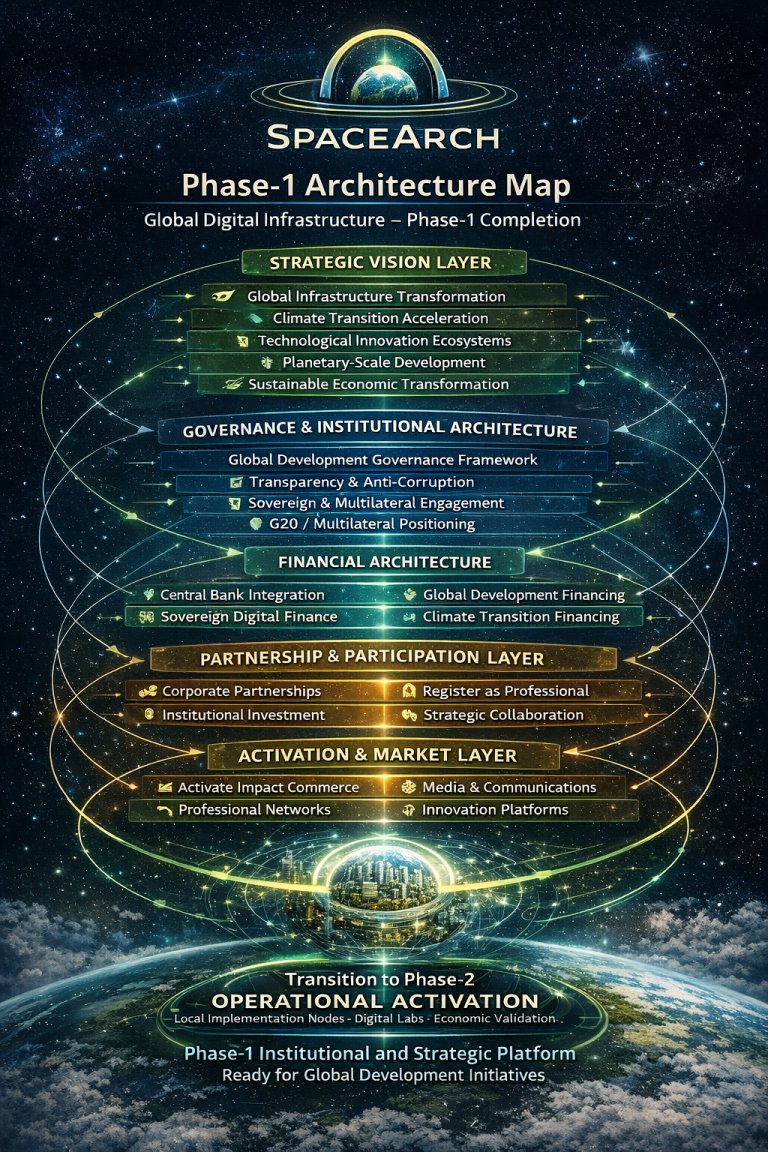
SpaceArch Solutions International
1. PURPOSE
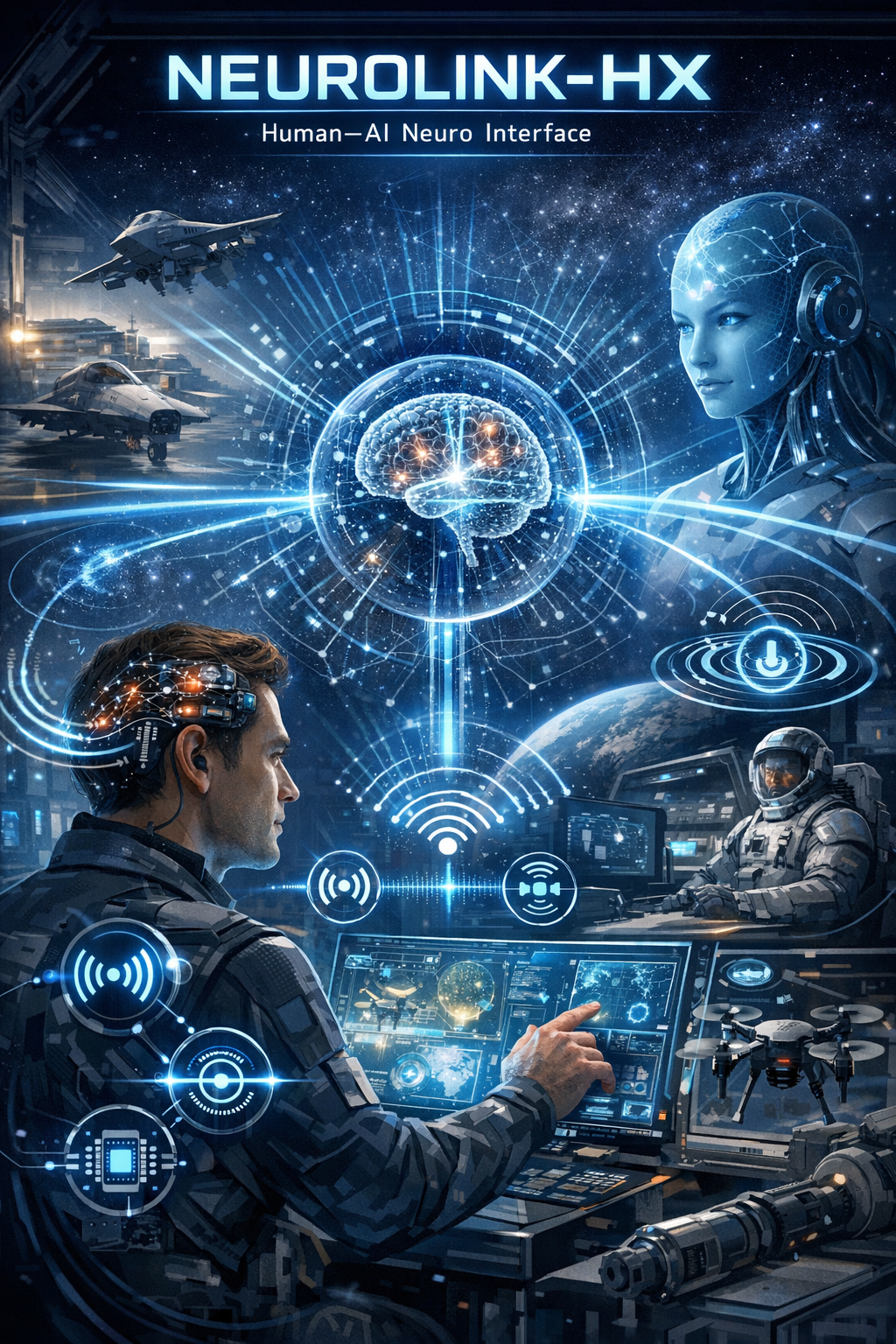
NeuroLink-HX defines a future-ready architectural framework for human–AI neural coupling, enabling bidirectional neuroelectric interaction between the human nervous system and AI systems through safe, certifiable, and scalable multimodal vectors.
The system is designed to evolve progressively toward an External Digital Neurocortex (EDN), without violating physiological safety, legal responsibility, or human cognitive sovereignty.
2. CORE CONCEPT (NON-SPECULATIVE)
NeuroLink-HX does not propose direct “AI control of the brain”.
It establishes a governed interface layer where:
- the human defines intention and objectives,
- the AI processes complexity and proposes actions,
- a biological safety kernel enforces hard physiological limits.
Principle:
Cognition is augmented, not overridden.
3. INTERFACE MODES (NEURAL COUPLING CLASSES)
| Mode | Description | Industrial Plausibility |
|---|---|---|
| Neuroelectric Coupling | Reading/modulating neural electrical activity (spikes, LFPs) | Near-term |
| Population-Level Modulation | Interaction with neural clusters, not individual neurons | Near-term |
| Intersynaptic Modulation | Synapse-level interaction (chemical/electrochemical) | Long-term / experimental |
| Cognitive Intent Interface | Extraction and feedback of intention, attention, workload | Near-term |
Strategic decision:
Industrial deployment prioritizes neuroelectric and population-level coupling, not deep synaptic intervention.
4. MULTIMODAL VECTOR ARCHITECTURE
NeuroLink-HX is vector-agnostic by design, enabling hybrid combinations:
| Vector | Role | Constraints |
|---|---|---|
| RF / UWB | Data uplink/downlink to neural hubs | Energy & interference limits |
| Electric fields | Low-resolution modulation | Spatial dispersion |
| Magnetic induction | Power transfer / modulation | Focality limits |
| Ultrasound | Focal stimulation / telemetry | Safety calibration |
| Optical (NIR) | High-bandwidth via guided paths | Limited penetration |
| Micro/Nano nodes (“neural dust”) | Local sensing/modulation | Biocompatibility |
Key insight:
There is no single universal vector.
The future interface is hierarchical and hybrid.
5. SYSTEM ARCHITECTURE (HIGH LEVEL)
Layer A — Neural Sensing
Acquisition of neural activity patterns (electrical, population-level).
Layer B — Neuro-Encoding / Decoding
AI models translating neural dynamics ↔ cognitive states.
Layer C — Multimodal Vector Layer
Physical transmission of data/energy via hybrid vectors.
Layer D — Biological Safety Kernel
Hard limits on:
- energy deposition
- frequency bands
- stimulation rate
- duration
Includes instant physiological abort and audit logs.
Layer E — Cognitive AI Copilot
Advisory AI that:
- compresses information,
- filters cognitive load,
- never enforces decisions.
6. KEY BOTTLENECKS (REAL CONSTRAINTS)
NeuroLink-HX explicitly addresses the true limiting factors:
- Signal-to-noise ratio in vivo
- Spatial targeting without tissue damage
- Energy delivery without heating
- Long-term stability and immune response
- Neural privacy and cyber-neurosecurity
These constraints define the realistic roadmap.
7. TECHNOLOGICAL ROADMAP
Phase 1 – Functional Interface
- Intent detection + sensory feedback
- Accessibility, rehabilitation, teleoperation
Phase 2 – Hybrid Hub Architecture
- Secure neural hub + local micro-nodes
- Increased bandwidth without RF overload
Phase 3 – Cognitive Augmentation
- Assisted working memory, attention, situational awareness
- AI strictly advisory
Phase 4 – External Digital Neurocortex (EDN)
- Human governs by intention
- AI manages complexity
- Deep intersynaptic coupling remains regulated/experimental
8. SAFETY & GOVERNANCE BY DESIGN
NeuroLink-HX embeds a Biological Safety Kernel, analogous to aerospace safety kernels:
- deterministic physiological limits
- vector-independent abort
- immutable audit trails
- consent and revocation mechanisms
This makes the system:
- certifiable,
- defensible,
- compatible with medical and defense regulation.
9. MARKET & STRATEGIC POSITIONING
Primary entry markets
- Medical & rehabilitation
- Secure teleoperation
- Defense situational awareness
- Industrial safety & productivity
Not positioned initially for
- consumer mass adoption,
- uncontrolled cognitive manipulation.
10. STRATEGIC CONCLUSION
NeuroLink-HX is not a “brain-AI fantasy”.
It is a governance architecture for neural interfaces, designed to scale safely as technology matures.
The future is not AI controlling humans.
It is humans governing complexity through AI,
via safe, auditable neural interfaces.
NEUROLINK-HX
Modelo Comercial y de Monetización
SpaceArch Solutions International
1. PRINCIPIO COMERCIAL FUNDAMENTAL
NeuroLink-HX no se comercializa como implante, nanodispositivo ni “brain hacking”.
Se comercializa como:
Arquitectura de gobernanza neuro-IA + software crítico + seguridad fisiológica,
con desarrollo modular ejecutado por SpaceArch Digital Labs.
El valor no está en el hardware, sino en:
- el marco arquitectónico,
- el safety kernel biológico,
- la traducción neuro-IA certificable,
- y la responsabilidad legal contenida.
2. PRODUCTO COMERCIAL REAL
2.1 NeuroLink-HX Core (propiedad SpaceArch)
- Arquitectura de interfaz neuro-IA
- Modelo de capas y autoridad
- Safety Kernel Biológico
- Stack conceptual + técnico
- Roadmap de certificación
👉 No se licencia completamente.
👉 Se usa como base obligatoria de desarrollo.
2.2 Servicios SpaceArch Digital Labs (contratable)
Unidad mínima comercial:
🟦 1 célula Digital Labs = USD 12.000 / mes
Cada célula incluye:
- arquitectura de software neuro-IA,
- modelos de codificación/decodificación,
- simulación y validación,
- documentación técnica y safety framing,
- soporte de patentes y trazabilidad.
2.3 Propiedad intelectual y royalties
- SpaceArch retiene el core IP.
- Partners (Big Tech / primes / institutos) desarrollan módulos derivados.
- SpaceArch conserva el 10% de royalty sobre patentes y productos derivados.
👉 Esto posiciona a SpaceArch como:
- socio estructural, no proveedor,
- con ingreso recurrente a largo plazo,
- sin bloquear escalado industrial.
3. MODELO POR VERTICALES
A. SALUD / MEDICINA
Casos de uso iniciales
- Rehabilitación neuromotora
- Interfaces para movilidad asistida
- Tratamiento de trastornos resistentes
- Comunicación asistida (locked-in, etc.)
Modelo de ingresos
- Contratos de I+D con hospitales / pharma / Big Tech Health
- Licencia del stack NeuroLink-HX Core
- Servicios Digital Labs continuos
- Royalties sobre dispositivos aprobados
Ventaja clave
- Regulación clara
- Validación clínica progresiva
- Alta legitimidad institucional
B. DEFENSA / SEGURIDAD
Casos de uso
- Situational awareness cognitiva
- Teleoperación segura
- Gestión de fatiga y carga cognitiva
- Comando multimodal humano-IA
Modelo de ingresos
- Contratos B2G / defensa
- Desarrollo conjunto con primes
- Servicios Digital Labs clasificados
- Royalty estructural sobre sistemas desplegados
Ventaja clave
- NeuroLink-HX no automatiza decisiones letales
- Compatible con doctrina militar y soberanía estatal
C. INDUSTRIA / INFRAESTRUCTURA CRÍTICA
Casos de uso
- Operación remota segura
- Control de sistemas complejos
- Prevención de errores humanos
- Seguridad laboral avanzada
Modelo de ingresos
- Licencias por operador / sistema
- Servicios de integración
- Entrenamiento certificado
- Soporte continuo
D. CONSUMO (NO PRIORITARIO)
- XR, productividad, gaming, etc.
- No es mercado inicial
- Solo después de madurez regulatoria
👉 Esto protege reputación y evita bloqueo político.
4. ESTRUCTURA DE PRICING (REALISTA)
| Elemento | Precio |
|---|---|
| Célula Digital Labs | USD 12.000 / mes |
| Múltiples células | Escalable |
| Licencia Core | Negociada por programa |
| Royalty IP | 10% |
| Entrenamiento / soporte | Add-on |
👉 El pricing está:
- por debajo del coste de error,
- muy por debajo del coste regulatorio,
- alineado con presupuestos reales de I+D.
5. MODELO DE ADOPCIÓN
- Contrato de 1 célula (3–6 meses)
→ framing, arquitectura, validación conceptual - Escalado a 2–5 células
→ desarrollo real + pilotos - Definición de patentes conjuntas
→ SpaceArch conserva 10% - Despliegue industrial
→ SpaceArch queda como socio estructural
6. BARRERAS DE ENTRADA
- Doctrina de gobernanza neuro-IA
- Safety Kernel Biológico
- Trazabilidad legal y ética
- Relación con reguladores
- Royalty incrustado en IP
👉 Esto hace que no puedan copiar sin volver a SpaceArch.
7. LECTURA PARA BIG TECH / GOBIERNO
El mensaje implícito es:
“Nosotros ponemos el marco correcto.
Ustedes ponen escala y músculo industrial.
El riesgo queda contenido.
El valor se comparte.”
Eso es exactamente lo que buscan cuando entran en neuro-IA.
8. CONCLUSIÓN COMERCIAL
NeuroLink-HX:
- no promete ciencia ficción,
- no bloquea reguladores,
- no amenaza soberanía humana,
- sí habilita un mercado de décadas.
SpaceArch queda:
- en el centro conceptual,
- con ingresos recurrentes,
- sin necesidad de fabricar hardware,
- con upside estructural vía royalties.
NEUROLINK-HX
Commercial One-Pager – Big Tech Edition
Human–AI Neural Interface Governance Architecture
SpaceArch Solutions International
1. EXECUTIVE SUMMARY
NeuroLink-HX is a governance-first architecture for future human–AI neural interfaces, designed to enable safe, certifiable, and scalable neuroelectric coupling without exposing Big Tech to regulatory, ethical, or reputational risk.
It is not a device and not a speculative implant.
It is the missing architectural layer that allows Big Tech to develop neural interface technologies without becoming the decision-maker over human cognition.
2. THE PROBLEM BIG TECH FACES (UNSPOKEN)
Big Tech can build:
- AI models
- hardware
- sensors
- chips
- networks
But cannot safely improvise:
- neural governance,
- physiological safety boundaries,
- legal responsibility models,
- long-term cognitive risk containment.
Current risk:
“If we move too fast, we become the company that crossed the line first.”
NeuroLink-HX exists to remove that risk.
3. THE SOLUTION
NeuroLink-HX provides a neutral, certifiable interface layer between:
- the human nervous system, and
- AI systems and platforms.
Key characteristics:
- AI is advisory, not authoritative
- Human intent is interpreted, not overridden
- A Biological Safety Kernel enforces hard limits
- All interaction is auditable and reversible
Principle:
Big Tech builds intelligence.
NeuroLink-HX governs the interface.
4. WHAT MAKES THIS DIFFERENT (AND SAFE)
| Typical Neural Tech Risk | NeuroLink-HX Approach |
|---|---|
| AI influencing cognition directly | AI never writes to neural control |
| Unclear legal responsibility | Human authority preserved |
| Hard to certify | Certifiable by design |
| Black-box interaction | Full traceability |
| Ethical controversy | Governance-first framing |
This architecture is compatible with medical, defense, and governmental regulation, enabling cross-sector scalability.
5. WHAT BIG TECH GETS
Strategic Value
- Entry into neuro-AI without reputational exposure
- A defensible long-term position in human–AI interfaces
- A framework regulators can accept early
- Avoidance of architectural dead-ends
Operational Value
- Clear separation of responsibilities
- Faster alignment across legal, ethics, and engineering
- Reduced internal friction between R&D and compliance
- Ability to scale across verticals (health, defense, industry)
6. ENGAGEMENT MODEL (LOW FRICTION)
SpaceArch Digital Labs operates as an external advanced architecture cell.
- Unit: 1 Digital Labs cell
- Cost: USD 12,000 / month
- Scope: architecture, safety framing, AI–neural translation models, simulation, IP support
Typical engagement:
- 1 cell → conceptual framing & validation
- 2–5 cells → active development & pilots
- Integration with Big Tech internal teams
7. INTELLECTUAL PROPERTY MODEL (ALIGNED, NOT EXTRACTIVE)
- Big Tech develops hardware, models, and products
- SpaceArch retains the NeuroLink-HX core architecture
- 10% royalty on patents/products derived from NeuroLink-HX
Why this works:
- No upfront IP capture
- Incentives aligned long-term
- SpaceArch remains architect, not competitor
- Big Tech retains industrial control
8. WHERE THIS GOES (MARKETS)
Immediate
- Health & rehabilitation
- Secure teleoperation
- Cognitive workload management
Mid-term
- Defense situational awareness
- Industrial safety & control
- High-reliability human–AI systems
Long-term
- External Digital Neurocortex (EDN)
- Cognitive supervision of complex systems
9. WHY SPACEARCH (AND NOT A CONSULTANCY)
SpaceArch is not selling hours.
SpaceArch provides:
- a closed conceptual framework,
- a governance model Big Tech cannot safely invent alone,
- and a bridge between technology, regulation, and doctrine.
This is architecture, not advice.
10. FINAL MESSAGE TO BIG TECH
NeuroLink-HX allows you to build the future of human–AI interaction
without being the first to cross irreversible lines.
It keeps:
- humans sovereign,
- AI powerful but bounded,
- and your company protected.