

Intelligent Harvesting Layer – Portsfish Strategic Port Network
Strategic Positioning
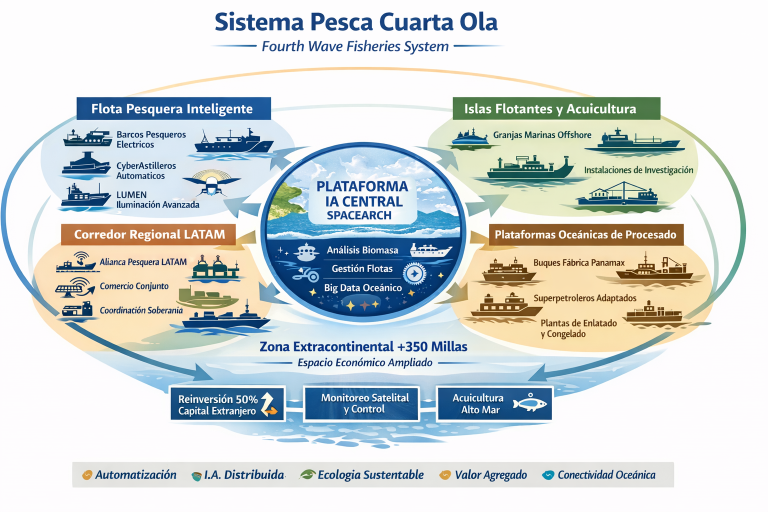
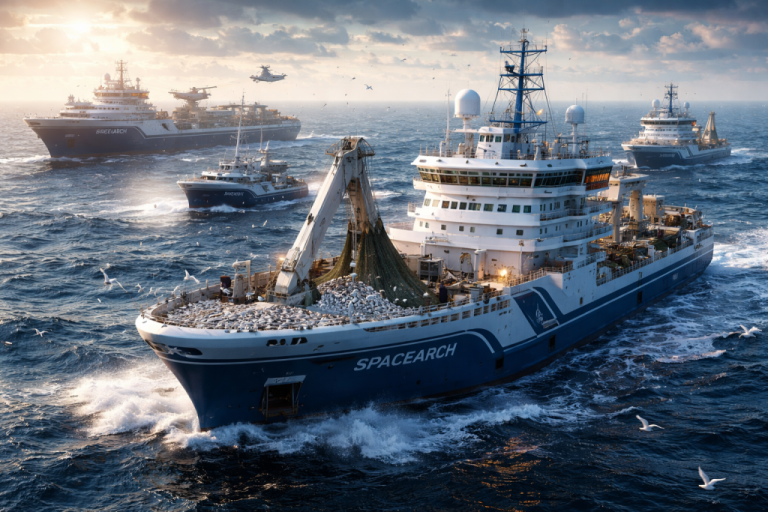
Within Portsfish.Agency, Smart Fishing Fleet Programs represent the transition from traditional fishing operations to digitally coordinated, efficiency-optimized, climate-aware harvesting systems.
This program transforms fleets into:
- Data-driven maritime assets
- Climate-adaptive production platforms
- Fuel-optimized operational units
- Traceability-compliant export contributors
- ESG-aligned marine resource operators
It integrates fleet operations into the broader Portsfish ecosystem:
Harvest → Processing → Cold Chain → Trade → Finance → Intelligence
1. Program Objectives
Smart Fishing Fleet Programs are designed around six primary pillars:
1️⃣ Operational Efficiency
- Route optimization
- Fuel consumption reduction
- Catch-per-unit-effort maximization
- Predictive maintenance
2️⃣ Resource Sustainability
- Real-time stock monitoring
- Bycatch reduction systems
- Dynamic quota management
- Climate-adaptive fishing zones
3️⃣ Financial Performance
- Fuel cost index tracking
- Margin-per-voyage analytics
- Vessel productivity ranking
- Risk-adjusted profitability modeling
4️⃣ Compliance & Traceability
- Satellite tracking integration
- Digital logbooks
- Blockchain-based catch certification
- Illegal, Unreported, and Unregulated (IUU) monitoring compliance
5️⃣ Safety & Risk Reduction
- Storm pattern integration
- Collision avoidance analytics
- Crew performance monitoring
- Insurance-linked data transparency
6️⃣ Fleet Portfolio Optimization
- Vessel performance benchmarking
- Decommissioning vs retrofit modeling
- Hybrid propulsion transition planning
- Asset lifecycle management
2. Digital Fleet Architecture
A. Onboard Technology Stack
Each vessel is equipped with:
- GPS & satellite communication systems
- Real-time sonar and biomass detection
- Fuel consumption sensors
- Engine vibration monitoring
- Electronic logbooks
- IoT-based storage temperature control
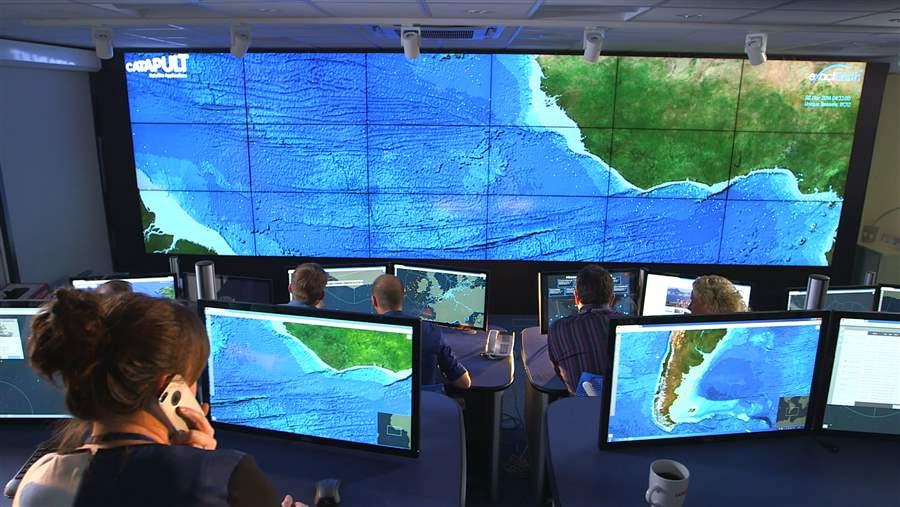
B. Fleet Intelligence Control Center (FICC)
Centralized monitoring hub connected to all vessels:
- Live vessel positioning
- Catch data per hour
- Fuel burn analytics
- Climate overlays
- Quota compliance tracker
- Risk alerts
3. Route & Catch Optimization Model
3.1 Fuel Optimization Algorithm
Optimal Route=f(Current,Weather,Stock Density,Fuel Cost)
AI dynamically recalculates routes based on:
- Ocean current patterns
- Sea surface temperature
- Historical catch density
- Fuel price fluctuations
Fuel reduction potential:
8%–18%
3.2 Catch Efficiency Model
CPUE=EffortCatch
Effort measured in:
- Hours at sea
- Trawl cycles
- Fuel consumption
Program target:
+10% CPUE improvement through analytics.
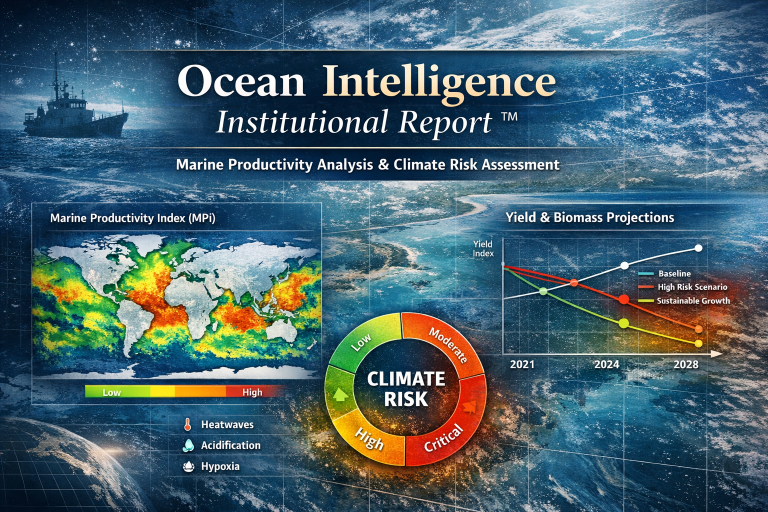
4. Climate & Ocean Intelligence Integration
Fleet programs integrate:
- Sea surface temperature anomaly detection
- Chlorophyll concentration maps
- Harmful algae bloom warnings
- Storm trajectory modeling
- Seasonal migration forecasts
This reduces:
- Unproductive voyages
- Stock depletion pressure
- Climate-related disruption
5. Financial Impact Model
5.1 Fuel Savings Example
Fleet size: 20 vessels
Average fuel cost/vessel/year: 1.2M USD
10% reduction → 120,000 USD per vessel
Network savings: 2.4M USD annually
5.2 Catch Yield Improvement
5% productivity increase
Annual fleet catch: 40,000 tons
Average price: 5.50 USD/kg
Incremental revenue ≈ 11M USD
5.3 Insurance Premium Reduction
Data transparency & safety compliance may reduce premiums by 5–12%.
6. ESG & Regulatory Alignment
Smart Fleet Programs enable:
- Full traceability from sea to port
- Reduced carbon intensity per ton landed
- Compliance with international marine protection zones
- Eligibility for sustainability-linked financing
Carbon tracking per voyage:CO2 per kg=CatchFuel Consumption×Emission Factor
7. Hybrid & Energy Transition Module
Fleet modernization roadmap includes:
- Hybrid propulsion retrofits
- LNG transitional fuels
- Electric auxiliary systems
- Solar-assisted onboard power
- Green hydrogen (long-term feasibility)
8. Multi-Port Fleet Synchronization
Within the Strategic Port Network:
- Vessels assigned to ports based on demand forecasts
- Processing plant capacity matched with landing schedule
- Export contracts synchronized with catch timing
- Cold chain congestion minimized
9. Risk Mitigation Framework
Reduces:
- Fuel volatility exposure
- Regulatory non-compliance risk
- Overfishing penalties
- Market price timing risk
- Operational downtime
10. Governance Model
Fleet programs structured under:
- Centralized digital oversight
- Performance ranking matrix
- Incentive-based captain compensation
- Standardized safety protocols
- Real-time compliance reporting
11. Integration with Portsfish Systems
Smart Fleet Programs connect to:
- Processing Plant Optimization
- Multi-Port Efficiency Integration Model
- Supply-Demand Analytics
- Price Index & Forecasting
- Climate & Fishing Impact Intelligence
Creating a fully integrated maritime intelligence ecosystem.
Strategic Outcome
Smart Fishing Fleet Programs convert traditional fleets into:
- Intelligent marine harvesting platforms
- Fuel-efficient industrial assets
- Climate-aware operators
- Financially optimized production nodes
- ESG-ready investment components
Positioning Statement for Menu
Smart Fishing Fleet Programs within Portsfish integrate advanced analytics, climate intelligence, and operational optimization to transform fishing fleets into data-driven, fuel-efficient, sustainable, and investment-grade maritime assets aligned with the Strategic Port Network.
SMART FISHING FLEET PROGRAMS
Integrated Analytical & Technical Framework
Portsfish Strategic Port Network – Intelligent Harvesting Architecture
I. SYSTEM OVERVIEW
The Smart Fishing Fleet Programs (SFFP) represent a fully integrated technical architecture designed to convert fishing fleets into:
- Data-optimized marine production systems
- Fuel-efficient operational networks
- Climate-responsive harvesting platforms
- Financially benchmarked maritime assets
- ESG-aligned investment-grade fleets
The model integrates:
Ocean Intelligence + Vessel Telemetry + AI Decision Engine + Financial Analytics + Port Integration
II. ARCHITECTURE STRUCTURE
1️⃣ Hardware Layer (Onboard Systems)
Each vessel is equipped with:
- GPS & AIS tracking
- Satellite communication module
- Sonar & biomass detection systems
- Engine performance sensors
- Fuel flow meters
- Storage temperature IoT sensors
- Electronic catch logbook
These systems generate continuous real-time data streams.
2️⃣ Data Integration Layer
Data is transmitted to the Fleet Intelligence Control Center (FICC) where it is:
- Normalized
- Time-stamped
- Georeferenced
- Integrated with oceanographic databases
External inputs include:
- Sea surface temperature (SST)
- Chlorophyll density
- Current velocity maps
- Weather forecasts
- Quota regulation databases
- Global price feeds
3️⃣ AI Decision Engine
The core analytical model combines:
A. Route Optimization Function
RO=f(SST,Current,Stock Density,Fuel Cost,Weather Risk)
Objective:
Minimize fuel consumption while maximizing catch probability.
B. Catch Probability Index (CPI)
CPI=w1×Biomass+w2×SST_Optimality+w3×Historical Yield+w4×Seasonal Factor
CPI identifies highest probability fishing zones dynamically.
C. Catch Per Unit Effort (CPUE)
CPUE=Fuel Consumption+Hours at SeaTotal Catch
Target improvement: +8–15%
III. FUEL EFFICIENCY MODEL
Fuel is typically 30–45% of voyage OPEX.
Optimization variables:
- Speed reduction curve
- Route curvature analysis
- Current exploitation
- Idle time minimization
Fuel consumption formula:Fuel Burn∝Speed3
A 10% speed reduction may reduce fuel consumption by ~27%.
Projected network savings:
8–18% annual reduction.
IV. FINANCIAL ANALYTICS FRAMEWORK
Voyage-Level Profitability Model
Voyage Margin=Revenue−(Fuel+Labor+Maintenance+Port Fees)
Revenue:Catch Volume×Market Price
System integrates live price feeds to determine optimal landing port.
Fleet-Level EBITDA
EBITDAFleet=i=1∑n(Voyage Margini)−Centralized OPEX
Fleet optimization increases EBITDA margin by 3–7%.
V. CLIMATE INTELLIGENCE INTEGRATION
Smart fleets incorporate:
- SST anomaly detection
- El Niño / La Niña modeling
- Storm trajectory analysis
- Ocean acidification mapping
- Harmful algae bloom detection
Risk score per voyage:Risk Index=f(Storm,SST Anomaly,Regulatory Zone,Fuel Exposure)
High-risk routes are automatically deprioritized.
VI. ESG & CARBON ACCOUNTING
Carbon intensity per kg landed:CO2/kg=Catch VolumeFuel Used×Emission Factor
Fleet benchmarking allows:
- Carbon reduction tracking
- Sustainability-linked loan eligibility
- Blue bond financing
- Insurance premium reductions
VII. MULTI-PORT SYNCHRONIZATION
Fleet operations are synchronized with:
- Processing plant capacity
- Cold storage availability
- Export vessel schedules
- Market demand forecasts
Landing port decision function:Optimal Port=f(Price,Distance,Processing Capacity,Tariff,Currency)
VIII. DIGITAL TWIN NETWORK
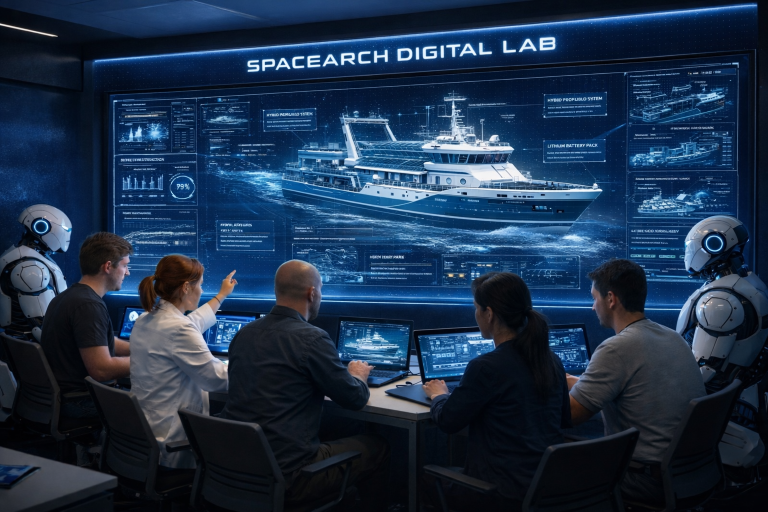
Each vessel has a digital twin simulation model:
Simulates:
- Fuel shock scenarios
- Catch volatility
- Storm rerouting
- Regulatory zone closures
- Market price fluctuations
Monte Carlo simulation applied to:
- Voyage ROI
- Fleet margin volatility
- Insurance risk modeling
IX. FLEET MODERNIZATION STRATEGY
Retrofit Evaluation Model
ROIRetrofit=Retrofit CAPEXFuel Savings+Maintenance Reduction
Hybrid propulsion CAPEX recovered in 4–6 years in fuel-heavy fleets.
X. GOVERNANCE & INCENTIVE MODEL
Performance-based captain incentive:Incentive=Base+α(CPUE Improvement)+β(Fuel Reduction)
Aligns operational behavior with network optimization goals.
XI. RISK MITIGATION STRUCTURE
Program reduces:
- Fuel price volatility
- Overfishing penalties
- Regulatory non-compliance
- Market timing inefficiency
- Operational downtime
Portfolio effect lowers overall fleet beta.
XII. INTEGRATION WITH PORTSFISH ECOSYSTEM
Smart Fishing Fleet Programs connect to:
- Processing Plant Optimization
- Multi-Port Processing Integration
- Supply–Demand Analytics
- Price Forecasting Models
- Climate & Fishing Impact Intelligence
- Blue Maritime Infrastructure Fund
Creating a fully closed-loop maritime production-finance-intelligence system.
XIII. STRATEGIC OUTCOME
The Smart Fishing Fleet Programs transform fleets into:
- Intelligent harvesting platforms
- Data-driven industrial assets
- Climate-aware operators
- Fuel-optimized maritime systems
- ESG-aligned investment vehicles
They reposition fishing from traditional extraction to:
Precision Marine Production Infrastructure