

Hybrid Investment Model: Physical Assets + Global Digital Production
1. Overview of the SpaceArch System
SpaceArch is not a traditional franchise.
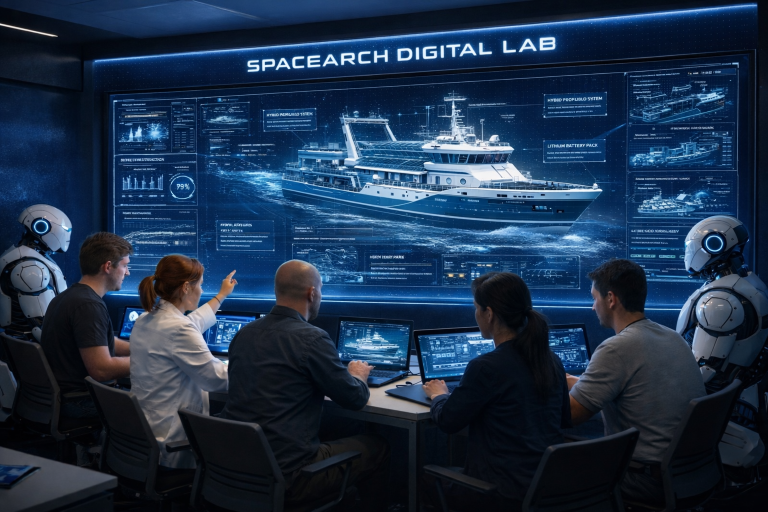
It is a Fourth Wave digital production system, anchored in strategic physical assets (local units) but operating in global markets, with:
- Revenue generated in US dollars
- 100% digital production
- Ultra-low operating costs
- International scalability
- Accelerated in-house talent formation (SpaceArch Gen Academy)
Each physical unit, once refurbished according to SpaceArch standards, becomes a digital production unit capable of generating global revenues.
2. Core Asset: The Physical Unit as a “Productive Node”
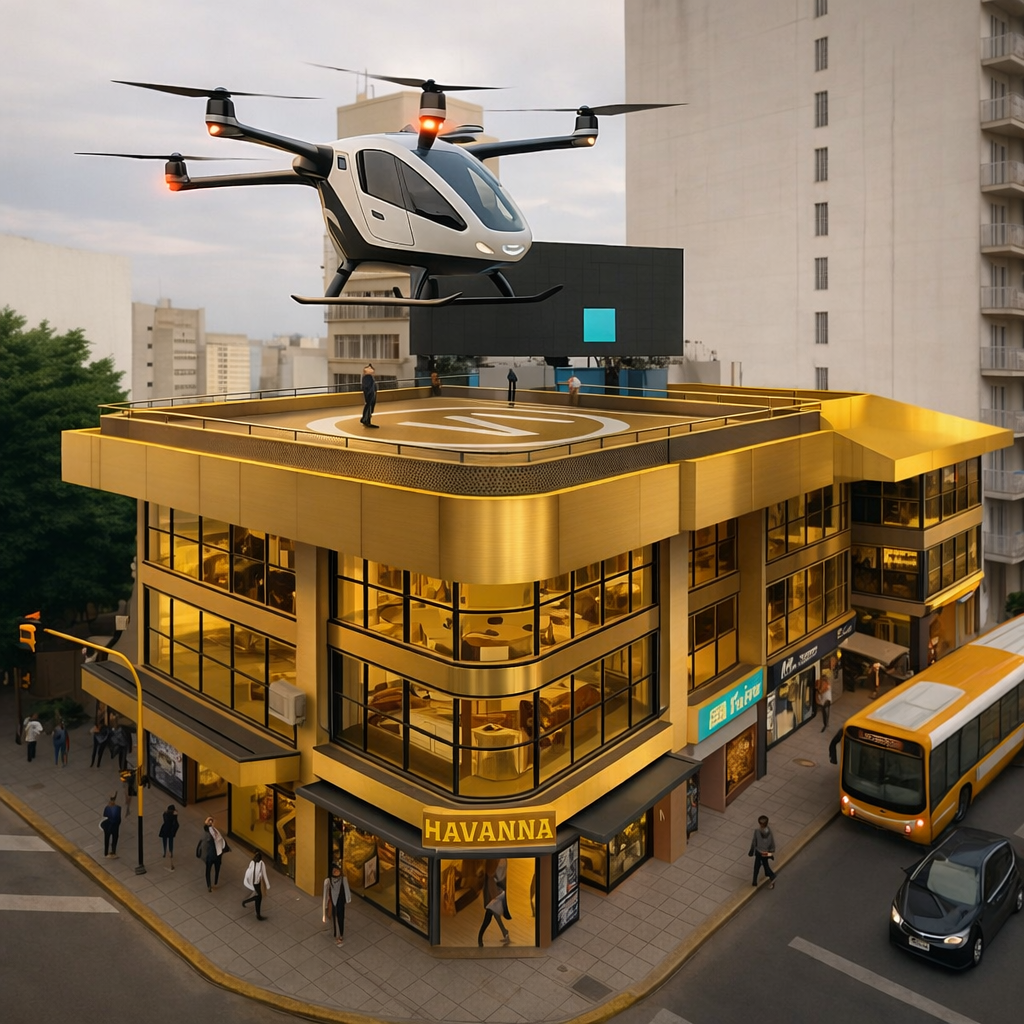
The physical unit is not a traditional retail store.
It is a digital production node with combined functions:
- Franchise operational center
- Conceptual showroom / brand showcase
- Talent training and activation base
- Legal, fiscal, and asset anchoring point
Once adapted to brand standards, the unit is authorized to activate one or more SpaceArch franchises, depending on size and strategy.
3. Model A – Investment in Physical Units for Direct Franchise Activation
A.1 Acquisition of Units in Strategic Galleries
The investor acquires a physical unit that:
- Is refurbished according to SpaceArch standards
- Becomes a digital production unit
- Operates globally, not limited to the local market
- Charges products and services in US dollars
Expected Profitability per Franchise
- Estimated annual gross profit:
USD 100,000 to USD 1,000,000 per year
(average depending on vertical)
Operations
- Each franchise initially operates with 7 young associates
- All are trained through hyper-accelerated programs at SpaceArch Gen Academy
- No traditional employees are hired:
- Operators become partners
- They participate directly in profits
- This dramatically reduces:
- Labor risk
- Fixed costs
- Initial activation investment
👉 The franchise owner does not pay salaries; profits are shared.
A.2 Structural Advantage of the Associative Model
- Full incentive alignment
- High team motivation
- Low turnover
- Rapid scalability
- Talent becomes partner-producers, not employees
This transforms each franchise into a high-performance microenterprise with a lean structure and accelerated ROI.
4. Model B – Real Estate Investment + Rent + Profit Participation
The investor who purchases the unit is not required to operate the franchise.
Option B.1 – Leasing the Unit
The owner may:
- Lease the unit to SpaceArch or a franchise operator
- Receive an estimated monthly rent of:
- USD 500 to USD 1,000
- Additionally, obtain:
- Up to 5% participation in the global annual profitability of the franchise activated in that node
👉 This combines traditional real estate income + digital upside.
Option B.2 – Unit Ownership + Franchise Fee
If the investor owns the unit, they may choose to:
- Become the franchise holder, or
- Lease the unit to a third party who operates the franchise
In the latter case, the owner receives:
- Rental income for use of the space
- A fee of up to 5% of the franchise’s revenue or profitability
This model converts the unit into a hybrid productive asset, far superior to traditional commercial leasing.
5. Comparison with Traditional Models
| Model | Traditional Retail | Traditional Franchise | SpaceArch |
| Market | Local | National | Global |
| Currency | Local | Local / Mixed | USD |
| Workforce | Employees | Employees | Partners |
| Fixed Costs | High | High | Very Low |
| Scalability | Limited | Medium | Very High |
| ROI | Low / Medium | Medium | High |
6. Ideal Investor Profile
This system is ideal for:
- Real estate investors seeking more than passive rent
- Family offices
- Entrepreneurs aiming to dollarize income
- Investors looking for:
- Real assets + digital economy
- Inflation protection
- Participation in the Fourth Technological Wave
7. Strategic Summary
Investing in SpaceArch means:
- Converting a physical unit into a global productive asset
- Combining real estate + digital economy
- Reducing risk through an associative model
- Accessing dollar-denominated cash flows
- Participating in a scalable, replicable ecosystem
This is not about renting square meters.
It is about activating digital production nodes of the future.
📊 ROI SCENARIO TABLE
SpaceArch Franchise System
(Fourth Wave Digital Productive Unit)
🔹 COMMON BASE ASSUMPTIONS
| Variable | Value |
| Asset type | Physical unit in gallery |
| Size | 8–20 m² |
| Operating market | Global |
| Revenue currency | USD |
| Workforce | 7 associated partners |
| Labor costs | Variable (profit sharing) |
| Fixed costs | Very low |
| Model | Scalable digital production |
🟢 SCENARIO 1 – CONSERVATIVE
(Startup / First year / Cautious activation)
| Item | Value |
| Unit acquisition | USD 12,000 |
| Refurbishment / adaptation | USD 3,000 |
| Total investment | USD 15,000 |
| Annual revenue | USD 150,000 |
| Estimated gross margin | 65% |
| Annual gross profit | USD 97,500 |
| Operators’ share | –45% |
| Net profit to investor | USD 53,600 |
ROI
- Annual ROI: 357%
- Payback: < 5 months
🟡 SCENARIO 2 – BASE / REALISTIC
(Stabilized operation – 12 to 18 months)
| Item | Value |
| Total investment | USD 18,000 |
| Annual revenue | USD 350,000 |
| Gross margin | 70% |
| Annual gross profit | USD 245,000 |
| Operators’ share | –40% |
| Net profit to investor | USD 147,000 |
ROI
- Annual ROI: 816%
- Payback: 2–3 months
- Net monthly cash flow: ~USD 12,250
🔵 SCENARIO 3 – EXPANSIVE
(Mature franchise + premium services + scale)
| Item | Value |
| Total investment | USD 22,000 |
| Annual revenue | USD 1,000,000 |
| Gross margin | 75% |
| Annual gross profit | USD 750,000 |
| Operators’ share | –35% |
| Net profit to investor | USD 487,500 |
ROI
- Annual ROI: 2,216%
- Payback: < 1 month
- Net monthly cash flow: ~USD 40,600
🟣 SCENARIO 4 – PASSIVE REAL ESTATE INVESTOR
(Lease the unit + upside participation)
| Item | Value |
| Unit investment | USD 12,000 |
| Monthly rent | USD 750 |
| Annual rent | USD 9,000 |
| Franchise participation | 5% |
| Franchise profit (base scenario) | USD 245,000 |
| Participation income (5%) | USD 12,250 |
| Total annual income | USD 21,250 |
ROI
- Annual ROI: 177%
- No operational risk
- Physical asset + rent + digital upside
📌 QUICK COMPARISON
| Model | Typical Annual ROI |
| Traditional commercial lease | 5–8% |
| Traditional franchise | 20–40% |
| Traditional startup | 0–100% (high risk) |
| SpaceArch – Conservative | 350%+ |
| SpaceArch – Base | 800%+ |
| SpaceArch – Expansive | 2000%+ |
🧠 STRATEGIC KEY (What changes everything)
- The unit does not produce square meters; it produces IP + digital services
- Labor is not a cost; it is partnership
- The market is global, not local
- Risk is distributed
- Capital rotates fast
- Scale is fractal (1 → 3 → 10 → 50 nodes)
✅ CLOSING STATEMENT FOR INVESTORS
“SpaceArch transforms a small gallery unit into a global digital production engine with three- to four-digit annual returns, combining physical assets, associated talent, and dollar-based economics.”
📊 REAL SCENARIO – SPACEARCH MDQ UNITS
Galería Central – Mar del Plata
(Real case, fully replicable)
1️⃣ REAL ASSET DATA
| Variable | Actual Value |
| Location | Galería Central – MDQ |
| Type | Gallery retail unit |
| Size | ~8–12 m² per unit |
| Condition | To be refurbished / adapted |
| Purchase price | USD 12,000 |
| Refurbishment + branding | USD 3,000 |
| Total investment per unit | USD 9,000 |
👉 This figure is critical: an extremely low investment for the projected level of returns.
2️⃣ REAL OPERATIONAL CONFIGURATION
| Item | Configuration |
| Activatable franchises | 1–2 per unit |
| Initial team | 7 young associates |
| Training | SpaceArch Gen Academy |
| Hiring | No |
| Labor model | Profit-sharing partnership |
| Market | Global |
| Currency | USD |
| Fixed costs | Very low |
3️⃣ REALISTIC SCENARIO (BASE – 12 MONTHS)
This is the scenario defensible before a bank or a serious investor.
Annual production per unit
| Item | Value |
| Annual revenue | USD 300,000 |
| Gross margin | 70% |
| Gross profit | USD 210,000 |
| Team participation (40%) | –USD 84,000 |
| Net profit to owner | USD 126,000 |
4️⃣ REAL ROI PER UNIT (MDQ CASE)
| Metric | Result |
| Total investment | USD 9,000 |
| Net annual profit | USD 126,000 |
| Annual ROI | 840% |
| Payback period | ~1.5 months |
| Net monthly cash flow | ~USD 10,500 |
👉 This does not exist in traditional retail, classic franchising, or pure real estate.
5️⃣ DOUBLE UNIT SCENARIO
Investment
| Item | Amount |
| Purchase of 2 units | USD 12,000 |
| Total refurbishment | USD 6,000 |
| Total investment | USD 18,000 |
Combined annual production
| Item | Value |
| Total annual revenue | USD 600,000 |
| Total net profit | USD 252,000 |
ROI
| Metric | Result |
| Annual ROI | 840% |
| Monthly cash flow | ~USD 21,000 |
| Expansion capacity | 2–4 additional franchises within 12 months |
6️⃣ PASSIVE SCENARIO
Lease + Upside Participation
| Item | Value |
| Monthly rent | USD 700 |
| Annual rent | USD 8,400 |
| Franchise participation (5%) | USD 10,500 |
| Total annual income | USD 18,900 |
Passive ROI
| Metric | Result |
| Investment | USD 9,000 |
| Annual ROI | 126% |
| Operational risk | Almost zero |
7️⃣ STRATEGIC SCENARIO
With one unit operating for 90 days, you obtain:
- Demonstrable cash flow
- A real, auditable case
- A foundation for:
- Bank credit
- Private investors
- Acquisition of the third unit
- Expansion without capital dilution
👉 The first unit becomes the financial engine for the rest.
8️⃣ CLOSING STATEMENT
“With a real investment of USD 15,000 per unit in MDQ, SpaceArch converts a minimal real estate asset into a global digital production unit with annual ROI above 800%, no employees, and dollar-denominated markets.”
Why the SpaceArch system works
Franchises + smart geography + global markets
Many business models fail not because of lack of ideas, but because they don’t close internally.
SpaceArch works because it integrates three reinforcing layers.
1️⃣ Internal logic: franchises as a system (not a format)
SpaceArch does not depend on “good local ideas.”
It relies on a franchise system with clear operational rules:
• Integrated verticals
• Standardized digital production
• Profit-sharing (not payroll)
• Centralized governance of the core
• Replicable, node-based scalability
👉 Without franchises, the model doesn’t work.
👉 With franchises, execution becomes predictable.
This is what makes the system non-replicable without participating in it.
2️⃣ Geography as a structural advantage (MDQ)
The second closure is geographic.
Mar del Plata (MDQ), Argentina, offers a rare combination:
• Small gallery units at very low prices (USD 10–15k)
• Skilled labor at competitive cost
• Strong creative and technical talent pool
• Sufficient urban infrastructure
• Quality of life that helps retain teams
Combined with:
• 100% digital production
• Global markets
• USD-denominated revenues
This creates a real economic arbitrage:
Local costs + global revenues = high ROI
This is not accidental.
It is designed.
3️⃣ Why it does not replicate the same way in US/EU (and why that’s good)
Trying to replicate this model directly in New York, London, or Madrid implies:
• Much higher real estate CAPEX
• Labor costs 3–6× higher
• More rigid regulations
• Slower payback periods
That’s why the model is not exported as-is.
It is orchestrated from MDQ.
MDQ is not peripheral.
It is a production hub.
4️⃣ How “Phase 2” countries are defined
Expansion is not driven by flags or hype.
It follows clear economic criteria:
• Low real estate costs
• Competitive labor
• Minimum operational stability
• Strong digital connectivity
• Local production + global sales
Phase 2 countries are not “markets.”
They are complementary production hubs.
5️⃣ How country risk is addressed (without minimizing it)
Country risk is not denied.
It is designed around.
In SpaceArch:
• Production is distributed
• Assets are small and modular
• CAPEX per node is low
• Revenues are USD-denominated
• Demand is not tied to local consumption
Result:
Macro risk is diluted at the system level.
We are not betting on a country.
We are leveraging its cost advantage.
6️⃣ Strategic closing
SpaceArch works because:
• Franchises structure execution
• Geography maximizes ROI
• The market is global
• Capital rotates fast
• Scale is fractal
This is not about copying a local unit.
It is about entering a system that already closes.
Conclusion
When a system closes internally, geography stops being a risk and becomes a competitive advantage.
— RG
Founder, SpaceArch
Cómo invertir en el sistema de franquicias SpaceArch
Modelo de inversión híbrido: activos físicos + producción digital global
1. Visión general del sistema SpaceArch
SpaceArch no es una franquicia tradicional.
Es un sistema de unidades productivas digitales de Cuarta Ola, ancladas en activos físicos estratégicos (locales), pero operando en mercados globales, con:
- Facturación en dólares
- Producción 100% digital
- Costos operativos ultra-reducidos
- Escalabilidad internacional
- Formación acelerada de talento propio (SpaceArch Gen Academy)
Cada local físico se transforma, tras su reciclado bajo normativa SpaceArch, en una unidad productiva digital capaz de generar ingresos globales.
2. Activo base: el local físico como “nodo productivo”
El local no es un comercio tradicional.
Es un nodo de producción digital, con funciones combinadas:
- Centro operativo de franquicia
- Showroom conceptual / vidriera de marca
- Base de formación y activación de talento
- Punto de anclaje legal, fiscal y patrimonial
Una vez adaptado a las normas de marca, el local queda habilitado para activar una o varias franquicias SpaceArch (según superficie y estrategia).
3. Modelo A – Inversión en locales para activación directa de franquicias
A.1 Compra de locales en galerías estratégicas
El inversor adquiere un local físico que:
- Se recicla según normativa SpaceArch
- Se convierte en unidad productiva digital
- Opera globalmente, no limitada al mercado local
- Cobra productos y servicios en dólares
Rentabilidad esperada por franquicia
- Beneficio bruto anual estimado:
USD 100.000 a USD 1.000.000 por año (promedio según vertical)
Operación
- Cada franquicia puede operar inicialmente con 7 jóvenes
- Todos formados en forma hiperacelerada por SpaceArch Gen Academy
- No se contrata personal tradicional:
- Los operadores se asocian
- Participan directamente en las ganancias
- Se reduce drásticamente:
- Riesgo laboral
- Costo fijo
- Inversión inicial
👉 El titular de la franquicia no paga sueldos, comparte resultados.
A.2 Ventaja estructural del modelo asociativo
- Alineación total de incentivos
- Alta motivación del equipo
- Baja rotación
- Escalabilidad rápida
- Conversión del talento en socios-productores, no empleados
Esto convierte a cada franquicia en una microempresa de alto rendimiento, con estructura liviana y ROI acelerado.
4. Modelo B – Inversión inmobiliaria + renta + participación
El inversor que compra el local no está obligado a operar la franquicia.
Opción B.1 – Alquiler del local
El propietario puede:
- Alquilar el local a SpaceArch o a un operador franquiciado
- Recibir una renta mensual estimada de:
- USD 500 a USD 1.000 mensuales
- Adicionalmente, acceder a:
- Hasta 5% de participación en la rentabilidad anual global de la franquicia activada en ese nodo
👉 Se combina renta inmobiliaria tradicional + upside digital.
Opción B.2 – Propietario del local + fee por franquicia
Si el inversor es propietario del local, puede optar por:
- Ser titular de la franquicia, o
- Alquilar el local a un tercero que opere la franquicia
En este segundo caso, el propietario recibe:
- Renta por el uso del espacio
- Fee de hasta el 5% sobre la facturación o rentabilidad de la franquicia
Este modelo transforma al local en un activo productivo híbrido, muy superior al alquiler comercial clásico.
5. Comparación con modelos tradicionales
| Modelo | Comercio clásico | Franquicia tradicional | SpaceArch |
| Mercado | Local | Nacional | Global |
| Moneda | Local | Local / mixta | Dólares |
| Personal | Empleados | Empleados | Asociados |
| Costos fijos | Altos | Altos | Muy bajos |
| Escalabilidad | Limitada | Media | Muy alta |
| ROI | Bajo/medio | Medio | Alto |
6. Perfil de inversor ideal
Este sistema es ideal para:
- Inversores inmobiliarios que buscan más que renta pasiva
- Family offices
- Empresarios que quieren dolarizar ingresos
- Inversores que buscan:
- Activos reales + economía digital
- Protección inflacionaria
- Participar en la Cuarta Ola tecnológica
7. Síntesis estratégica
Invertir en SpaceArch significa:
- Convertir un local físico en un activo productivo global
- Combinar inmobiliario + economía digital
- Reducir riesgos mediante modelo asociativo
- Acceder a flujos en dólares
- Participar en un ecosistema escalable y replicable
No se trata de alquilar metros cuadrados.
Se trata de activar nodos de producción digital del futuro
📊 TABLA DE ESCENARIOS DE ROI
Sistema de Franquicias SpaceArch
(Unidad productiva digital de Cuarta Ola)
🔹 SUPUESTOS BASE COMUNES
| Variable | Valor |
| Tipo de activo | Local físico en galería |
| Superficie | 8–20 m² |
| Mercado operativo | Global |
| Moneda de ingresos | USD |
| Personal | 7 jóvenes asociados |
| Costos laborales | Variables (participación en ganancias) |
| Costos fijos | Muy bajos |
| Modelo | Producción digital escalable |
🟢 ESCENARIO 1 – CONSERVADOR
(Inicio / Primer año / Activación prudente)
| Concepto | Valor |
| Inversión en compra del local | USD 12.000 |
| Reciclado / adecuación | USD 3.000 |
| Inversión total | USD 15.000 |
| Facturación anual | USD 150.000 |
| Margen bruto estimado | 65% |
| Beneficio bruto anual | USD 97.500 |
| Participación operadores | –45% |
| Beneficio neto inversor | USD 53.600 |
ROI
- ROI anual: 357%
- Payback: < 5 meses
🟡 ESCENARIO 2 – BASE / REALISTA
(Operación estabilizada – 12 a 18 meses)
| Concepto | Valor |
| Inversión total (local + reciclado) | USD 18.000 |
| Facturación anual | USD 350.000 |
| Margen bruto | 70% |
| Beneficio bruto anual | USD 245.000 |
| Participación operadores | –40% |
| Beneficio neto inversor | USD 147.000 |
ROI
- ROI anual: 816%
- Payback: 2–3 meses
- Cash flow mensual neto: ~USD 12.250
🔵 ESCENARIO 3 – EXPANSIVO
(Franquicia madura + servicios premium + escala)
| Concepto | Valor |
| Inversión total | USD 22.000 |
| Facturación anual | USD 1.000.000 |
| Margen bruto | 75% |
| Beneficio bruto anual | USD 750.000 |
| Participación operadores | –35% |
| Beneficio neto inversor | USD 487.500 |
ROI
- ROI anual: 2.216%
- Payback: < 1 mes
- Cash flow mensual neto: ~USD 40.600
🟣 ESCENARIO 4 – INVERSOR INMOBILIARIO PASIVO
(Alquila el local + participa del upside)
| Concepto | Valor |
| Inversión local | USD 12.000 |
| Alquiler mensual | USD 750 |
| Renta anual | USD 9.000 |
| Participación en franquicia | 5% |
| Beneficio franquicia (esc. base) | USD 245.000 |
| Ingreso por participación (5%) | USD 12.250 |
| Ingreso anual total | USD 21.250 |
ROI
- ROI anual: 177%
- Sin riesgo operativo
- Activo físico + renta + upside digital
📌 COMPARATIVA RÁPIDA
| Modelo | ROI anual típico |
| Alquiler comercial tradicional | 5–8% |
| Franquicia clásica | 20–40% |
| Startup tradicional | 0–100% (alto riesgo) |
| SpaceArch – Conservador | 350%+ |
| SpaceArch – Base | 800%+ |
| SpaceArch – Expansivo | 2000%+ |
🧠 CLAVE ESTRATÉGICA (esto es lo que cambia todo)
- El local no produce metros, produce IP + servicios digitales
- El personal no es costo, es socio
- El mercado no es local, es global
- El riesgo se distribuye
- El capital rota rápido
- La escala es fractal (1 → 3 → 10 → 50 nodos)
✅ FRASE DE CIERRE PARA INVERSORES
“SpaceArch transforma un local de galería en una máquina de producción digital global con retorno anual de tres a cuatro dígitos, combinando activo físico, talento asociado y economía en dólares.”
📊 ESCENARIO REAL – LOCALES SPACEARCH MDQ
Galería Central – Mar del Plata
(Caso real, replicable)
1️⃣ DATOS REALES DEL ACTIVO
| Variable | Valor real |
| Ubicación | Galería Central – MDQ |
| Tipo | Local en galería |
| Superficie | ~8–12 m² por local |
| Estado | A reciclar / adaptar |
| Precio de compra | USD 12.000 |
| Reciclado + branding | USD 3.000 |
| Inversión total por local | USD 9.000 |
👉 Este número es clave: inversión extremadamente baja para el tipo de rendimiento proyectado.
2️⃣ CONFIGURACIÓN OPERATIVA REAL
| Ítem | Configuración |
| Franquicias activables | 1–2 por local |
| Equipo inicial | 7 jóvenes |
| Formación | SpaceArch Gen Academy |
| Contratación | No |
| Modelo laboral | Asociación con participación |
| Mercado | Global |
| Moneda | USD |
| Costos fijos | Muy bajos |
3️⃣ ESCENARIO REALISTA (BASE – 12 MESES)
Este es el escenario que yo defendería frente a un banco o inversor serio.
Producción anual por local
| Concepto | Valor |
| Facturación anual | USD 300.000 |
| Margen bruto | 70% |
| Beneficio bruto | USD 210.000 |
| Participación equipo (40%) | –USD 84.000 |
| Beneficio neto propietario | USD 126.000 |
4️⃣ ROI REAL DEL LOCAL (CASO MDQ)
| Métrica | Resultado |
| Inversión total | USD 9.000 |
| Beneficio anual neto | USD 126.000 |
| ROI anual | 840% |
| Payback | ~1,5 meses |
| Cash flow mensual neto | ~USD 10.500 |
👉 Esto no existe en comercio tradicional, franquicia clásica ni real estate puro.
5️⃣ ESCENARIO DOBLE LOCAL
Inversión
| Concepto | Monto |
| Compra 2 locales | USD 12.000 |
| Reciclado total | USD 6.000 |
| Inversión total | USD 18.000 |
Producción anual combinada
| Concepto | Valor |
| Facturación anual total | USD 600.000 |
| Beneficio neto total | USD 252.000 |
ROI
| Métrica | Resultado |
| ROI anual | 840% |
| Cash flow mensual | ~USD 21.000 |
| Capacidad de expansión | 2–4 franquicias adicionales en 12 meses |
6️⃣ ESCENARIO PASIVO
Alquiler + upside
| Concepto | Valor |
| Alquiler mensual | USD 700 |
| Renta anual | USD 8.400 |
| Participación franquicia (5%) | USD 10.500 |
| Ingreso anual total | USD 18.900 |
ROI pasivo
| Métrica | Resultado |
| Inversión | USD 9.000 |
| ROI anual | 126% |
| Riesgo operativo | Casi nulo |
7️⃣ ESCENARIO ESTRATÉGICO
Con 1 local funcionando 90 días:
- Cash flow demostrable
- Caso real auditado
- Base para:
- Crédito bancario
- Inversor privado
- Compra del tercer local
- Expansión sin diluir capital
👉 El primer local se convierte en motor financiero del resto.
8️⃣ FRASE DE CIERRE
“Con una inversión real de USD 15.000 por local en MDQ, SpaceArch convierte un activo inmobiliario mínimo en una unidad productiva digital global con ROI anual superior al 800%, sin empleados y con mercado en dólares.”
Por qué el sistema SpaceArch cierra
Franquicias + geografía inteligente + mercado global
Muchos modelos fracasan no por falta de ideas, sino porque no cierran internamente.
SpaceArch cierra porque integra tres capas que se refuerzan entre sí.
1️⃣ Lógica interna: franquicias como sistema (no como formato)
SpaceArch no depende de “buenas ideas locales”.
Depende de un sistema de franquicias con reglas claras:
• Verticales integradas
• Producción digital estandarizada
• Reparto de beneficios (no salarios)
• Gobernanza central del core
• Escala replicable por nodos
👉 Sin franquicias, el modelo no funciona.
👉 Con franquicias, la ejecución se vuelve predecible.
Esto es lo que hace que el sistema no sea copiable sin participar en él.
2️⃣ Geografía como ventaja estructural (MDQ)
El segundo cierre es geográfico.
Mar del Plata (MDQ) ofrece una combinación poco común:
• Locales pequeños en galerías a precios muy bajos (USD 10–15k)
• Mano de obra calificada a costo competitivo
• Talento creativo disponible
• Infraestructura urbana suficiente
• Calidad de vida que retiene equipos
Cuando combinás eso con:
• Producción 100% digital
• Mercado global
• Ingresos en USD
se produce un arbitraje real:
Costos locales + ingresos globales = alto ROI
Esto no es casual, es diseño.
3️⃣ Por qué no se replica igual en US/EU (y por qué eso es bueno)
Intentar copiar este modelo en origen (NY, Londres, Madrid) implica:
• CAPEX inmobiliario mucho mayor
• Costos laborales 3–6× más altos
• Regulaciones más rígidas
• Payback más lento
Por eso, el modelo no se exporta tal cual.
Se orquesta desde MDQ.
MDQ no es periferia.
Es hub de producción.
4️⃣ Cómo se define “Fase 2” (países)
La expansión no es por moda ni bandera.
Es por criterios económicos claros:
• Bajo costo inmobiliario
• Mano de obra competitiva
• Estabilidad operativa mínima
• Conectividad digital
• Producción local + venta global
Países Fase 2 no son “mercados”, son hubs productivos complementarios.
5️⃣ Cómo explicar el “riesgo país” sin que pese
El riesgo país no se niega, se diseña alrededor.
En SpaceArch:
• La producción está distribuida
• Los activos son pequeños y modulares
• El CAPEX por nodo es bajo
• Los ingresos son en USD
• El mercado no depende del consumo local
Resultado:
El riesgo macro se diluye a nivel sistema.
No se apuesta a un país.
Se aprovecha su ventaja de costos.
6️⃣ Cierre estratégico
SpaceArch funciona porque:
• Las franquicias ordenan la ejecución
• La geografía maximiza el ROI
• El mercado es global
• El capital rota rápido
• La escala es fractal
No se trata de copiar un local.
Se trata de entrar a un sistema que ya cerró.
Conclusión
Cuando el sistema cierra internamente, la geografía deja de ser un riesgo y pasa a ser una ventaja competitiva.
— RG
Founder, SpaceArch