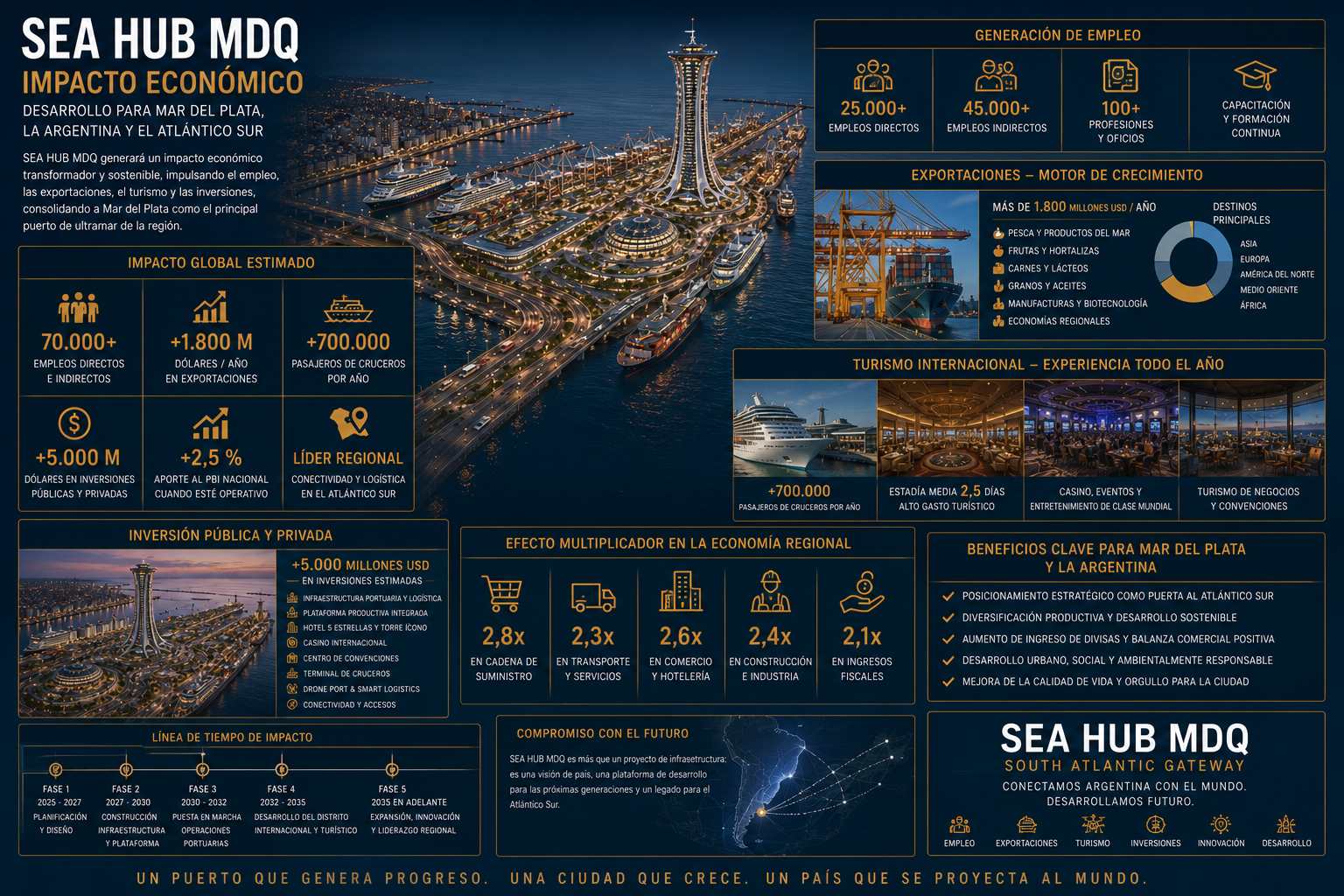






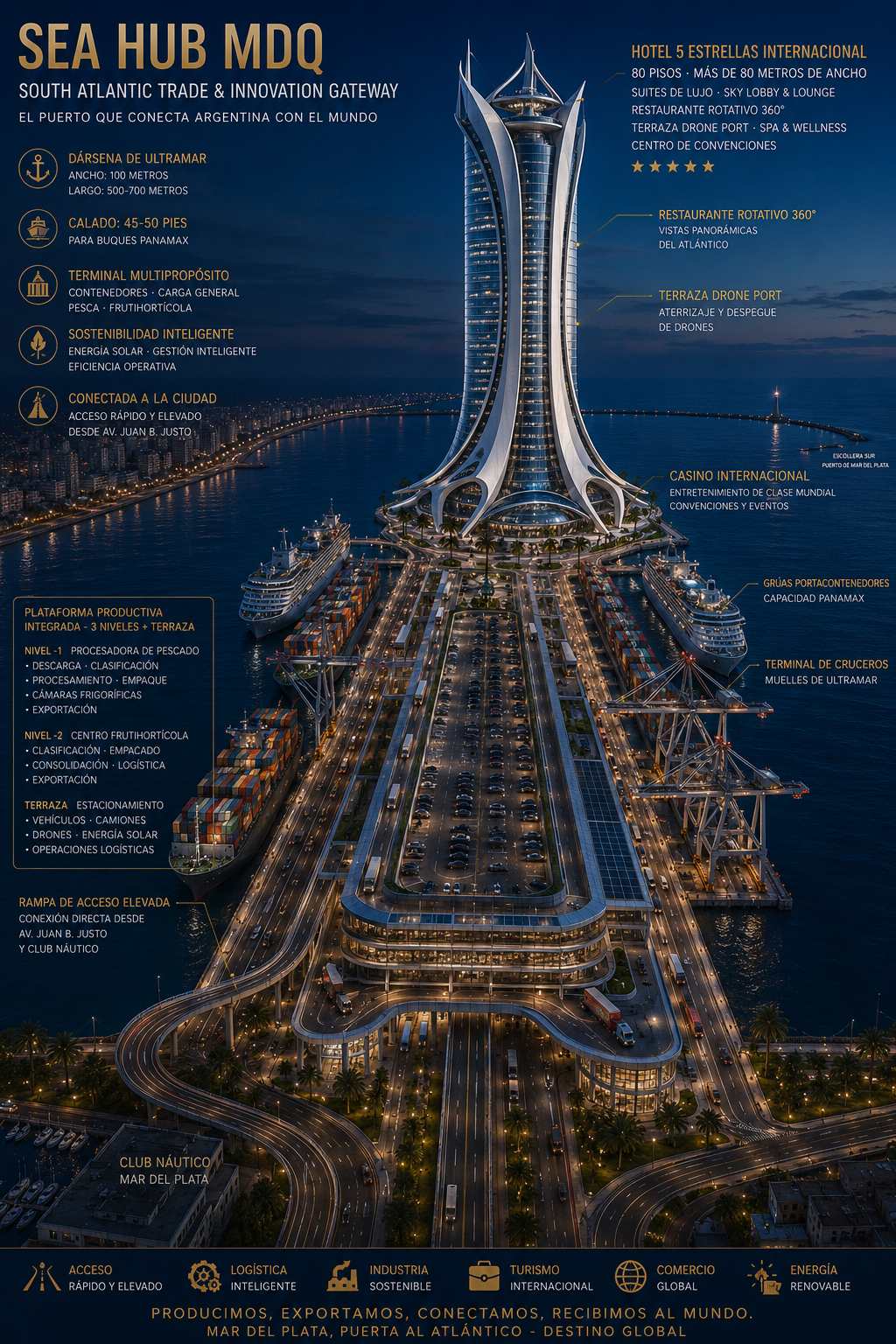
International Launch – Ultra Fintech Platform for Urban, Financial and Productive Development
Sea Hub MDQ is not financed only by capital. It is progressively financed by the cash flows it creates.
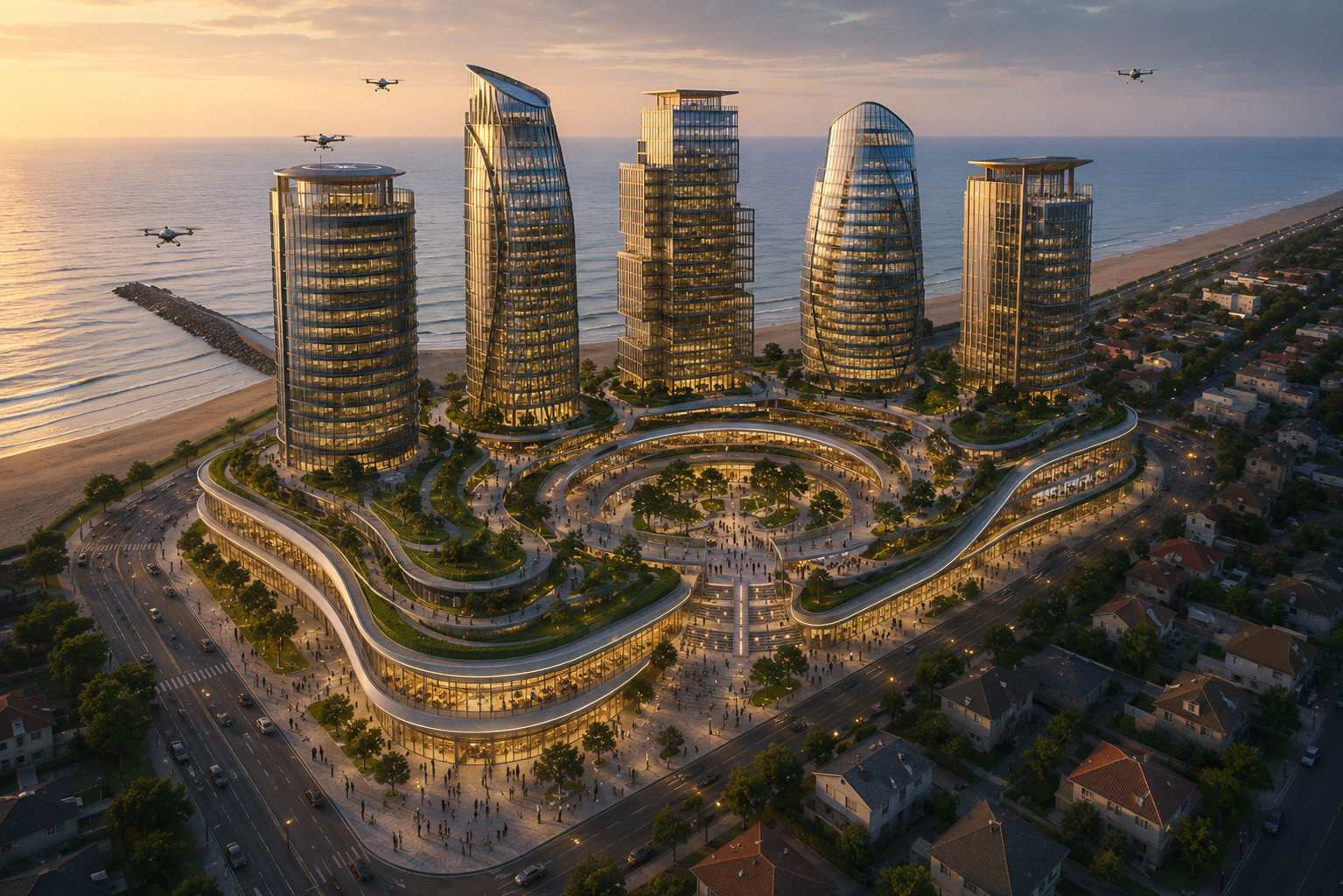
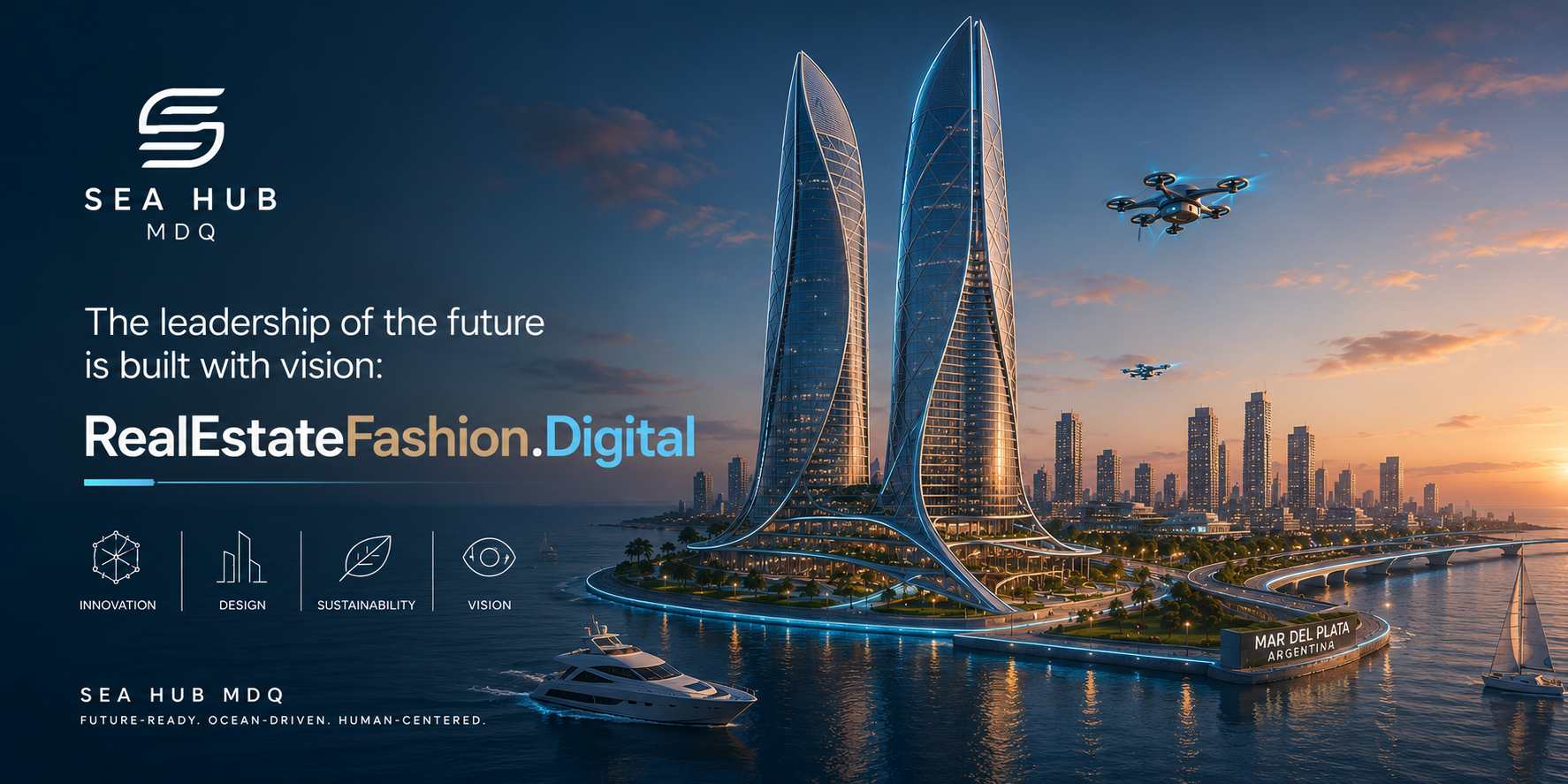
SpaceArch Solutions International LLC, through its Design & Construction Division, announces the international evolution of the Sea Hub MDQ megaproject, an initiative created to transform Mar del Plata into a strategic hub for innovation, investment, tourism, technology, blue economy development, and advanced urban transformation within a new stage of Argentine growth.
Sea Hub MDQ is not simply a real estate or infrastructure project. Its core concept is the creation of a comprehensive economic ecosystem where architecture, engineering, artificial intelligence, global investment, premium tourism, maritime industries, and next-generation financial models converge under a Fifth Wave development platform.
Conceptual Origin: A Vision Started in 1998
The project’s conceptual foundation dates back to 1998, when the need for a new Argentine territorial development model was proposed, based on strategic decentralization, regional growth hubs, and the concept of alternative capitals.
The central vision anticipated a global transformation: future nations would no longer grow exclusively around one dominant city, but through interconnected networks of intelligent specialized cities capable of attracting international investment, knowledge, innovation, and talent.
Years later, Argentina institutionally advanced the alternative capitals concept through national legislation, opening a historic opportunity for strategic cities such as Mar del Plata to assume a new role within the country’s productive ecosystem.
SpaceArch Solutions considers Mar del Plata to have exceptional conditions:
- strategic ocean location;
- strong port tradition;
- international tourism potential;
- established fishing industry;
- universities and human capital;
- technological development capacity;
- direct connection with the global blue economy.
The challenge is to transform Mar del Plata from a mainly seasonal destination into a year-round international economic hub.
Ultra Fintech Model: The New Financial Engineering of Development
Sea Hub MDQ introduces a different approach from traditional large-scale public infrastructure models.
Twenty-first century development requires the integration of:
- international institutional capital;
- global banking networks;
- investment funds;
- private investment;
- regulated asset tokenization;
- PropTech models;
- artificial intelligence applied to finance;
- dynamic project management systems.
SpaceArch’s role goes beyond architectural design.
The company integrates:
Concept Design + Project Management + Financial Engineering + AI Management Systems
The objective is to transform ambitious urban visions into technically designed, financially structured, and commercially viable projects.
First Stage: Strategic Initial Investment
SpaceArch reports that it has developed international connections aimed at structuring an initial investment phase estimated at approximately USD 3 billion, including preliminary discussions with international financial entities interested in large-scale infrastructure development.
This first stage would focus on high economic impact components:
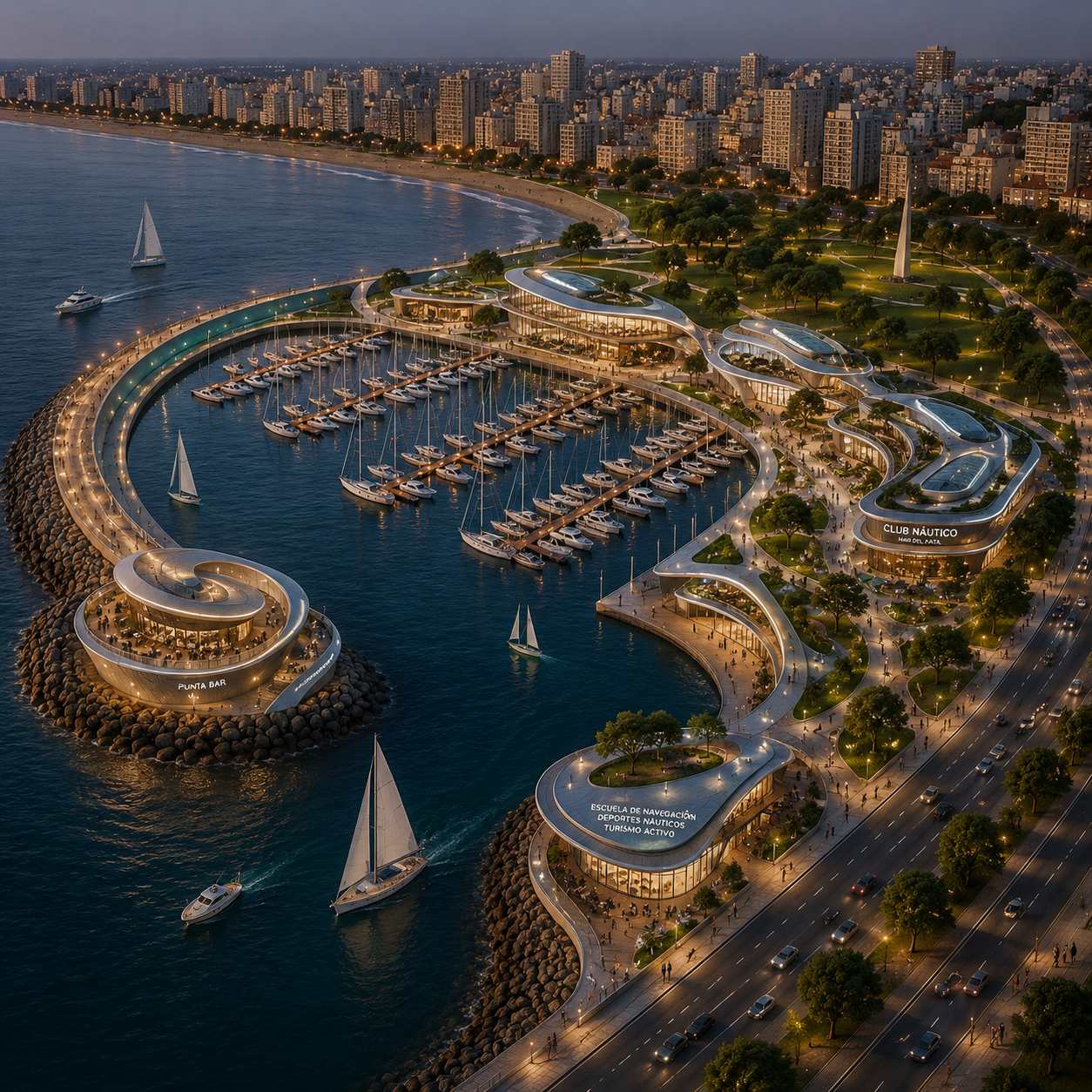
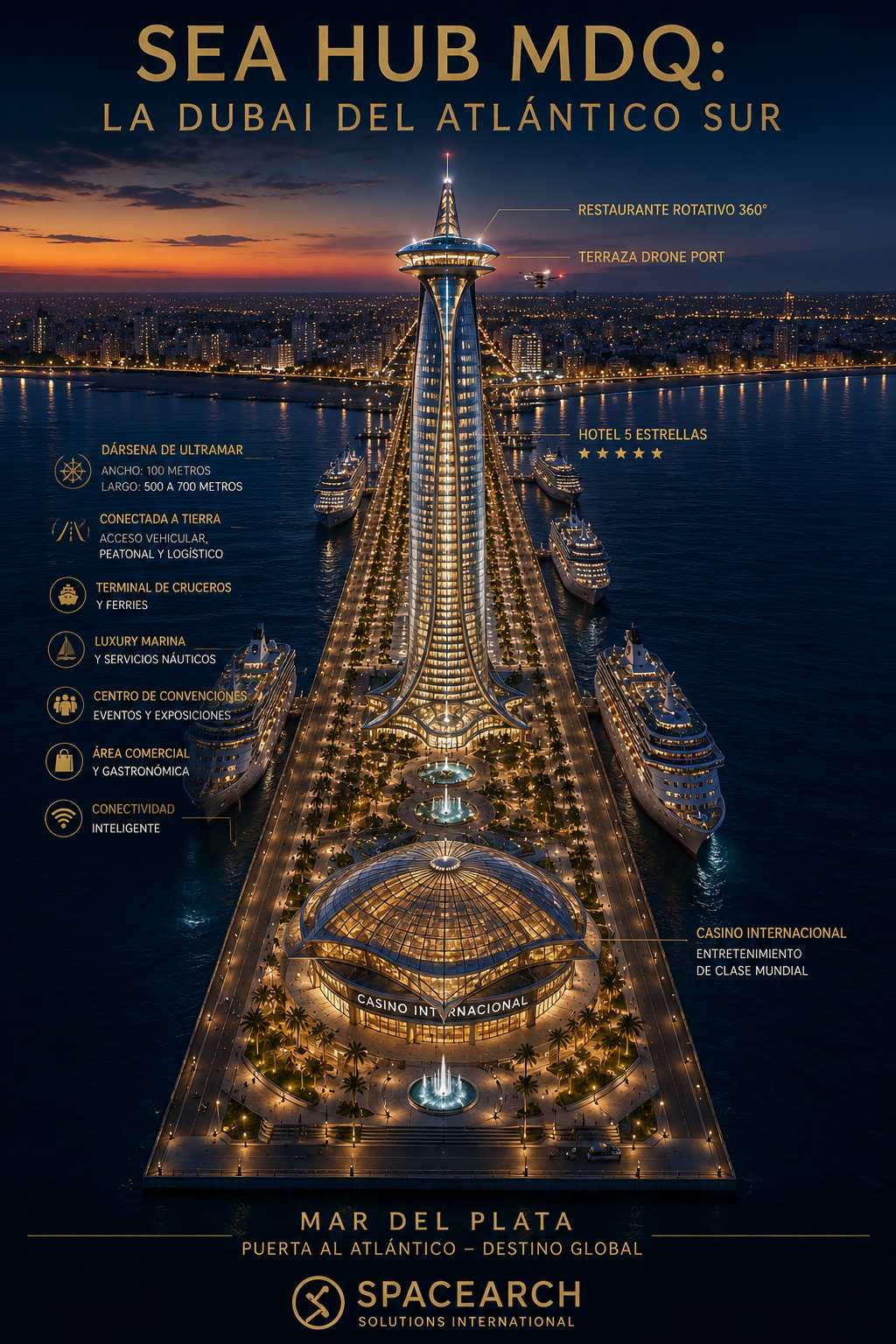
- new international marina and harbor infrastructure;
- advanced maritime facilities;
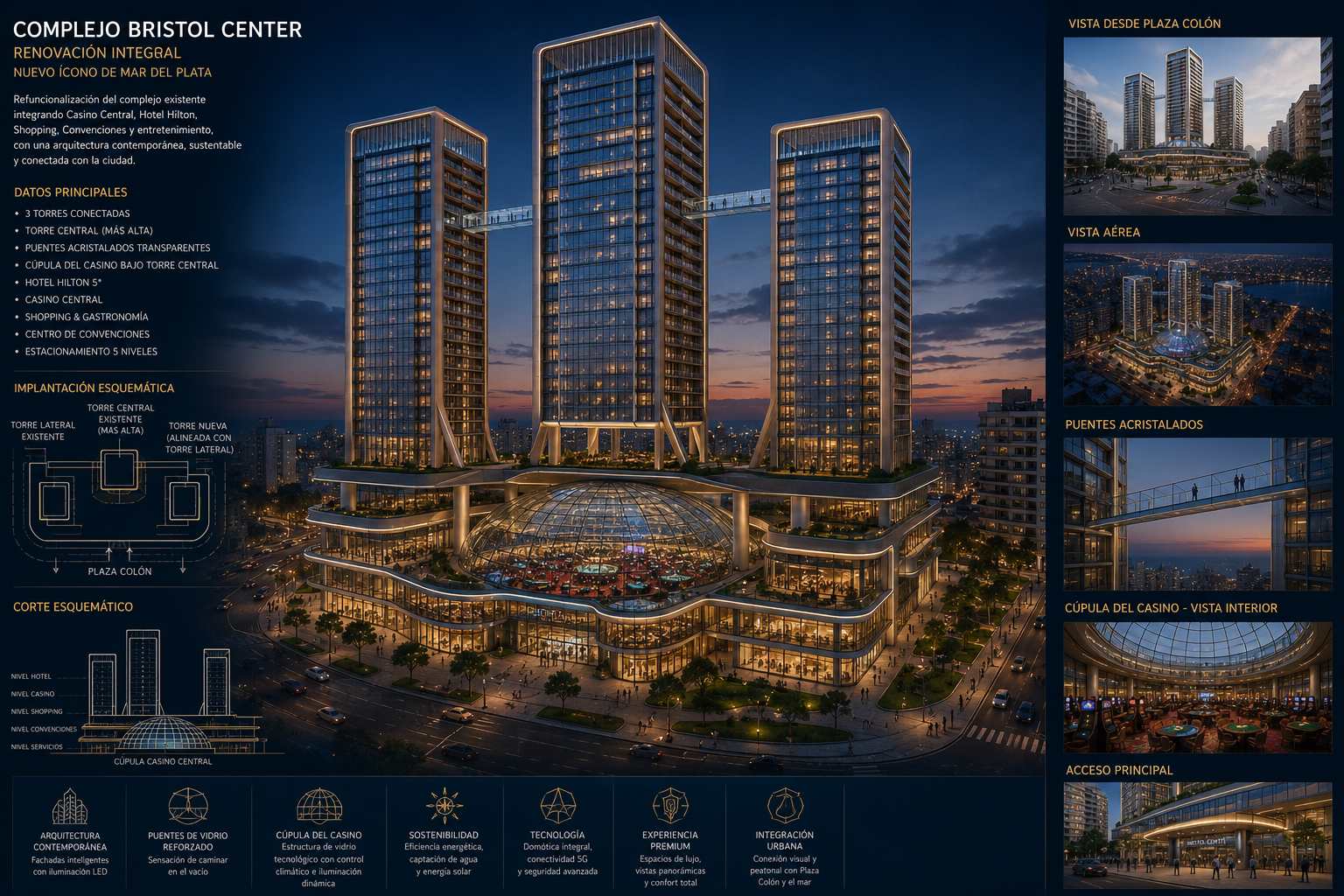
- international hotel complex;
- international casino;
- commercial and technology areas;
- global tourism services.
The goal is to create the first economic catalyst capable of activating additional private investment around the ecosystem.
International Background
Sea Hub MDQ has an extensive history of conceptual development.
In the early 2000s, the project attracted professional interest and collaboration proposals within the international architecture sector, including discussions with renowned architect Elena Gigantes regarding participation in the project’s conceptual development and direction.
Additionally, in 2006, international financial structuring alternatives were explored, including a proposed USD 500 million bridge loan arranged from Miami by banker Victor Vilches, associated with Lighting Funding.
That stage did not advance due to insufficient institutional and local alignment.
Two decades later, the global scenario has changed.
Artificial intelligence, digital economies, financial tokenization, blue economy development, and energy transformation now provide new tools capable of activating projects of this scale.
Expected Impact: A New City Model
Sea Hub MDQ aims to become the catalyst for a much larger transformation process.
The first investment stage is not considered the final objective, but the foundation for progressive economic expansion.
The ecosystem could enable new strategic areas:
- AI-Native smart fishing;
- advanced shipyards;
- maritime robotics;
- aquaculture;
- ocean renewable energy;
- technology-driven real estate;
- international tourism;
- advanced education;
- data centers;
- scientific research;
- startup ecosystems.
The strategic projection estimates the possibility of mobilizing tens of billions of additional dollars over the next decade through associated investments and complementary developments.
A Historic Opportunity
The cities that will lead the twenty-first century will be those capable of integrating knowledge, technology, infrastructure, and capital.
Sea Hub MDQ proposes a clear vision:
Mar del Plata not only as a tourism destination.
Mar del Plata as an international ocean platform.
A bridge connecting Argentina with the new global economy.
SpaceArch Solutions International is prepared to contribute its technical, architectural, technological, and financial capabilities to support this transformation.
The future is not something we wait for.
The future is designed, financed, and built.
Sea Hub MDQ
Executive Investment Brief
AI-Native Ocean Economy, Logistics & Tourism Megaproject
Location: Mar del Plata, Argentina Developer: SpaceArch Solutions International LLC – Design & Construction Division Concept: Next-generation international maritime, logistics, tourism, and AI-Native industrial hub.
Strategic Position
Mar del Plata is Argentina’s leading ocean tourism destination, receiving more than 6 million visitors per year and representing one of the country’s most important coastal economies.
Its existing productive ecosystem combines:
- tourism;
- fishing industry;
- food processing;
- port activities;
- universities;
- technological talent;
- industrial services.
Sea Hub MDQ proposes transforming this existing economic foundation into an international Fifth Wave development platform by integrating:
Ocean Infrastructure + Artificial Intelligence + Robotics + Smart Logistics + Tourism + Global Investment
Existing and Potential Economic Base
Blue Economy
Mar del Plata represents Argentina’s largest fishing center, with an export ecosystem estimated around USD 1 billion annually.
SpaceArch proposes accelerating this sector through an AI-Native transformation model:
- autonomous fishing technologies;
- robotic processing systems;
- smart cold chain;
- AI logistics optimization;
- international market integration;
- higher added-value production.
The objective is not only increasing volume, but transforming raw production into a technology-enhanced export platform.
Agri-Food Expansion
The regional hinterland has major potential in fruit, vegetable, and food production, with the possibility of developing an additional export ecosystem estimated at approximately USD 1 billion annually through:
- advanced processing;
- industrial freezing;
- automated packaging;
- logistics optimization;
- direct international distribution.
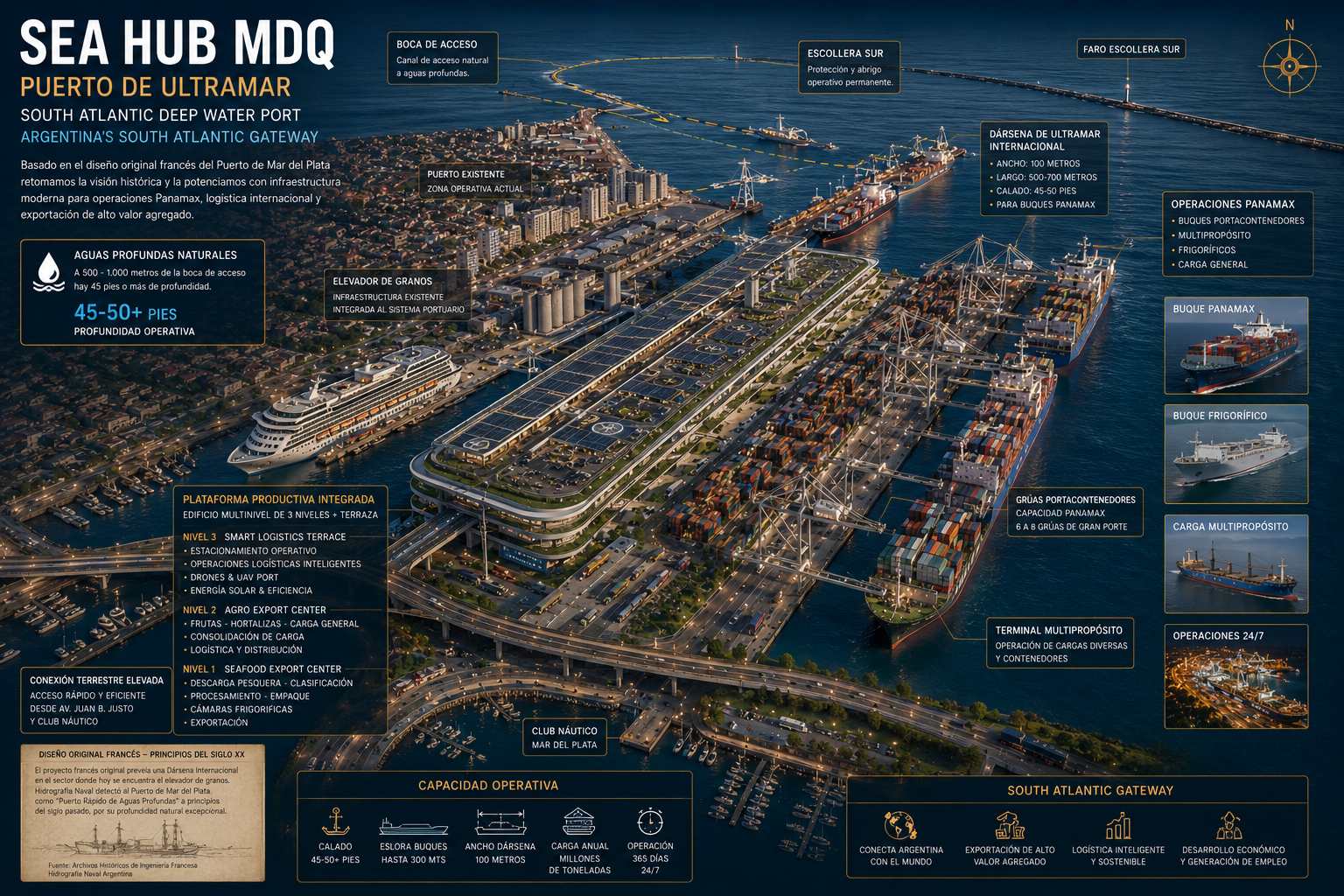
International Deep-Water Harbor Platform
The Sea Hub MDQ core infrastructure includes the development of a new international maritime terminal designed for future global trade standards.
Projected capabilities:
- deep-water harbor infrastructure;
- approximately 50-foot draft capacity;
- access for large international cruise ships;
- Panamax-class vessel operations;
- container ship integration;
- expansion of Argentina’s Atlantic logistics capacity.
The strategic objective:
Create one of the most competitive South Atlantic maritime platforms by combining geographic position, technology, automation, and optimized operational costs.
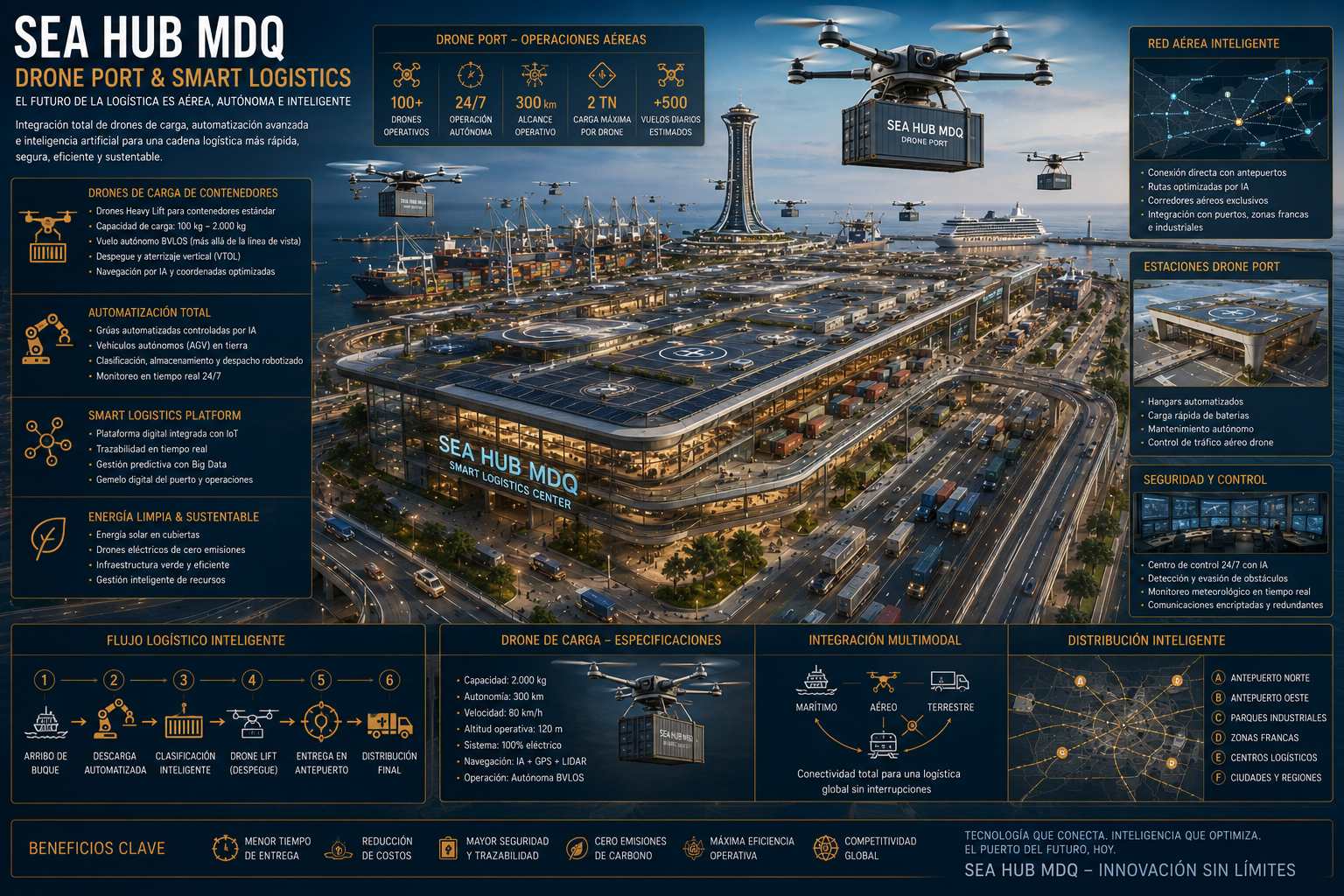
AI-Native Smart Port System
Unlike traditional ports, Sea Hub MDQ is designed from inception as an AI-Native logistics ecosystem.
The model integrates:
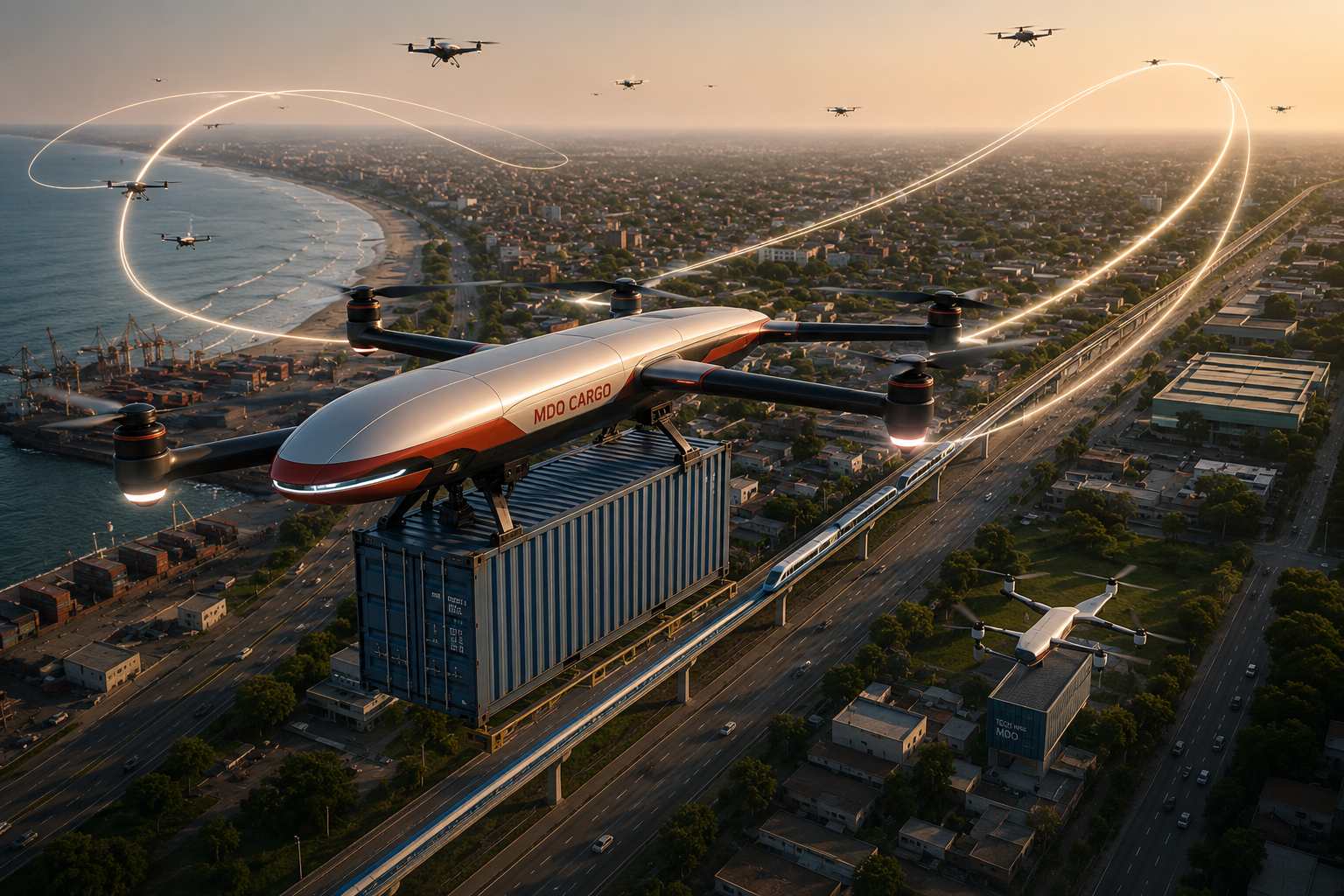
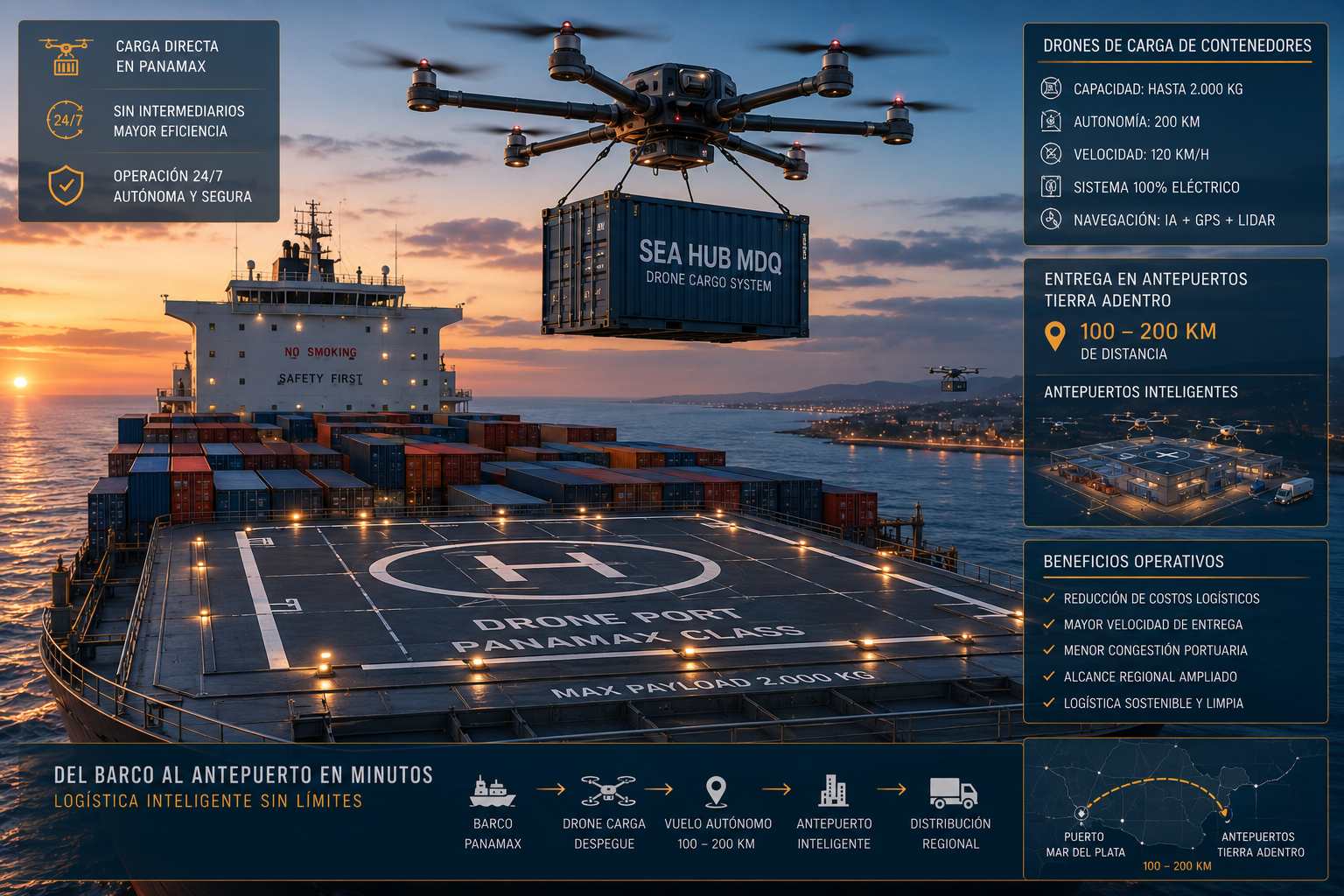
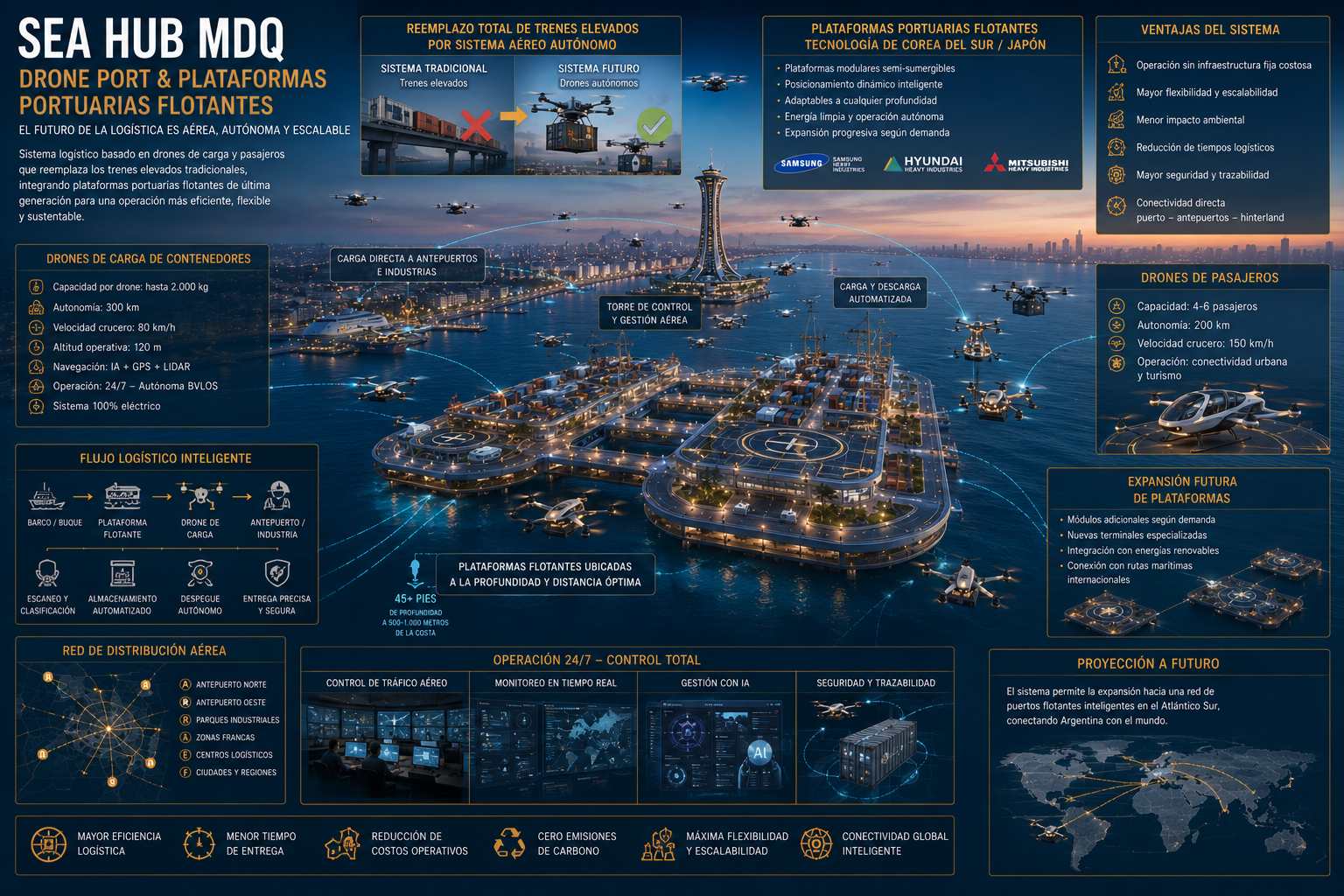
- autonomous cargo drones;
- robotic unloading systems;
- AI-controlled port operations;
- direct ship-to-logistics-platform cargo transfer;
- automated storage areas;
- smart customs integration;
- predictive supply chain management.
The goal is to significantly reduce:
- operational times;
- logistics costs;
- energy consumption;
- port congestion.
Industrial Processing Platform
The project includes an extended industrial base connected directly with maritime operations.
Designed functions:
- large-scale seafood processing;
- fruit and vegetable processing;
- industrial freezing facilities;
- refrigerated logistics;
- export preparation centers.
The key competitive advantage:
Processing and freezing capacity located meters away from vessel unloading areas.
This creates a fully integrated production chain:
Ship → Robotic Unloading → Processing → Freezing → Export Logistics
International Tourism & Premium Economy
Sea Hub MDQ integrates tourism infrastructure designed to reposition Mar del Plata as a global destination.
Main components:
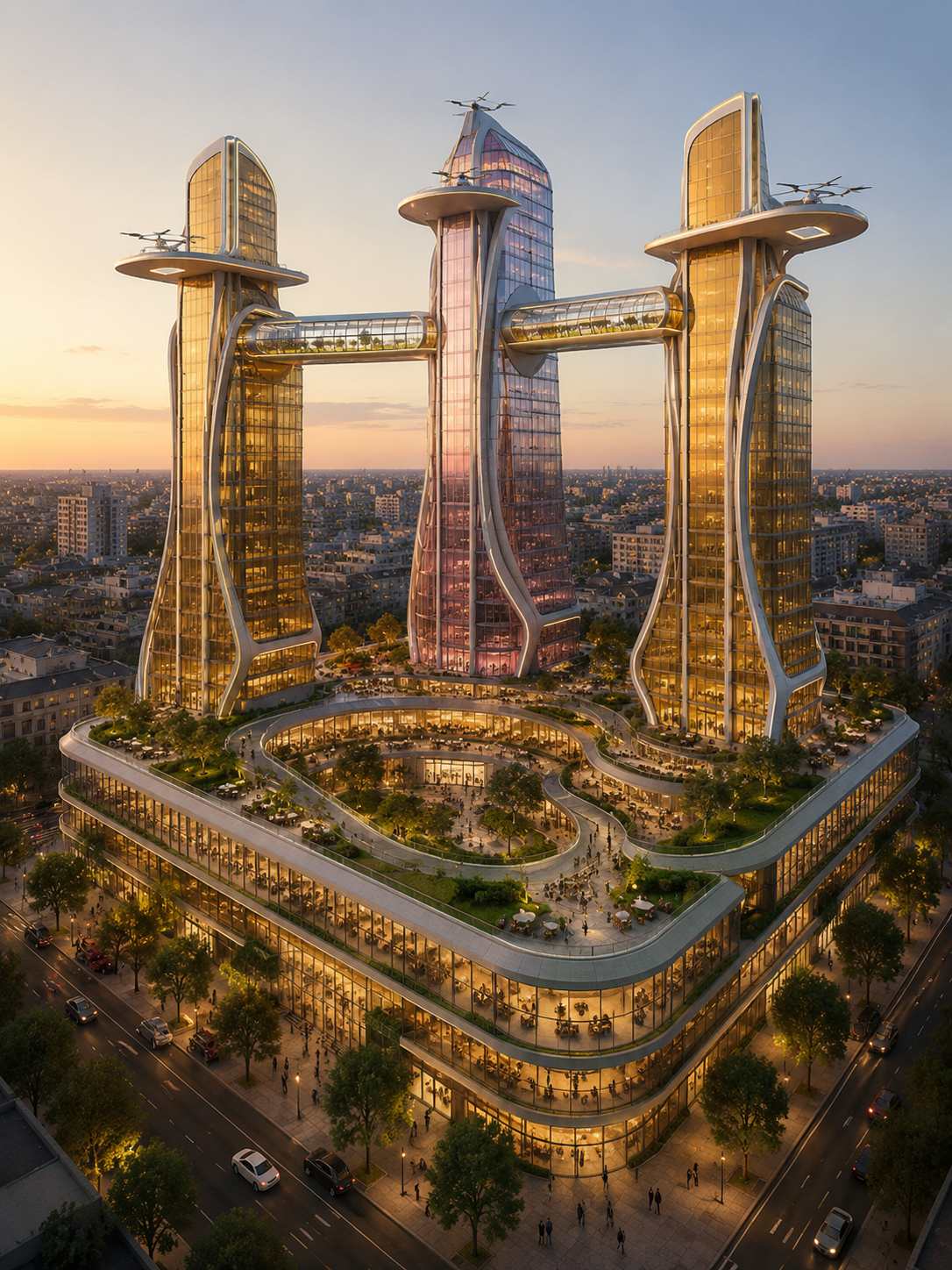
Five-Star International Ocean Hotel
A landmark architectural development located directly within the new harbor ecosystem.
Features:
- international hospitality standards;
- ocean views;
- luxury services;
- business tourism integration.
International Luxury Casino
A premium entertainment destination designed to attract:
- global tourism;
- conventions;
- high-value visitors;
- international events.
Sky Experience Platform
The upper levels are projected as a next-generation experience zone:
- drone landing infrastructure;
- panoramic observation areas;
- rotating ocean-view restaurant;
- premium event spaces;
- international convention halls.
AI-Native Development Model
SpaceArch Solutions introduces a different infrastructure paradigm.
Sea Hub MDQ is not designed only as construction.
It is designed as a living technological organism.
Artificial intelligence systems will support:
- design optimization;
- construction management;
- logistics;
- security;
- energy efficiency;
- predictive maintenance;
- business operations;
- investment analytics.
Strategic Vision
Sea Hub MDQ represents the convergence of four global megatrends:
- Blue Economy expansion.
- AI-Native industrial transformation.
- Automated global logistics.
- Next-generation experiential tourism.
The objective is to transform Mar del Plata into a South Atlantic innovation gateway:
a city where ports, robotics, artificial intelligence, tourism, industry, and investment operate as one interconnected ecosystem.
A new generation of ports will not only move products.
They will move intelligence, technology, data, capital, and human progress.
Sea Hub MDQ
Preliminary Financial & Infrastructure Layer
Integrated AI-Native Ocean Business District
Developer: SpaceArch Solutions International LLC Location: Mar del Plata, Argentina Estimated Initial Investment Platform: USD 3 Billion Phase 1 Development Model: Public / Private / PPP / Mixed Investment Structure
1. Asset Definition
Sea Hub MDQ is conceived as a new generation ocean infrastructure platform integrating:
- deep-water international harbor;
- cruise terminal;
- automated container operations;
- AI-Native logistics;
- luxury hospitality;
- international entertainment;
- industrial food processing;
- international business center.
The project operates under an integrated revenue model where multiple economic verticals generate independent and complementary cash flows.
2. Land & Urban Development
The project proposes the creation of a new maritime platform through land reclamation.
Estimated reclaimed surface:
5–7 hectares
Equivalent:
50,000–70,000 m² of strategic oceanfront land
Because of vertical development capacity, total built area could significantly exceed land surface.
Preliminary development potential:
- port infrastructure;
- industrial basement;
- commercial areas;
- casino complex;
- convention center;
- hotel tower;
- logistics facilities;
- mobility infrastructure.
Estimated possible constructed area:
250,000–400,000+ m²
(subject to final architectural and engineering design)
3. Deep-Water Smart Harbor
Core infrastructure:
- approximately 50-foot draft;
- Panamax vessel compatibility;
- large cruise ship capacity;
- container operations;
- grain export infrastructure integration;
- automated logistics.
Strategic objective:
Position Mar del Plata as a competitive South Atlantic alternative logistics node.
Competitive advantages:
- lower operational cost strategy;
- faster loading/unloading cycles;
- AI optimization;
- robotic port management;
- direct connection with productive hinterland.
4. AI-Native Automated Port Model
Traditional model:
Ship → Port → Storage → Truck → Processing → Export
Sea Hub AI-Native model:
Ship ↓ Autonomous robotic unloading ↓ Smart logistics layer ↓ Processing/freezing ↓ Direct international distribution
Technology integration:
- autonomous cargo drones;
- robotic handling;
- predictive logistics AI;
- digital twin management;
- automated scheduling;
- intelligent traffic control.
Objective:
Reduce time, cost, and operational friction.
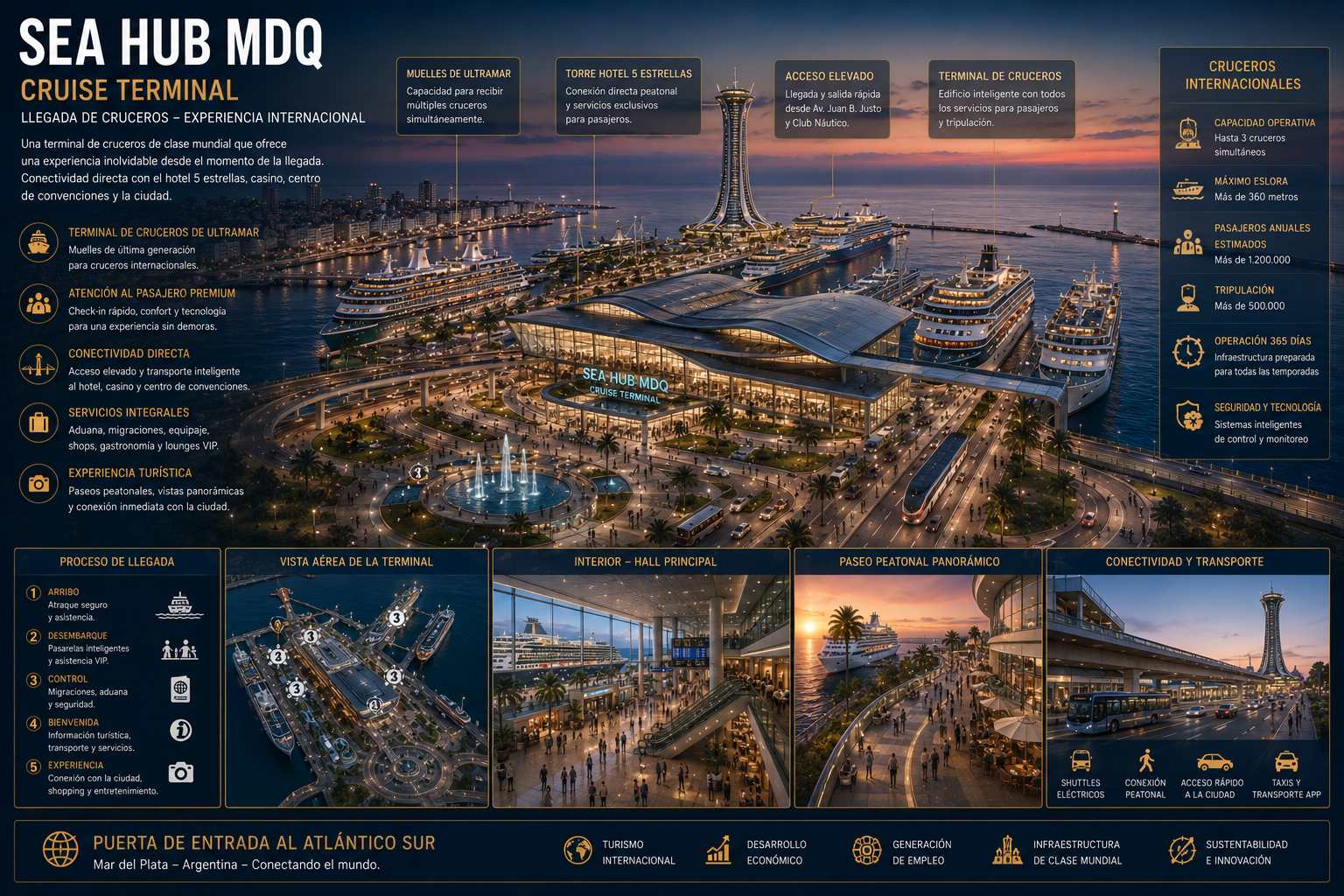
5. International Cruise Terminal
Benchmark objective:
Develop cruise activity comparable with leading Argentine cruise destinations.
Revenue sources:
- passenger fees;
- tourism services;
- retail;
- gastronomy;
- excursions;
- entertainment;
- hotel integration.
Strategic advantage:
Mar del Plata already receives more than 6 million annual visitors.
The project upgrades existing tourism demand into a global premium segment.
6. International Luxury Casino Complex
Location:
Prime position at the end of the maritime platform.
Estimated area:
Approximately 1 hectare footprint.
Development:
2–3 levels.
Estimated built surface:
20,000–30,000 m².
Functions:
- international casino;
- premium entertainment;
- restaurants;
- events;
- VIP areas;
- luxury services.
The casino operates as one of the highest-margin cash flow generators within the ecosystem.
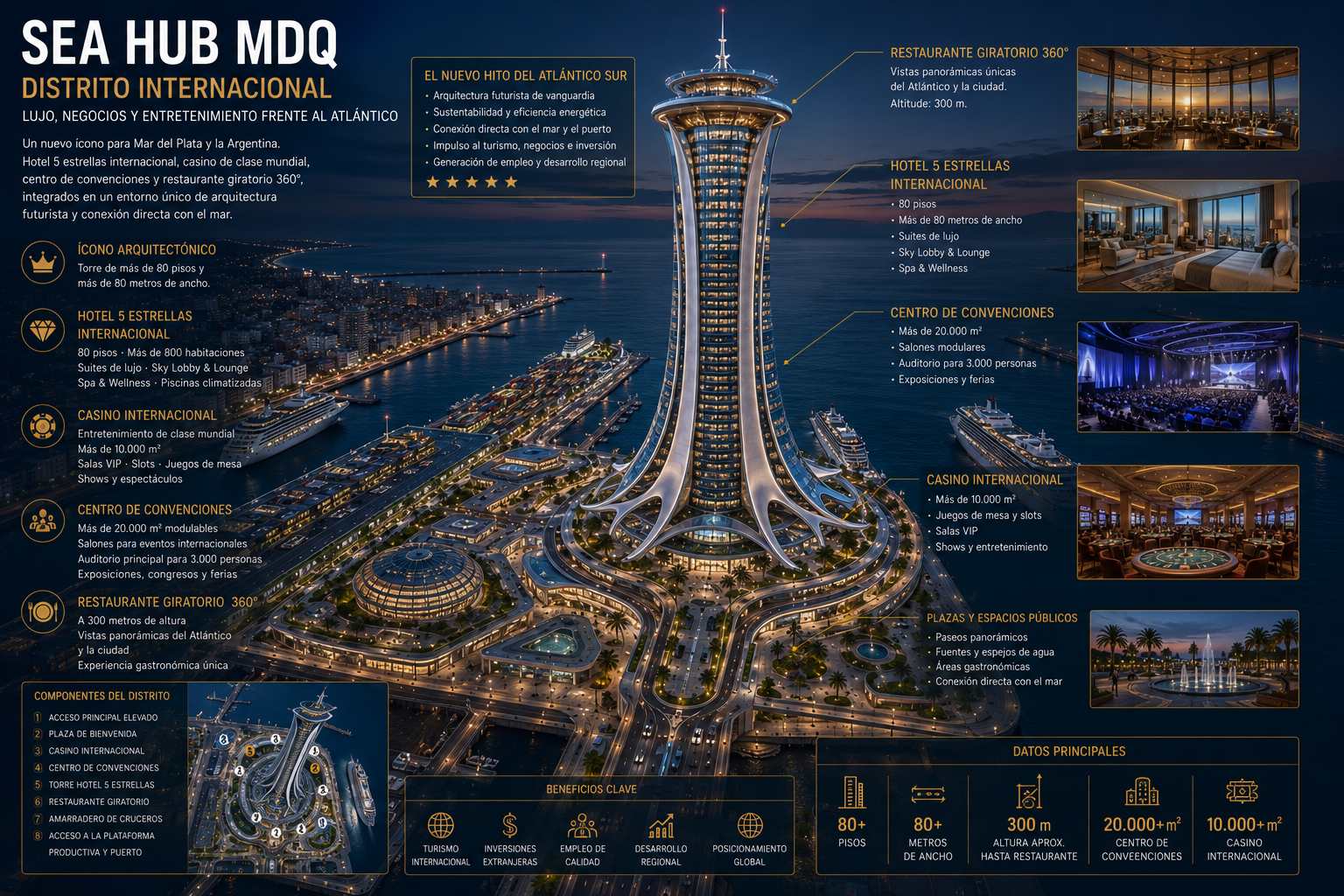
7. International Five-Star Hotel Tower
Concept:
Global landmark ocean tower.
Estimated:
- approximately 80 floors;
- around 1,000 rooms;
- premium hospitality;
- business tourism;
- conventions;
- international events.
Additional components:
- elevated arrival platform;
- direct connection from Juan B. Justo corridor;
- rooftop mobility infrastructure;
- drone operation platform;
- panoramic rotating restaurant;
- sky experience areas.
8. Industrial Production Platform
Lower structural levels operate as an advanced production base.
Functions:
- seafood processing;
- fruit and vegetable processing;
- industrial freezing;
- packaging;
- export preparation.
Competitive advantage:
Processing capacity located meters from vessel operations.
Integrated chain:
Production → Processing → Freezing → Export
without unnecessary logistics fragmentation.
9. International Business Center Integration
Sea Hub MDQ incorporates the original concept of creating an international business coordination center.
The objective is to connect:
- investors;
- exporters;
- banks;
- technology companies;
- logistics operators;
- startups.
Through AI management systems:
- commercial operations;
- maritime traffic;
- investment flows;
- logistics;
- international transactions.
The business district becomes the intelligence layer controlling the economic ecosystem.
10. Development Sequence
Phase 1
International harbor infrastructure:
- maritime platform;
- cruise operations;
- Panamax/container capacity;
- grain export integration;
- logistics systems.
Phase 2
International casino and entertainment complex.
Phase 3
Five-star international hotel tower.
Phase 4
Industrial AI-Native production basement and full ecosystem expansion.
11. Investment Structure
Potential models:
- private investment;
- public-private partnership;
- concession model;
- mixed sovereign/private structure.
Possible concession scenarios:
- 30 years;
- 50 years;
- 75 years.
Final duration adjusted according to:
- capital exposure;
- investment recovery period;
- infrastructure risk profile.
Strategic Summary
Sea Hub MDQ is designed as a new category of infrastructure:
Not a port.
Not a hotel.
Not a casino.
An AI-Native Ocean Economic Platform.
A system where logistics, tourism, production, finance, and technology reinforce each other to create a permanent international economic engine.
Sea Hub MDQ
Integrated Cash Flow Equation
Sea Hub MDQ is structured as an integrated economic organism.
Each component is designed to generate net operating income that supports, accelerates, and partially finances the next stage of development.
The model is not linear.
It is cumulative.
Core Equation
Port Operations + Cruise Activity + Logistics + Grain Exports generate the first operational cash flow.
That cash flow supports:
Casino Development + Premium Tourism + Entertainment
The casino and entertainment platform then increase high-margin revenue and tourism attraction, supporting:
International Hotel Tower + Convention Center + Business Tourism
The hotel, conventions, and business activity strengthen demand for:
Industrial Processing + Cold Chain + Export Platform
The production basement and export infrastructure then expand:
Regional Trade + AI-Native Logistics + International Business Center
This creates a circular financial engine:
Infrastructure → Cash Flow → New Asset → Higher Cash Flow → Larger Investment Capacity
Strategic Principle
The net benefits of each completed stage do not remain isolated.
They co-finance the next stage.
This reduces external capital pressure over time and transforms the project into a self-reinforcing investment platform.
Financial Logic
Sea Hub MDQ is therefore not only a CAPEX project.
It is a phased cash-flow architecture.
Each layer performs three functions:
- generates direct income;
- increases the value of the whole platform;
- reduces the financing burden of the next phase.
Final Definition
Sea Hub MDQ is an AI-Native integrated economic platform where port, tourism, logistics, entertainment, food processing, finance, and real estate operate as one coordinated financial organism.
Its power is not in any single component.
Its power is in the integration equation.
Sea Hub MDQ
Lanzamiento Internacional – Plataforma Ultra Fintech de Desarrollo Urbano, Financiero y Productivo
SpaceArch Solutions International LLC, a través de su división Design & Construction, anuncia la evolución internacional del megaproyecto Sea Hub MDQ, una iniciativa concebida para transformar a Mar del Plata en un nodo estratégico de innovación, inversión, turismo, tecnología, economía azul y desarrollo urbano avanzado dentro de una nueva etapa de crecimiento argentino.
Sea Hub MDQ no representa únicamente un proyecto inmobiliario o de infraestructura. Su concepto central es la creación de un ecosistema económico integral, donde arquitectura, ingeniería, inteligencia artificial, inversión global, turismo premium, industria marítima y nuevos modelos financieros convergen bajo una plataforma de desarrollo de Quinta Ola.
Origen conceptual: una visión iniciada en 1998
El proyecto tiene sus raíces conceptuales en 1998, cuando se planteó la necesidad de impulsar un nuevo modelo territorial argentino basado en la descentralización estratégica, la creación de polos regionales de desarrollo y el concepto de capitales alternas.
La idea central era anticipar una tendencia mundial: los países del futuro no crecerían únicamente desde una ciudad dominante, sino mediante redes de ciudades inteligentes especializadas, conectadas internacionalmente y capaces de atraer inversión, conocimiento y talento.
Años después, Argentina avanzó institucionalmente con el concepto de capitales alternas mediante legislación nacional, abriendo una oportunidad histórica para que ciudades estratégicas como Mar del Plata puedan asumir un nuevo rol dentro del mapa productivo nacional.
SpaceArch Solutions considera que Mar del Plata posee condiciones excepcionales:
- ubicación oceánica estratégica;
- tradición portuaria;
- capacidad turística internacional;
- industria pesquera consolidada;
- universidades y capital humano;
- potencial tecnológico;
- conexión directa con la economía azul global.
El desafío consiste en pasar de una ciudad principalmente estacional a un hub internacional activo durante todo el año.
Modelo Ultra Fintech: la nueva ingeniería financiera del desarrollo
Sea Hub MDQ introduce un enfoque diferente al modelo tradicional de grandes obras públicas.
La infraestructura del siglo XXI requiere integrar:
- capital institucional internacional;
- banca global;
- fondos de inversión;
- inversión privada;
- tokenización regulada de activos;
- modelos PropTech;
- inteligencia artificial financiera;
- gestión dinámica de proyectos.
La función de SpaceArch no se limita al diseño arquitectónico. La compañía integra:
Concept Design + Project Management + Financial Engineering + AI Management Systems
El objetivo es convertir grandes ideas urbanas en proyectos técnicamente diseñados, financieramente estructurados y comercialmente viables.
Primera etapa: inversión estratégica inicial
SpaceArch informa que ha desarrollado contactos internacionales orientados a estructurar una primera fase estimada de inversión de aproximadamente USD 3.000 millones, con conversaciones preliminares con entidades financieras internacionales interesadas en proyectos de infraestructura de gran escala.
Esta primera etapa estaría focalizada en componentes de alto impacto económico:
- nueva dársena internacional;
- infraestructura marítima avanzada;
- complejo hotelero internacional;
- casino internacional;
- áreas comerciales y tecnológicas;
- servicios asociados al turismo global.
El objetivo es generar un primer núcleo tractor capaz de activar nuevas inversiones privadas alrededor del ecosistema.
Antecedentes internacionales
Sea Hub MDQ cuenta con una extensa historia de desarrollo conceptual.
A comienzos de los años 2000, el proyecto despertó interés profesional y propuestas de colaboración dentro del ámbito de la arquitectura internacional, incluyendo conversaciones con la reconocida arquitecta Elena Gigantes para participar en el desarrollo conceptual y dirección del proyecto.
Asimismo, durante 2006 se analizaron alternativas de estructuración financiera internacional, incluyendo una propuesta de préstamo puente por USD 500 millones gestionada desde Miami por el banquero Victor Vilches, vinculado a Lighting Funding.
Aquella etapa no logró avanzar por falta de alineación institucional y local suficiente.
Dos décadas después, el escenario global es diferente.
La inteligencia artificial, la economía digital, la tokenización financiera, la economía azul y la transformación energética permiten reactivar proyectos de escala con herramientas antes inexistentes.
Impacto esperado: un nuevo modelo de ciudad
Sea Hub MDQ busca actuar como catalizador de un proceso mucho mayor.
La primera inversión no es considerada un punto final, sino la plataforma inicial para una transformación económica progresiva.
Por efecto multiplicador podrían activarse nuevas áreas:
- pesca inteligente AI-Native;
- astilleros avanzados;
- robótica marítima;
- acuicultura;
- energías renovables oceánicas;
- real estate tecnológico;
- turismo internacional;
- educación avanzada;
- centros de datos;
- investigación científica;
- startups.
La proyección estratégica estima la posibilidad de movilizar decenas de miles de millones de dólares adicionales durante la próxima década mediante inversiones asociadas y nuevos desarrollos complementarios.
Una oportunidad histórica
Las ciudades que liderarán el siglo XXI serán aquellas capaces de integrar conocimiento, tecnología, infraestructura y capital.
Sea Hub MDQ propone una visión:
Mar del Plata no solamente como destino turístico.
Mar del Plata como plataforma oceánica internacional.
Un puente entre Argentina y la nueva economía global.
SpaceArch Solutions International se encuentra preparada para aportar su capacidad técnica, arquitectónica, tecnológica y financiera para colaborar en esta transformación.
El futuro no se espera.
El futuro se diseña, se financia y se construye.