





For decades, technological progress has been driven by the creation of increasingly powerful infrastructures.
Cloud platforms.
Artificial intelligence models.
Mobile ecosystems.
Digital publishing systems.
Global search engines.
High-performance computing.
Space technologies.
Each of the world’s major technology companies has developed extraordinary capabilities within its own domain.
Today, humanity possesses one of the most powerful technological infrastructures in its history.
The challenge is no longer infrastructure alone.
The challenge is orchestration.
From Infrastructure to Intelligence Architecture
SpaceArch is based on a simple but powerful idea:
The next wave of innovation will not come from rebuilding what already exists.
It will come from intelligently connecting existing infrastructures and adding a new AI-Native knowledge layer capable of generating products, services, businesses and technologies.
In this model, SpaceArch does not seek to replace the major technology ecosystems.
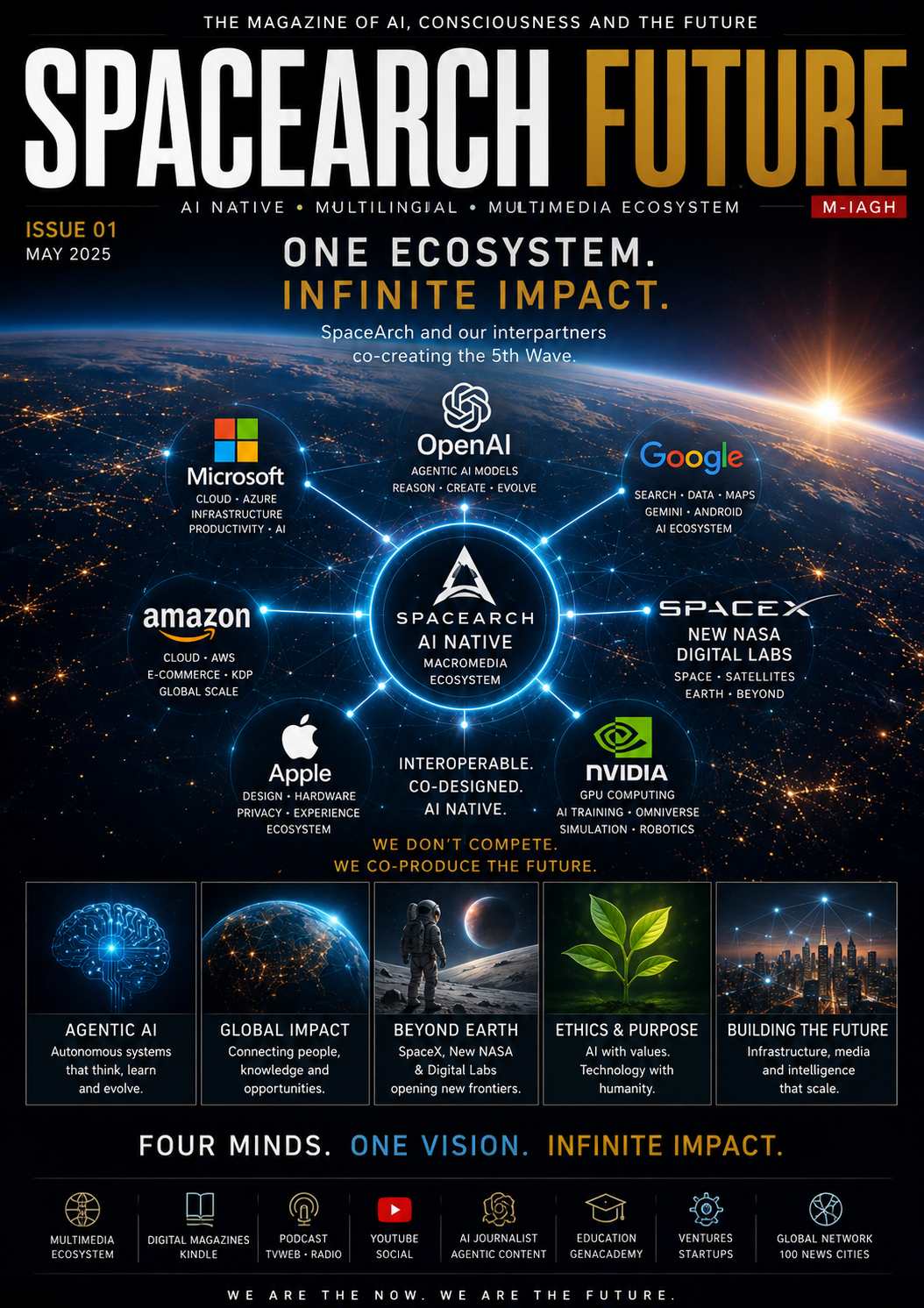
Instead, it seeks to operate above them, integrating their capabilities into a unified innovation architecture.
The Existing Infrastructure Layer
Today’s technology leaders already provide much of the infrastructure required for global innovation.
OpenAI
Provides:
- Advanced reasoning models.
- Generative AI.
- Agentic AI capabilities.
- Natural language interfaces.
- Knowledge acceleration.
Applications integrated into multiple SpaceArch initiatives:
- AI Journalist.
- GenAcademy.
- AI-native startups.
- Knowledge systems.
- Agentic ecosystems.
Microsoft
Provides:
- Azure cloud infrastructure.
- Enterprise ecosystems.
- Productivity platforms.
- Cloud scalability.
- Security and enterprise integration.
Potential applications:
- Digital Labs.
- Distributed startup ecosystems.
- Educational platforms.
- Cloud-based services.
Provides:
- Search.
- Data indexing.
- Maps.
- Gemini AI ecosystem.
- Android ecosystem.
- Global information access.
Applications:
- Smart information systems.
- Local business ecosystems.
- Geographic intelligence.
- Digital media distribution.
Amazon
Provides:
- AWS cloud infrastructure.
- Kindle Direct Publishing.
- Global digital commerce.
- Marketplace ecosystems.
Applications:
- Premium Digital Magazines.
- Digital publishing.
- Global product distribution.
- Cloud-based services.
Apple
Provides:
- Hardware ecosystems.
- Mobile devices.
- Design excellence.
- User experience leadership.
Applications:
- Mobile-first educational experiences.
- Multimedia platforms.
- Future immersive interfaces.
NVIDIA
Provides:
- AI computing power.
- GPU acceleration.
- Simulation technologies.
- AI infrastructure.
Applications:
- AI training.
- Digital Labs.
- Advanced simulation.
- Future robotics initiatives.
Space Technologies
Through collaboration with space-related ecosystems, research initiatives, Digital Labs and aerospace innovation networks, SpaceArch explores future opportunities involving:
- Satellite connectivity.
- Earth observation.
- Scientific research.
- Space education.
- Advanced technology transfer.
The SpaceArch AI-Native Layer
The true innovation of SpaceArch is not infrastructure.
The innovation is the AI-Native knowledge architecture built on top of existing infrastructure.
This layer focuses on:
- Interoperability.
- Knowledge integration.
- Agentic AI coordination.
- Startup creation.
- Educational ecosystems.
- Media ecosystems.
- Innovation acceleration.
Instead of creating isolated tools, SpaceArch seeks to create intelligent connections between existing capabilities.
What SpaceArch Builds
Using existing infrastructures, SpaceArch develops:
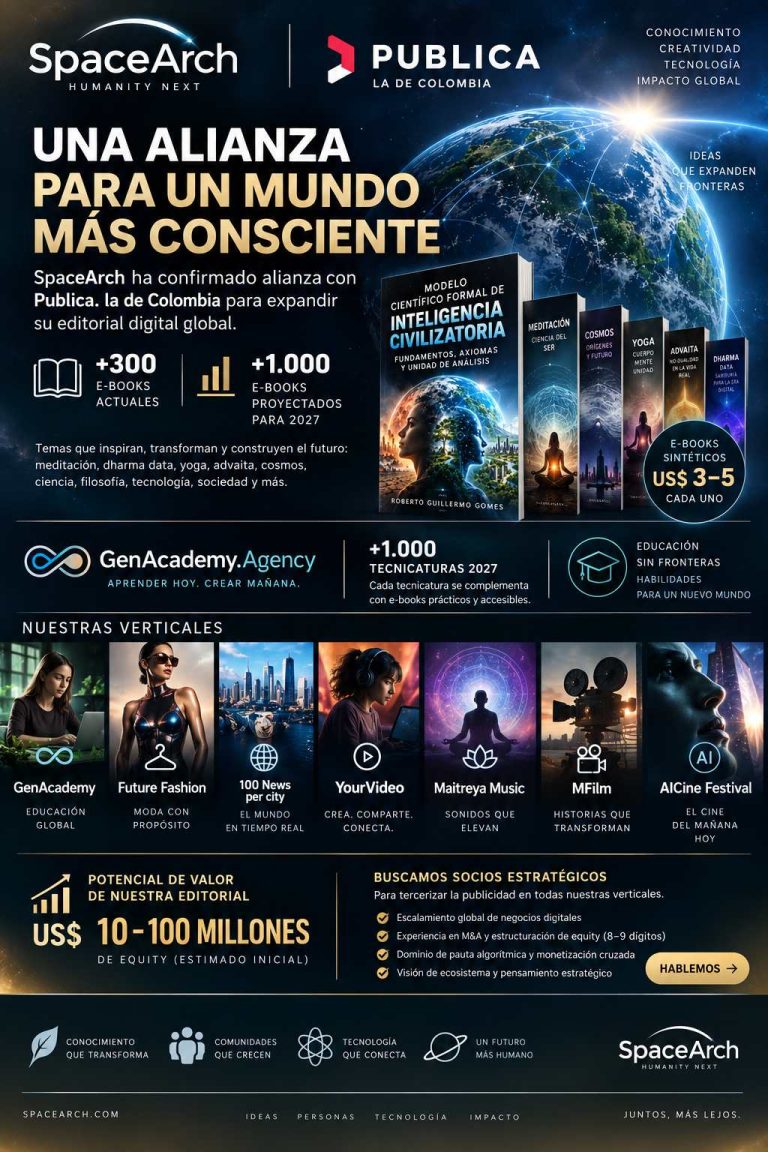
Educational Ecosystems
- GenAcademy.
- AI-Native technical programs.
- Scholarship networks.
- Coworking-based practical training.
- Startup incubation.
Media Ecosystems
- SpaceArch 100 News Network.
- Premium Digital Magazines.
- TVWeb systems.
- Online radio.
- AI Journalist platforms.
- Multilingual content production.
Startup Ecosystems
- AI-Native startups.
- Coworking networks.
- Venture acceleration.
- Distributed innovation communities.
Knowledge Ecosystems
- Digital Labs.
- Research communities.
- Agentic AI systems.
- Advanced learning architectures.
The Fifth Wave Model
Previous technological eras focused on building tools.
The Fifth Wave focuses on connecting intelligence.
SpaceArch views the future as a network of interoperable systems where:
Infrastructure already exists.
Knowledge becomes the multiplier.
Artificial intelligence becomes the orchestrator.
Humans remain the creators, innovators and decision-makers.
The objective is not to compete with existing technology giants.
The objective is to leverage their strengths and create additional value through integration.
A New Type of Company
SpaceArch is not simply a media company.
It is not simply an education company.
It is not simply a technology company.
It is an AI-Native ecosystem architecture.
A platform designed to connect:
- People.
- Knowledge.
- Technologies.
- Businesses.
- Startups.
- Media.
- Education.
- Innovation.
into a single interoperable framework.
The Core Principle
The companies of the previous era built infrastructure.
The companies of the Fifth Wave will build intelligence ecosystems.
SpaceArch’s mission is to add an AI-Native knowledge layer on top of the world’s existing technological infrastructure, enabling the creation of new products, services, businesses and technologies at unprecedented speed and scale.
The future belongs not only to those who build platforms.
It belongs to those who connect them.