





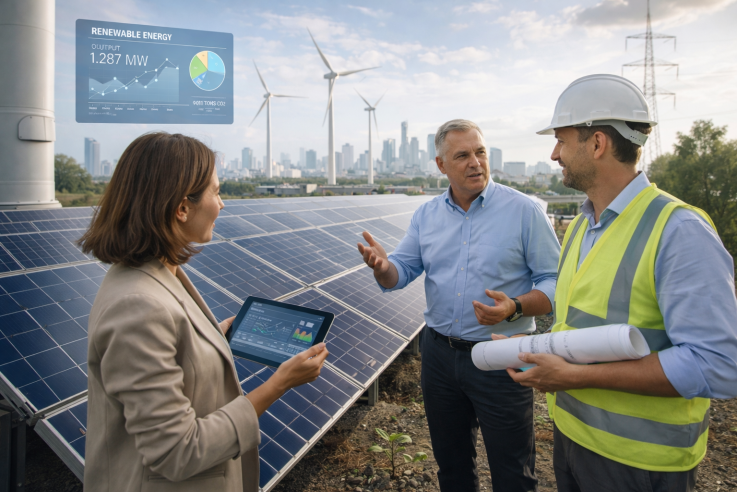
The Energy & Sustainability division of SpaceArch Solutions International integrates advanced energy systems, climate resilience strategies, and ESG-aligned infrastructure into every phase of the built environment lifecycle.
This vertical is designed to ensure that projects are:
- Energy-efficient
- Carbon-conscious
- Climate-resilient
- Economically viable
- Institutionally compatible
Energy is not treated as an afterthought.
It is embedded into the architectural, industrial, and urban system from the earliest design stage.
1. Strategic Positioning
SpaceArch approaches Energy & Sustainability as:
A structural layer of performance optimization across all infrastructure and urban systems.
Rather than adding sustainability features retroactively, the division integrates:
- Energy modeling
- Resource efficiency
- Environmental impact forecasting
- Lifecycle carbon analysis
From the conceptual phase onward.
2. Core Focus Areas
• Renewable Energy Integration
Deployment of:
- Solar photovoltaic systems
- Distributed rooftop solar platforms
- Utility-scale renewable integration
- Wind and hybrid systems
- Energy storage solutions
Integrated into commercial, industrial, hospitality, and public-sector projects.
• Energy-Efficient Building Design
Implementation of:
- High-performance building envelopes
- Passive design optimization
- Smart HVAC systems
- Advanced lighting systems
- Real-time energy monitoring
Energy consumption reduction is measured and monitored continuously.
• Smart Grid & Distributed Energy Systems
Integration of:
- Microgrid architecture
- Smart metering systems
- AI-assisted load balancing
- Battery storage coordination
- Grid-interactive building systems
These systems improve resilience and reduce operational cost volatility.
• Industrial Energy Optimization
Support for:
- Manufacturing efficiency upgrades
- Cold chain energy optimization
- Logistics hub load forecasting
- Port electrification initiatives
- Automated energy control systems
Energy becomes a managed asset rather than a fixed cost.
• Water & Resource Efficiency
Incorporation of:
- Greywater recycling systems
- Rainwater harvesting
- Efficient irrigation technologies
- Waste heat recovery
- Circular material strategies
Resource optimization strengthens long-term asset performance.
3. ESG Integration Framework
All Energy & Sustainability initiatives align with:
- Carbon reduction targets
- Climate adaptation standards
- Environmental reporting frameworks
- Institutional ESG compliance metrics
- Sustainable finance eligibility requirements
Projects are structured to meet institutional-grade sustainability criteria.
4. Financial Architecture
Energy strategies are evaluated through:
- Capex vs. lifecycle savings modeling
- Energy payback period analysis
- Yield enhancement projections
- Carbon credit optimization (where applicable)
- Long-term Opex compression modeling
Sustainability investments are positioned as performance multipliers rather than cost burdens.
5. Climate Resilience Engineering
Projects integrate:
- Flood resilience design
- Heat mitigation strategies
- Storm impact modeling
- Infrastructure redundancy systems
- Environmental risk stress testing
Resilience enhances long-term asset stability.
6. Digital Energy Monitoring
Energy systems are supported by:
- IoT-enabled monitoring devices
- Real-time consumption dashboards
- AI-driven anomaly detection
- Predictive maintenance alerts
- ESG performance tracking platforms
Operational transparency strengthens governance and accountability.
7. Institutional & Government Alignment
The division collaborates with:
- Development banks
- Sovereign funds
- Climate finance institutions
- Public-sector agencies
- Infrastructure investors
Projects are structured for eligibility within sustainable capital frameworks.
8. Phased Deployment Strategy
Energy integration follows a structured approach:
- Baseline energy diagnostics
- System design & modeling
- Capital structuring
- Installation & integration
- Real-time monitoring & optimization
This ensures controlled implementation and measurable performance outcomes.
9. Competitive Differentiators
- Sustainability embedded at design stage
- Financial modeling aligned with energy strategy
- Digital monitoring integration
- Lifecycle carbon optimization
- Cross-vertical energy alignment
- Asset-light scalable deployment
- Institutional ESG compatibility
10. Long-Term Vision
SpaceArch Energy & Sustainability aims to:
- Transition infrastructure toward low-carbon performance
- Strengthen urban climate resilience
- Enhance long-term asset valuation
- Align built environments with global sustainability transitions
- Integrate digital intelligence into energy governance
The division supports the evolution of infrastructure from static structures into intelligent, adaptive, and climate-aligned performance ecosystems.
Conclusion
Energy & Sustainability within SpaceArch represents a disciplined, financially structured, and digitally integrated approach to environmental performance.
It merges:
- Renewable integration
- Energy optimization
- Climate resilience
- ESG compliance
- Smart monitoring systems
Into scalable frameworks designed to enhance operational efficiency, institutional alignment, and long-term value creation across global infrastructure ecosystems.