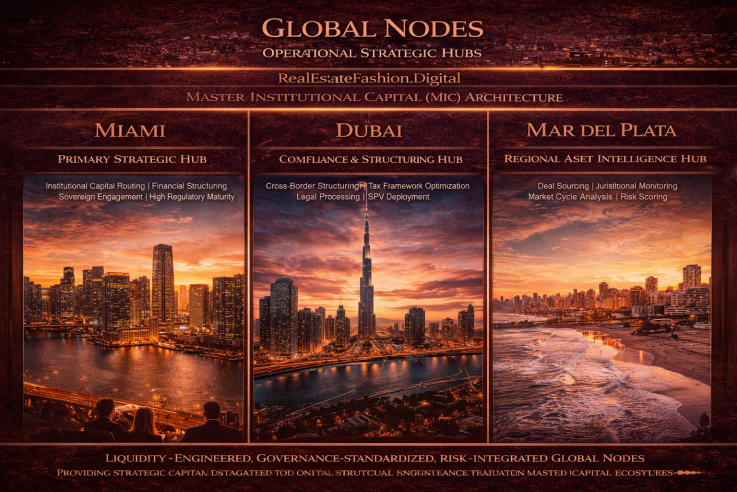




The Global Expansion Roadmap defines how SpaceArch Solutions International scales across cities, regions, and continents through a disciplined, capital-efficient, and intelligence-driven strategy.
Expansion is not pursued through uncontrolled geographic dispersion.
It is executed through a sequenced, node-based, performance-validated deployment model.
The objective is to build a synchronized global network of operational units while preserving:
- Brand coherence
- Capital discipline
- Operational integrity
- Governance standards
- Scalability logic
1. Expansion Philosophy
SpaceArch expands under four guiding principles:
- Asset-Light Deployment
- Cloud-Coordinated Oversight
- Phased Capital Exposure
- Replicable Node Architecture
Growth is designed to be modular and performance-driven rather than speculative.
2. Phase I – Strategic Foundation
The first stage focuses on structural consolidation:
- Core vertical definition
- Operational manuals standardization
- Digital infrastructure centralization
- Franchise & Node governance framework
- Brand positioning coherence
The objective is to ensure the system is replicable before scaling.
3. Phase II – Pilot City Activation
Initial expansion targets are selected based on:
- Strategic economic relevance
- Infrastructure demand
- Regulatory feasibility
- Market liquidity
- International connectivity
Each pilot city operates under the Cloud City Node™ (CCN) model.
Key goals during this phase:
- Validate revenue generation logic
- Test operational manuals
- Build local partnerships
- Establish institutional credibility
- Refine performance metrics
Pilot cities serve as proof-of-concept hubs.
4. Phase III – Regional Cluster Expansion
After validation, expansion follows a cluster-based strategy.
Rather than isolated city entries, SpaceArch activates:
- Economic corridors
- Port-connected regions
- Urban-industrial clusters
- Capital-access hubs
Clusters allow:
- Cross-node collaboration
- Shared intelligence
- Cost efficiency
- Brand density
- Compounding network value
5. Phase IV – International Network Synchronization
As nodes expand globally, the system evolves into:
- A synchronized global intelligence network
- Cross-border project collaboration
- Technology sharing platforms
- Capital pooling structures
- Multi-market strategic alliances
The global roadmap emphasizes coordination rather than fragmentation.
6. Geographic Prioritization Logic
Market prioritization follows five criteria:
- Infrastructure modernization demand
- Institutional capital accessibility
- Regulatory predictability
- ESG investment activity
- Strategic urban growth trends
Cities and regions are evaluated through structured intelligence diagnostics before activation.
7. Expansion Vehicles
Global growth is executed through:
- Master franchise licensing
- Strategic joint ventures
- Institutional partnerships
- Public-private collaboration
- Hospitality Node activation for visibility and access
Each vehicle is selected according to local regulatory and financial conditions.
8. Capital Deployment Strategy
Expansion capital follows a phased logic:
- Minimal fixed infrastructure investment
- Revenue-first activation
- Performance-based scaling
- Gradual asset deepening
- Controlled risk exposure
The objective is sustainable expansion without excessive leverage.
9. Technology Infrastructure Scaling
Digital infrastructure supports expansion through:
- Cloud-based project coordination
- Real-time performance dashboards
- AI-assisted financial modeling
- Digital twin interoperability
- Centralized governance reporting
This ensures operational consistency across geographies.
10. Risk Management Framework
Global expansion incorporates:
- Regulatory compliance mapping
- Political and economic risk analysis
- Currency and capital flow assessment
- ESG compliance verification
- Operational contingency protocols
Risk management is embedded structurally into expansion sequencing.
11. Competitive Advantage of the Roadmap
The Global Expansion Roadmap differentiates SpaceArch through:
- Network-based growth logic
- Asset-light scalability
- Modular deployment structure
- Multi-vertical integration
- Capital-aligned sequencing
- Institutional-grade governance
This provides resilience against market volatility.
12. Long-Term Vision
The roadmap aims to create:
- A distributed global network of intelligent urban nodes
- A synchronized infrastructure development platform
- A cross-continental knowledge and execution ecosystem
- A scalable franchise architecture
- A resilient global brand footprint
The long-term objective is not geographic presence alone.
It is the creation of a globally interconnected operational intelligence system.
Conclusion
The Global Expansion Roadmap transforms international growth from speculative expansion into disciplined, performance-driven scaling.
It ensures that each new city strengthens the system rather than diluting it.
Through phased deployment, cloud-coordinated supervision, capital discipline, and replicable node architecture, SpaceArch builds a synchronized global platform engineered for long-term, sustainable growth.
Expansion is not movement.
It is structured integration at scale.