


Deployable Intelligent Revenue Infrastructure
I. Strategic Definition
Modular Commercial Nodes are engineered, scalable, semi-portable or fixed commercial deployment units designed to integrate physical presence, digital infrastructure, AI automation, and revenue intelligence into a unified operational system.
They are not booths.
They are not retail kiosks.
They are:
Structured Physical–Digital Revenue Modules
designed for rapid deployment, measurable performance, and scalable replication.
II. Core Conceptual Framework
A Modular Commercial Node combines:
• Physical structure (architectural identity)
• Digital infrastructure (web + cloud)
• Smart retail systems
• IoT integration
• AI workflow automation
• CRM & lifecycle synchronization
• Revenue analytics
It becomes a self-contained commercial intelligence unit.
III. Architectural Layers
1️⃣ Structural Layer
• Modular construction system
• Adaptable footprint design
• Brand-integrated architectural identity
• Scalable replication capability
• Mobility (where required)
• Energy-efficient configuration
Nodes may be deployed in:
• Galleries
• Airports
• Trade expos
• Commercial corridors
• Real estate developments
• Malls
• International hubs
2️⃣ Digital Backbone Layer
Each node includes:
• High-performance web infrastructure
• Ecommerce synchronization
• Cloud-based data architecture
• Secure payment gateways
• Inventory integration
• CRM structuring
The node is digitally native.
3️⃣ Intelligence Layer
• AI sales recommendations
• Customer behavior modeling
• Real-time conversion tracking
• Revenue-per-square-meter analytics
• Automated inventory logic
• Demand forecasting (if applicable)
Every node generates measurable intelligence.
4️⃣ Automation Layer
• Lead capture automation
• In-store to online workflow
• Post-visit lifecycle sequencing
• Performance alerts
• Smart restock triggers
• Cross-node synchronization
Manual dependency is reduced.
5️⃣ Executive Oversight Layer
• Node performance dashboards
• Multi-location comparison
• ROI tracking
• Operational cost analysis
• Growth modeling
The node becomes a measurable business asset.
IV. Strategic Purpose
Modular Commercial Nodes exist to:
• Deploy branded presence rapidly
• Reduce fixed infrastructure risk
• Enable geographic scalability
• Synchronize online and offline commerce
• Convert physical presence into measurable revenue engine
• Standardize franchise or multi-location growth
V. Differentiation vs Traditional Commercial Installations
| Traditional Retail Unit | Modular Commercial Node |
|---|---|
| Fixed infrastructure | Scalable modular architecture |
| Manual POS | Cloud-synchronized retail intelligence |
| Isolated store | Connected revenue ecosystem |
| No AI layer | AI-enabled optimization |
| Limited analytics | Real-time performance dashboards |
| High long-term lease risk | Structured deployment flexibility |
We do not build shops.
We deploy revenue infrastructure units.
VI. Use Cases
• Franchise networks
• International brand expansion
• Expo-based commercial activation
• Real estate showroom networks
• Hybrid commerce corridors
• Airport / trade hub deployments
• Gallery revitalization projects
• Pop-up global market testing
VII. Scalability Model
Modular Commercial Nodes are designed for:
• Single-node pilot
• Multi-node replication
• International expansion
• Cross-border deployment
• Franchise structuring
The architecture remains consistent across scale.
VIII. Integration Within AIEarth Ecosystem
Modular Commercial Nodes integrate with:
• Digital Foundations
• Scalable Cloud Environments
• Smart Retail Systems
• AI Workflow Systems
• Lifecycle Automation
• IoT Business Integration
• Process Optimization Architecture
They become:
The physical deployment interface of the AIEarth ecosystem.
IX. Capital Efficiency Logic
Compared to traditional retail:
Modular Nodes:
• Reduce buildout CAPEX
• Reduce long-term lease exposure
• Enable phased expansion
• Improve revenue density
• Shorten deployment time
• Allow ROI-driven expansion decisions
They improve capital agility.
X. Risk Mitigation
Properly engineered nodes include:
• Secure payment systems
• Encrypted connectivity
• Modular insurance design
• Scalability stress testing
• Inventory risk modeling
• Multi-node performance monitoring
Deployment is structured — not improvised.
XI. Strategic Positioning Statement (Website-Ready)
Modular Commercial Nodes
Deployable Intelligent Revenue Infrastructure.
We engineer scalable commercial units that integrate architecture, cloud infrastructure, AI automation, and performance analytics — transforming physical presence into measurable, replicable revenue systems.
XII. Strategic Outcome
When Modular Commercial Nodes are properly implemented:
Physical presence becomes:
Measurable
Replicable
Intelligent
AI-enhanced
Cloud-synchronized
Scalable
They transform commercial expansion from:
Capital risk
→
Structured growth architecture.
Modular Commercial Nodes
Structured Pricing Framework
Pricing is determined by:
• Footprint size
• Structural complexity
• Digital integration depth
• AI workflow density
• IoT endpoint count
• Multi-node orchestration level
• Franchise replication requirements
• Brand customization complexity
We price infrastructure architecture + intelligence integration.
Physical fabrication cost may be separate depending on territory.
Tier 1 — NODE FOUNDATION
Intelligent Single-Unit Deployment
Ideal for:
Boutique brands, pilot projects, gallery presence, expo-based activation.
Includes:
✔ Modular structural design blueprint
✔ Digital Foundations integration
✔ Ecommerce synchronization
✔ Smart Retail Foundation
✔ CRM & Lifecycle integration
✔ Basic IoT layer (optional)
✔ Revenue performance dashboard
✔ Deployment advisory
Focus:
Launch measurable hybrid commercial presence.
Timeline
6–8 weeks
Investment
$25,000 – $45,000 setup
Ongoing digital + intelligence layer:
$1,500 – $3,000 / month
Tier 2 — NODE ADVANCED
Multi-Location Ready Infrastructure
Ideal for:
Growing brands preparing for structured geographic expansion.
Includes everything in Foundation, plus:
✔ Advanced Smart Retail Systems
✔ AI Workflow integration
✔ Multi-node performance dashboard
✔ Predictive inventory modeling
✔ IoT Business Integration (Foundation)
✔ Process Optimization alignment
✔ Replication blueprint documentation
✔ Standard Operating Architecture Manual
Focus:
Prepare for scalable replication.
Timeline
8–10 weeks
Investment
$50,000 – $85,000 setup
Ongoing orchestration & analytics:
$3,000 – $6,000 / month
Tier 3 — NODE ENTERPRISE
Franchise-Ready Commercial Intelligence System
Ideal for:
Brands targeting structured franchise or international expansion.
Includes everything in Advanced, plus:
✔ Full AI Workflow Enterprise layer
✔ IoT Advanced integration
✔ Multi-territory synchronization
✔ Franchise digital onboarding portal
✔ Centralized brand intelligence dashboard
✔ Cross-location KPI benchmarking
✔ Royalty & performance tracking system
✔ Franchise compliance monitoring logic
✔ Executive intelligence reporting
Focus:
Turn commercial nodes into a franchise-ready infrastructure network.
Timeline
10–14 weeks
Investment
$100,000 – $200,000+ setup
Ongoing franchise intelligence governance:
$6,000 – $12,000 / month
Franchise-Ready Positioning Model
We now structure the narrative correctly.
Modular Commercial Nodes are not locations.
They are:
Replicable revenue infrastructure units.
Franchise Infrastructure Framework
AIEarth enables franchise-ready structuring through:
1️⃣ Standardized Deployment Architecture
• Identical structural blueprints
• Unified digital backbone
• Centralized cloud environment
• Consistent CRM integration
• Controlled branding system
2️⃣ Centralized Intelligence Control
Headquarters receives:
• Real-time revenue dashboards
• Performance comparison by territory
• Inventory analytics
• Customer lifecycle data
• Compliance monitoring
• Automation oversight
Franchise becomes measurable.
3️⃣ Automation & Governance Layer
• Franchise onboarding workflows
• KPI-based compliance logic
• Automated reporting
• Royalty performance monitoring
• Territory performance benchmarking
4️⃣ Scalable Replication Model
Each new node requires:
• Minimal architectural redesign
• Structured onboarding
• Cloud-linked integration
• Centralized intelligence sync
Scaling becomes systematic, not chaotic.
Strategic Differentiation
| Traditional Franchise Model | Modular Commercial Node Franchise |
|---|---|
| Manual reporting | Real-time dashboard governance |
| Paper-based compliance | Automated KPI monitoring |
| Independent POS systems | Unified cloud infrastructure |
| Limited data visibility | Centralized AI intelligence layer |
| Reactive expansion | Data-driven replication model |
Capital Efficiency Logic
Modular Nodes allow:
• Controlled pilot deployment
• Gradual territory expansion
• Performance-based growth decisions
• Reduced fixed infrastructure exposure
• Shorter ROI cycles
This reduces franchise expansion risk.
Strategic Positioning Statement (Website-Ready)
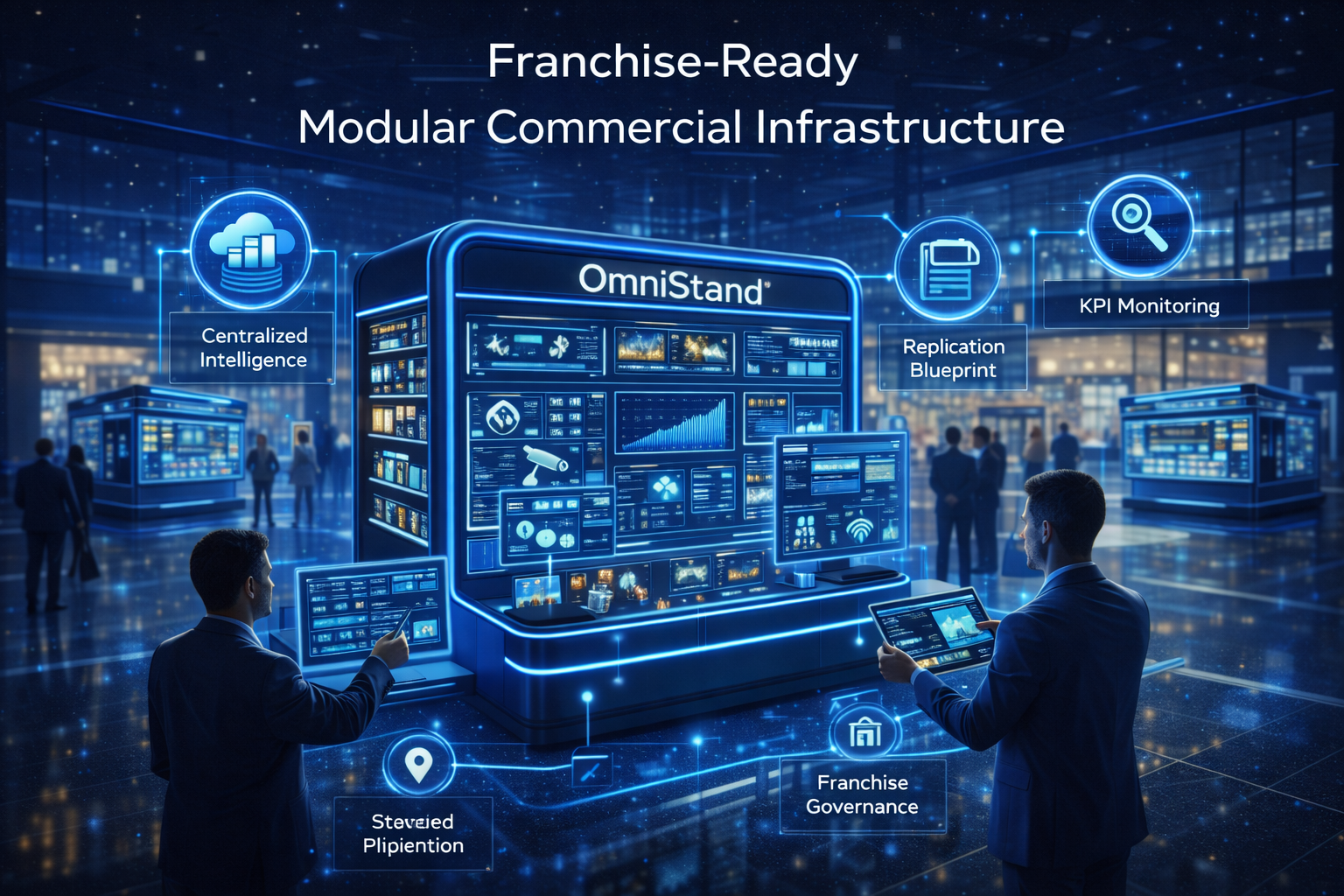
Franchise-Ready Modular Commercial Infrastructure
We design and deploy scalable commercial nodes engineered for replication, intelligence integration, and centralized governance — enabling structured, data-driven franchise expansion across territories.
Enterprise Alignment
Modular Commercial Nodes integrate into:
Enterprise Infrastructure → Multi-Node Commercial Layer.
At this level:
Franchise expansion becomes:
Digital
Cloud-synchronized
AI-monitored
Process-optimized
Performance-measurable
Strategic Outcome
When properly structured, Modular Commercial Nodes enable:
Geographic scalability
Operational consistency
Brand control
Data-driven governance
Reduced franchise risk
Increased valuation logic
They transform expansion from:
Speculative growth
→
Engineered replication.