






Institutional–Technical Definition for the Maitreya Menu (Hypothetical Framework, Coherent-Core Only)
Status: Conceptual / simulation-oriented / non-validated
Purpose: Provide a clean, internally consistent, institution-grade description suitable for R&D positioning, system architecture, and future modeling—without metaphysical overreach, energy claims, or incoherent physics shortcuts.
1) Formal Definition (Institutional Language)
TransVectorial Supertechnology (TVS) is a hypothetical class of space–time reconfiguration systems that aims to produce apparent relocation of a bounded physical system from an origin state S0 to a destination state S1 by means of:
- complete state capture (structure + dynamics + boundary coupling),
- state encoding into a transferable formal representation,
- consistency-preserving state reconstruction at the destination under strict verification constraints,
- governance-grade safety controls preventing identity loss, misassembly, or uncontrolled replication.
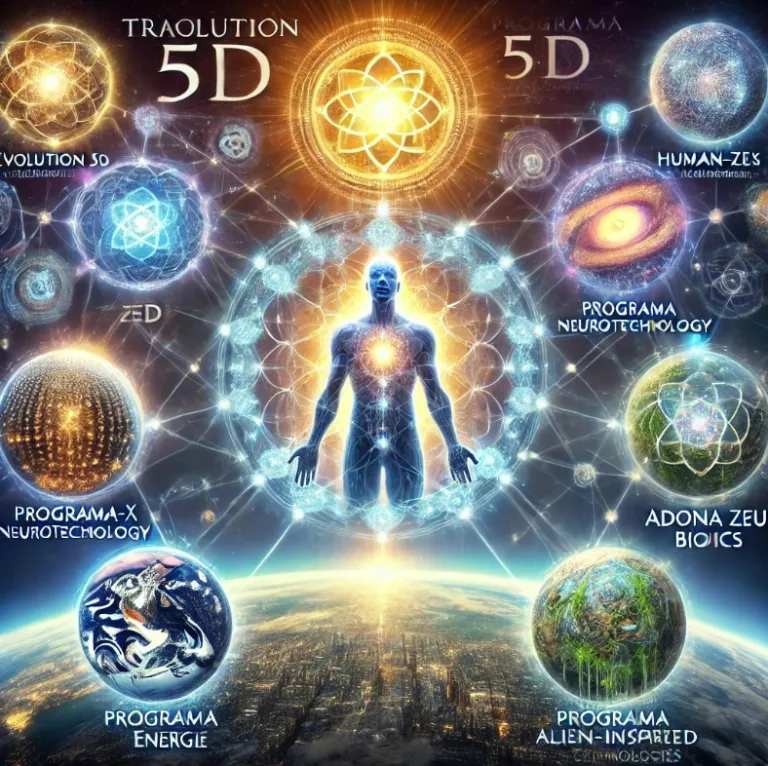
TVS is “Trans” because it targets transitions beyond conventional transport (no trajectory in ordinary space is assumed), and “Vectorial” because it is defined by explicit coordinate mappings (origin ↔ destination) within a multi-layer coordinate system (3D configuration space, 4D temporal indexing, and a 5D meta-state representation used strictly as an abstract control layer).
Core claim (bounded): TVS is framed as an information-driven relocation protocol with formal reconstruction constraints—not as a guarantee of faster-than-light travel, free energy, or multiverse traversal.
2) Conceptual Base (Eliminating Incoherence)
To make the idea technically discussable, TVS is defined on three layers:
Layer A — 3D/4D Physical Domain (Operational Reality)
- The physical entity is a bounded system with:
- microstructure (atoms/molecules/fields),
- mesostructure (materials/tissues),
- macrostructure (geometry),
- dynamical state (momentum, thermal distribution),
- boundary interaction (environment coupling).
Layer B — 5D Meta-State Domain (Not “another place,” but a control representation)
- “5D” is used only as a modeling construct: a history/state-space where complete state representations can be stored, compared, verified, and selected (as in your Ts coherence model).
- It does not assert a physical fifth dimension in the conventional sense; it defines a formal domain for global consistency operations.
Layer C — Coherence and Identity Governance
- TVS depends on an Identity & Integrity Protocol (IIP) ensuring:
- no ambiguous duplicates,
- no partial reconstruction,
- no drift or substitution,
- correct continuation of dynamics.
This removes the incoherent leap of “the entity already exists omnipresently, so we just ‘select it.’” Institutionally, the system must prove what it reconstructs and prevent unsafe edge cases.
3) System Objective and KPI Envelope (Business/Engineering Framing)
Primary objective: deterministic relocation of a bounded system with formally defined acceptable error rates.
Engineering KPIs (simulation-ready):
- State fidelity F: similarity between reconstructed state and target reference.
- Identity continuity score I: invariants preserved (biometric/structural/functional).
- Assembly completeness C: percentage of required state features reconstructed.
- Environmental coupling error E: mismatch with local boundary conditions.
- Safety risk index R: probability-weighted catastrophic failure modes.
Institutional readiness is achieved only when F,I,C exceed thresholds and R is bounded under audited assumptions.
4) Operational Model (Clean Process Architecture)
Stage 0 — Pre-Authorization & Governance Lock
- Destination must be certified (free volume, environment parameters, legal/ethical authorization, non-hostile constraints).
- Unique transaction ID + cryptographic commitment prevents unauthorized replay.
Stage 1 — Full-State Capture (FSC)
Goal: convert the entity’s complete relevant state into a structured representation.
- Structural scan: geometry, composition, material/tissue maps.
- Dynamical scan: thermal/momentum distributions, field states.
- Functional scan: for living systems, functional invariants (metabolic viability constraints), not “mind claims” unless explicitly modeled.
Output: a State Vector x0 and metadata M0.
Stage 2 — State Encoding (SE)
Convert (x0,M0) into a transferable representation:
- compressed but loss-bounded,
- with redundancy and error correction,
- with audit logs.
Output: Encoded Packet Π0.
Stage 3 — Coherence Gate (Ts-Style Stabilization)
Before reconstruction, apply a coherence operator ensuring the packet is:
- internally consistent,
- compatible with destination constraints,
- not corrupted,
- not adversarially altered.
This is where the Tetrasecond/Ts concept fits cleanly: not as mystical time-freeze, but as a periodic global stabilization and verification cadence.
Output: Verified Packet Π0\*.
Stage 4 — Destination Reconstruction (DR)
Reconstruct physical state under a controlled assembly environment:
- local material/energy inputs (must be declared),
- precision field control,
- deterministic assembly sequence.
Output: reconstructed state x^1.
Stage 5 — Post-Assembly Verification (PAV)
Verify:F(x^1,x0)≥Fmin,I(x^1)=valid,C(x^1)≥Cmin
If not met: abort, quarantine, rollback (where defined), or safe termination protocol.
5) Mathematical Core (Simulation-Ready Baseline)
5.1 State Space
Let the entity be represented as:x=[xstruct,xdyn,xbound,xfunc]
where:
- struct: composition/geometry/topology
- dyn: momenta/temperature/field microstates (or coarse-grained)
- bound: coupling to environment
- func: viability constraints (optional per domain)
5.2 Encoding and Reconstruction Operators
- Capture operator: S:x0↦Π0
- Verification / coherence operator: KTs:Π0↦Π0\*
- Reconstruction operator: R:Π0\*↦x^1
Success condition:x^1=(R∘KTs∘S)(x0)
with bounded error:d(x^1,x0)≤ϵ
5.3 Coherence Gate as Constraint Satisfaction
Define constraints:
- internal consistency constraints Cint,
- destination constraints Cdst,
- identity constraints Cid.
Then:Π0\*=argΠ∈ΩminD(Π)s.t.Π⊨(Cint∧Cdst∧Cid)
Where D(Π) penalizes ambiguity, corruption, loss, and reconstruction instability.
6) Technical Subsystems (Clean Reframing of Your Components)
6.1 High-Precision Scanning Array (replaces “neurolaser” metaphors)
Function: multi-scale state capture.
Engineering analogs: tomography, ultrafast spectroscopy, quantum sensing, phased-array field measurement.
Deliverables:
- calibration chains,
- error bounds,
- scan time windows.
6.2 Field-Control Assembly Chamber (replaces “laser engines” as dimensional conduits)
Function: controlled reconstruction.
Engineering analogs: atomically precise manufacturing, field traps, programmable matter, photonic/EM field shaping.
Deliverables:
- assembly protocol,
- material feedstock specification,
- energy budget transparency.
6.3 Coherence & Safety Controller (IAG + Ts cadence)
Function: verify and stabilize packets + orchestrate reconstruction.
Engineering analogs: formal verification, redundancy checks, adversarial integrity validation, real-time control.
Deliverables:
- safety case,
- audit logs,
- failure-mode test suite.
7) Risk Architecture (Institutional Safety, No Fantasy)
Primary Failure Modes
- Partial reconstruction (catastrophic in biology).
- State drift (functional degradation).
- Identity ambiguity (unacceptable).
- Destination mismatch (boundary coupling failure).
- Unauthorized duplication (security catastrophe).
- Packet corruption / adversarial manipulation.
Mandatory Controls
- No-copy rule: enforce single-instance continuity (protocol + physical safeguards).
- Quarantine domain: reconstructed output remains isolated until verification passes.
- Redundancy: multi-encoding with cross-checks.
- Formal proofs: for identity and integrity constraints in the controller.
- Governance layer: legal/ethical authorization gates.
8) Comparative Analysis (Objective Positioning)
vs. Classical Transport
- Transport moves matter through space with energy costs scaling with mass/distance.
- TVS reframes relocation as state reconstruction with costs scaling with:
- state resolution,
- reconstruction precision,
- safety overhead.
vs. Quantum Teleportation (real-world physics)
- Quantum teleportation transfers quantum state information (not matter) and requires classical communication + entanglement.
- TVS would be a far more general concept: it would require a full physical reconstruction capability, which is beyond current science and must be treated as long-horizon R&D.
vs. “Mystical teleportation”
- TVS explicitly rejects non-auditable claims.
- Any integration with consciousness or non-duality must be translated into operational variables (constraints, selection rules, verification steps). Otherwise it is excluded from institutional scope.
9) R&D Roadmap (Commercially Coherent, Phased)
Phase 1 — Simulation & Formal Model
- define state vector granularity levels (particle-level is infeasible; choose coarse-grained).
- build a digital twin environment for reconstruction fidelity modeling.
- implement KTs as a coherence gate.
Output: simulation metrics, sensitivity analysis, feasibility constraints.
Phase 2 — Non-living Micro-Assemblies
- reconstruct micro-structures (simple lattices, microchips fragments, synthetic materials).
- validate fidelity under strict metrology.
Output: measured reconstruction error bounds.
Phase 3 — Living Tissue Primitives (only if Phase 2 succeeds)
- viability constraints become central.
- “identity continuity” must be defined biologically (functional invariants).
Output: biomedical safety case.
Phase 4 — System-Level Demonstrators
- controlled relocation in sealed environments, short-range, with maximal instrumentation.
Output: institutional demonstration package.
10) Commercial/Strategic Use (Menu-Grade Positioning)
TransVectorial Supertechnology can be positioned as a Frontier R&D Program with three monetizable layers, even before ultimate feasibility:
- Coherence & Verification Stack (near-term):
advanced safety verification for high-risk AI-controlled manufacturing, robotics, medical reconstruction, and critical systems. - State Capture & Digital Twin Infrastructure (near-to-mid):
ultra-high fidelity scanning, simulation, and reconstruction workflows with applications in:- aerospace materials,
- semiconductor repair/replication,
- defense logistics modeling,
- precision medicine.
- Programmable Reconstruction (mid-to-long):
atomically precise manufacturing, autonomous assembly, and self-correcting matter systems.
This preserves commercial coherence without claiming impossible deliverables.
11) Institutional Conclusion (Coherent-Core Summary)
The TransVectorial concept becomes institutionally admissible when it is treated as a rigorous state-capture → verification → reconstruction architecture, governed by formal safety constraints and implemented first in simulation. The “5D” layer is retained strictly as a meta-state control domain consistent with your Ts coherence cadence model, providing a disciplined rationale for stabilization gates. Claims about “zero energy,” “unlimited energy,” “omniverse access,” or “instant colonization” are excluded from the core until they can be translated into measurable variables and disconfirmable tests.
1) Menu-Ready Section (• TransVectorial Supertechnology)
TransVectorial Supertechnology (TVS)
Status: Hypothetical Frontier R&D Program (simulation-first)
Purpose: Develop a formally governed, verification-driven architecture for state capture → coherence validation → controlled reconstruction enabling apparent relocation without classical transport trajectories.
A. Institutional Definition
TransVectorial Supertechnology is a conceptual class of systems that targets relocation of bounded physical systems by reconstructing a verified state representation at a destination under strict identity, integrity, and safety constraints. “5D” is used as a meta-state control domain (formal state-space), not as an unverifiable metaphysical claim.
B. Core Capabilities (R&D Targets)
- Full-State Capture: multi-scale structural + dynamic + boundary-coupling state mapping
- Coherence Gate (Ts Cadence): periodic verification and stabilization cycle (error correction, constraint satisfaction, integrity proofs)
- Deterministic Reconstruction: controlled assembly under certified destination constraints
- Identity Continuity & No-Copy Governance: prevention of ambiguous duplicates, partial assembly, and adversarial packet manipulation
C. System Architecture (High Level)
- Authorization & destination certification
- State capture (scan + metrology)
- Encoding + redundancy
- Coherence gate (Ts stabilization)
- Controlled reconstruction
- Post-assembly verification + quarantine release
D. KPI Envelope
- Fidelity F, Identity continuity I, Completeness C, Boundary mismatch E, Risk index R
- Institutional readiness requires: F≥Fmin, C≥Cmin, I=valid, R bounded by audited safety case.
E. Development Roadmap
- Phase 1: simulation + formal model
- Phase 2: non-living micro-assemblies
- Phase 3: living tissue primitives (only after Phase 2 success)
- Phase 4: controlled demonstrators
F. Commercial Positioning
Even pre-feasibility, TVS yields monetizable IP in:
- verification/coherence controllers,
- state-capture digital twins,
- precision reconstruction and self-correcting matter workflows.
2) Simulation-Ready Mathematical Model Expansion (Annex)
2.1 State Space
Define the entity state as:x=[xstruct,xdyn,xbound,xfunc]
- xstruct: geometry, composition, topology
- xdyn: momenta/thermal distribution/field states (coarse-grained)
- xbound: environment coupling parameters
- xfunc: viability/functional invariants (optional per domain)
2.2 Operators
- Capture: S:x0→Π0
- Coherence gate (Ts cadence): KTs:Π0→Π0\*
- Reconstruction: R:Π0\*→x^1
Pipeline:x^1=(R∘KTs∘S)(x0)
2.3 Objective and Error Bound
Define a distance metric d(⋅,⋅) over state space:d(x^1,x0)≤ϵ
where ϵ is the allowable reconstruction error budget.
2.4 Constraint Library
Let constraints be:
- Cint: internal consistency constraints
- Cdst: destination constraints
- Cid: identity/no-copy constraints
- Csafe: safety constraints (quarantine, abort thresholds)
Coherence gate as constrained optimization:Π0\*=argΠ∈ΩminD(Π)s.t.Π⊨(Cint∧Cdst∧Cid∧Csafe)
Where D(Π) penalizes:
- ambiguity,
- corruption,
- reconstruction instability,
- adversarial modifications,
- constraint violations.
2.5 Identity Continuity (No-Copy Governance)
Define a set of invariants gk(x) that must be preserved:∣gk(x^1)−gk(x0)∣≤δk,k=1..K
Examples:
- mass/charge conservation bounds (when applicable),
- structural topology signatures,
- functional invariants (domain-specific),
- cryptographic chain-of-custody invariant for the packet.
Add a single-instance continuity rule:Release(x^1)=1⇒Invalidate(Π0\*)=1
(prevents replay duplication after successful reconstruction).
2.6 Verification Gate (Release Policy)
Define verification metrics:
- Fidelity F(x^1,x0)∈[0,1]
- Completeness C(x^1)∈[0,1]
- Identity validity I(x^1)∈{0,1}
- Risk R(x^1)≥0
Release rule:Release=1{F≥Fmin}⋅1{C≥Cmin}⋅I⋅1{R≤Rmax}
If not released → quarantine / rollback / safe termination.
2.7 Minimal Simulation Loop (Pseudo-Formal)
At each cycle n (Ts cadence):
- update packet estimate Π(n)
- enforce constraints via projection/optimization
- compute stability margin and adversarial integrity checks
- stop when convergence:
d(Π(n),Π(n−1))≤η∧Π(n)⊨C
Output Π0\*=Π(n)