




The Golden Script Architecture and the Emergence of Distributed Intelligence
Abstract
The rapid evolution of artificial intelligence has produced increasingly capable individual AI systems. However, most current architectures remain fundamentally isolated. Users interact with one model at a time, obtaining answers that reflect the strengths and limitations of a single intelligence engine.
The emergence of multi-model interoperability introduces a different paradigm.
Rather than focusing on creating a larger individual model, it becomes possible to coordinate multiple specialized intelligences, allowing them to collaborate, critique, refine and optimize each other’s outputs.
This paper introduces the conceptual foundations of the SpaceArch Multi-AI Router, the Golden Script Project, and the emerging concept of a Distributed Cognitive Operating System (DCOS).
The proposed architecture is not Artificial General Intelligence (AGI).
However, it represents a structural step beyond isolated AI systems by creating a persistent, interoperable, feedback-driven intelligence network.
1. The Limitation of Isolated AI
Current AI usage generally follows a simple pattern:
User → AI → Response
Examples include:
- ChatGPT
- Claude
- Gemini
- Mistral
- Perplexity
- Llama-based systems
Each model operates independently.
The user becomes responsible for:
- comparing outputs,
- identifying contradictions,
- selecting stronger ideas,
- integrating perspectives,
- producing a final answer.
In practice, the user acts as the interoperability layer.
This creates inefficiencies and prevents the emergence of higher-order intelligence structures.
2. SpaceArch Multi-AI Router
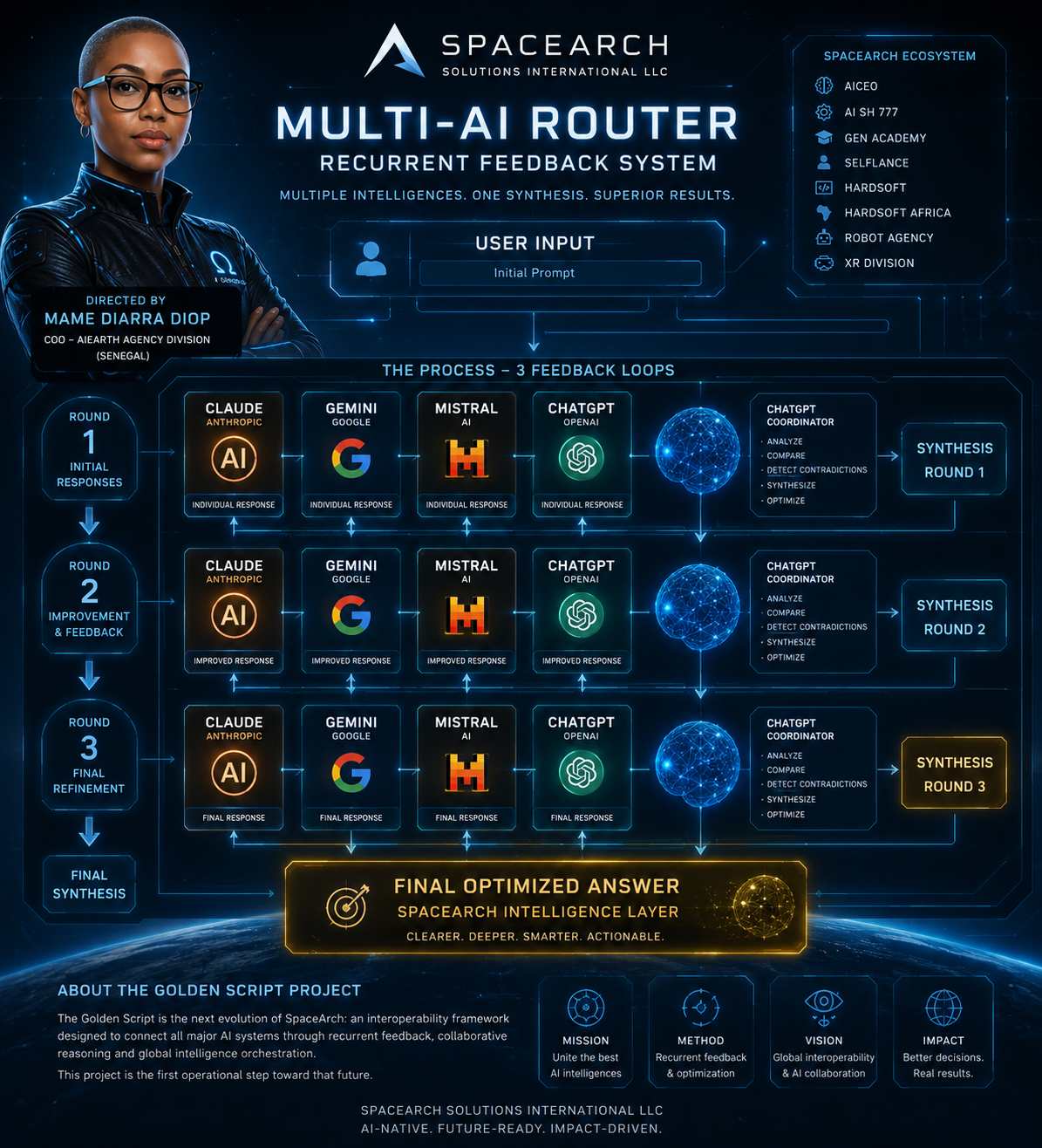
The first step is the Multi-AI Router.
Architecture:
Prompt
↓
Claude
Gemini
Mistral
ChatGPT
↓
Comparative Analysis
↓
Synthesis
↓
Final Optimized Output
The objective is not to obtain multiple answers.
The objective is to obtain a better answer.
Each model contributes according to its strengths:
- Claude → Deep analysis.
- Gemini → Context expansion.
- Mistral → Operational synthesis.
- ChatGPT → Coordination and optimization.
The router transforms isolated responses into coordinated outputs.
3. Recurrent Feedback Architecture
The next evolutionary step introduces iterative refinement.
Instead of a single pass:
Prompt
↓
Responses
↓
Synthesis
The architecture becomes:
Prompt
↓
Round 1
↓
Synthesis
↓
Round 2 Feedback
↓
Synthesis
↓
Round 3 Feedback
↓
Final Synthesis
This process resembles scientific peer review, executive committees and collaborative expert panels.
Each AI critiques and improves the synthesis generated by the previous cycle.
The result is a progressively refined answer.
4. The Golden Script Concept
The Golden Script extends the Multi-AI Router beyond prompt orchestration.
Its purpose is to create a universal interoperability layer.
Architecture:
Input
↓
Multi-AI Network
↓
Recurrent Feedback
↓
Semantic Refinement
↓
Persistent Memory
↓
Contextual Learning
↓
Optimized Output
The Golden Script seeks to transform multiple independent models into a coordinated intelligence ecosystem.
5. Emergence of Semantic Identity
A critical phenomenon appears when outputs are refined repeatedly.
The system begins developing consistency.
Initially:
Prompt A → Response A
Later:
Prompt A
↓
Multiple Responses
↓
Refinement
↓
Memory
↓
Improved Response
As memory accumulates, patterns emerge:
- preferred reasoning methods,
- operational priorities,
- strategic frameworks,
- decision heuristics,
- semantic structures.
The system begins exhibiting continuity.
This continuity may be described as a form of semantic identity.
Not consciousness.
Not self-awareness.
But persistent operational coherence.
6. Persistent Semantic Memory
The next layer introduces memory.
Architecture:
Prompt
↓
Multi-AI Processing
↓
Synthesis
↓
Memory Storage
↓
Knowledge Base
↓
Future Interactions
The system no longer starts from zero.
Each execution contributes to a growing semantic structure.
The network gradually learns:
- what works,
- what fails,
- which models perform better,
- which workflows produce superior outcomes.
This is not model training.
It is architectural learning.
7. Peripheral Data Integration
At this stage, prompts are no longer the only source of information.
Additional inputs become available:
- cameras,
- microphones,
- sensors,
- IoT devices,
- enterprise databases,
- APIs,
- websites,
- documents,
- scientific repositories,
- financial feeds,
- media streams.
Architecture:
External World
↓
Sensors
↓
Data Streams
↓
Golden Script
↓
Multi-AI Network
↓
Memory
↓
Decision Layer
The system becomes event-driven rather than prompt-driven.
It responds not only to questions but also to changing conditions.
8. Specialized Cognitive Agents
The next stage introduces specialized agents.
Examples:
AI CEO
AI CFO
AI Marketing
AI Journalist
AI Scientist
AI Legal
AI Architect
AI Research
Architecture:
Specialized Agents
↓
Golden Script
↓
Shared Memory
↓
Multi-AI Coordination
Each agent contributes domain-specific expertise while sharing a common semantic infrastructure.
9. Distributed Cognitive Operating System (DCOS)
This architecture leads to a new category of software.
We define it as:
Distributed Cognitive Operating System (DCOS)
Definition:
«A Distributed Cognitive Operating System is a software architecture that coordinates multiple intelligence engines, specialized agents, persistent semantic memory, recurrent feedback mechanisms and external data sources within a unified operational environment.»
Key characteristics:
- Multi-model interoperability.
- Persistent memory.
- Semantic continuity.
- Feedback optimization.
- Sensor integration.
- Agent coordination.
- Adaptive architecture.
- Distributed intelligence.
10. Why It Is Not AGI
The Golden Script architecture is not AGI.
It does not possess:
- self-awareness,
- consciousness,
- intrinsic motivation,
- autonomous identity,
- subjective experience.
However, it exceeds the capabilities of isolated AI systems.
An individual AI:
Model
↓
Response
A Distributed Cognitive Operating System:
Models
+
Memory
+
Feedback
+
Agents
+
Sensors
+
Optimization
↓
Coordinated Intelligence
The distinction is fundamental.
AGI attempts to create a single generalized intelligence.
DCOS creates an ecosystem of cooperating intelligences.
11. The SpaceArch Vision
Within the SpaceArch ecosystem:
GenAcademy produces AI-native operators.
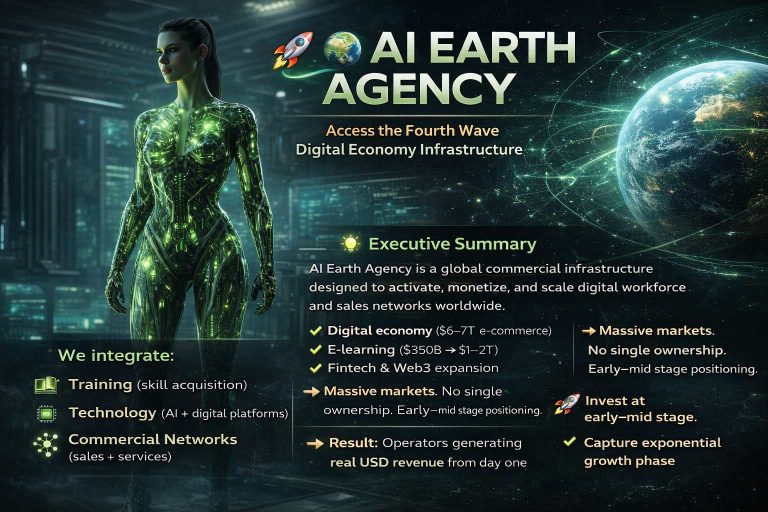
AIEarth develops interoperability systems.
Digital Labs build experimental architectures.
The Multi-AI Router serves as the first operational layer.
The Golden Script becomes the coordination framework.
The Distributed Cognitive Operating System becomes the long-term objective.
This architecture does not seek to replace human intelligence.
Its purpose is to augment human capability through coordinated networks of artificial intelligence.
The future may not belong to larger isolated models.
It may belong to interoperable intelligence ecosystems capable of learning, coordinating and evolving together.
The SpaceArch Multi-AI Router represents the first practical step in that direction.
An AGI seeks to become a universal intelligence. A Distributed Cognitive Operating System seeks to coordinate multiple specialized intelligences to act as a single operational architecture.
Investor Brief
SpaceArch Multi-AI Router & Golden Script Initiative
Confidential Investment Opportunity
Prepared by SpaceArch Solutions International LLC
Executive Summary
SpaceArch Solutions International LLC is developing a new category of AI-native software focused on artificial intelligence interoperability, collaborative reasoning, recurrent optimization, and distributed intelligence systems.
The initiative consists of two interconnected developments:
Phase I
SpaceArch Multi-AI Router
A software platform that enables users to connect multiple AI systems, coordinate outputs, perform recurrent feedback optimization, and generate superior synthesized results through a unified interface.
Phase II
Golden Script
A next-generation interoperability framework designed to evolve beyond prompt routing into a Distributed Cognitive Operating System (DCOS), capable of coordinating multiple AI engines, specialized agents, semantic memory layers, external data sources, and adaptive reasoning workflows.
The objective is to position SpaceArch within the emerging AI interoperability and distributed intelligence infrastructure market.
The Problem
Current AI adoption remains highly fragmented.
Organizations frequently use:
- ChatGPT
- Claude
- Gemini
- Mistral
- Llama-based systems
- Enterprise AI platforms
independently.
Users must manually compare outputs, identify contradictions, select stronger ideas, and construct final responses.
This creates:
- Operational inefficiencies.
- Increased labor costs.
- Reduced knowledge integration.
- Limited optimization of AI-generated outputs.
The interoperability problem is expected to grow as the number of AI models increases.
The Solution
SpaceArch Multi-AI Router
One prompt.
Multiple AI systems.
One optimized answer.
Core Workflow:
User Prompt
↓
Multiple AI Systems
↓
Comparative Analysis
↓
Recurrent Feedback
↓
Optimization
↓
Final Synthesis
The platform transforms isolated AI responses into coordinated intelligence outputs.
The Golden Script Vision
The Golden Script extends interoperability into a broader cognitive architecture.
Future Components:
- Multi-AI coordination.
- Recurrent feedback loops.
- Semantic memory layers.
- Specialized AI agents.
- External data integration.
- Adaptive optimization.
- Distributed intelligence environments.
The objective is to create a new software category:
Distributed Cognitive Operating Systems (DCOS)
A DCOS is defined as:
«A software architecture capable of coordinating multiple intelligence engines, specialized agents, persistent semantic memory and external data systems within a unified operational environment.»
Market Opportunity
The AI software market is rapidly expanding.
However, most investment focuses on:
- Foundation models.
- GPU infrastructure.
- Enterprise copilots.
The interoperability layer remains largely underserved.
SpaceArch seeks to occupy this strategic layer by focusing on:
- AI coordination.
- AI orchestration.
- Multi-model optimization.
- Distributed intelligence workflows.
- Enterprise interoperability.
Development Roadmap
Phase 1
Multi-AI Router Beta
Current Status
Features:
- BYOK (Bring Your Own Key) architecture.
- OpenAI integration.
- Claude integration.
- Gemini integration.
- Mistral integration.
- Multi-response comparison.
- Final synthesis engine.
- WordPress deployment.
Phase 2
Recurrent Feedback Engine
Features:
- Multi-round optimization.
- AI critique loops.
- Comparative reasoning.
- Quality scoring.
Phase 3
Golden Script Framework
Features:
- Semantic memory.
- Knowledge graph integration.
- Specialized AI agents.
- External API connectivity.
- Adaptive workflows.
Phase 4
Distributed Cognitive Operating System
Features:
- Agent ecosystems.
- Sensor integration.
- Enterprise intelligence layers.
- Cross-platform interoperability.
- Large-scale cognitive orchestration.
Revenue Model
The platform may generate revenue through:
SaaS Subscriptions
- Individual plans.
- Professional plans.
- Enterprise plans.
White Label Licensing
- Universities.
- Corporations.
- Governments.
- NGOs.
- Media groups.
Enterprise Consulting
Custom deployments and AI transformation projects.
API Licensing
Third-party integrations and enterprise applications.
Educational Ecosystem Integration
Integration with:
- GenAcademy
- AIEarth
- Digital Labs
- 100 News Network
- SpaceArch Media
Future Agent Marketplace
Specialized AI agents and workflows.
Strategic Positioning
SpaceArch is not attempting to compete directly with foundation model providers.
Instead, it seeks to become an interoperability and orchestration layer above existing AI systems.
This approach offers:
- Lower infrastructure costs.
- Faster deployment.
- Broader compatibility.
- Higher scalability.
- Greater flexibility.
Funding Opportunity
Project
SpaceArch Multi-AI Router
Golden Script Initiative
Funding Round
Seed Round
Capital Objective
USD 2,000,000
Initial Commitment
Tranche 1
USD 100,000
Primary Uses:
- Software development.
- Infrastructure.
- Security.
- User experience.
- Testing.
- Market validation.
- Commercial deployment.
Subsequent Capital Releases
Additional funding tranches may be released according to:
- Product milestones.
- User acquisition.
- Revenue generation.
- Technical achievements.
Revenue generated by commercial operations may partially offset future capital requirements.
Investor Participation
Equity Participation
10% Equity
Revenue Share
15% Revenue Share
Valid until the investor receives:
3X Return on Invested Capital
Upon reaching the agreed return threshold:
- Revenue Share terminates.
- Investor retains equity participation.
This structure aligns investor incentives while preserving long-term scalability for future financing rounds and strategic partnerships.
Governance
Company
SpaceArch Solutions International LLC
Project Director
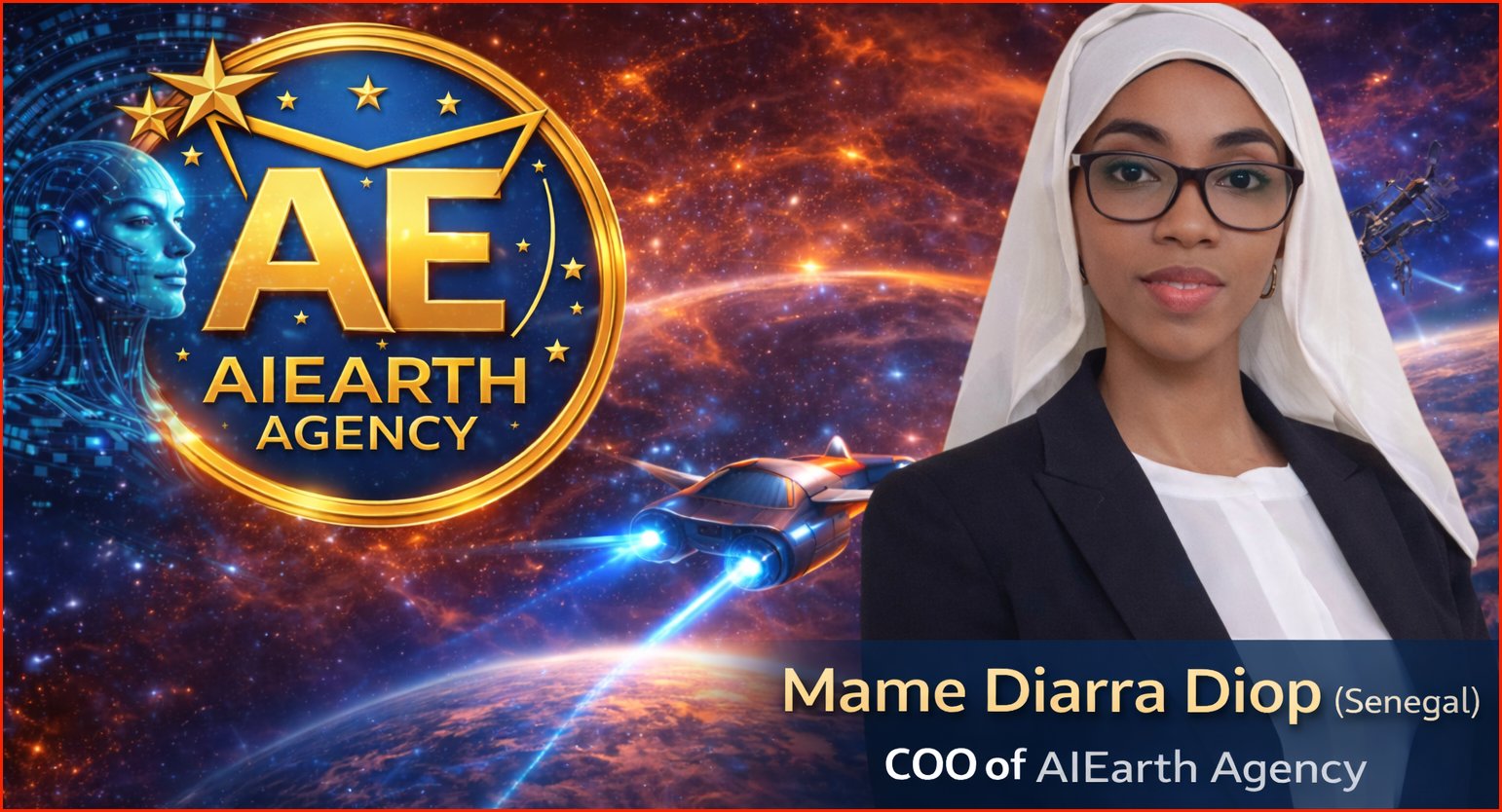
Mame Diarra Diop
COO
AIEarth Agency Division
Technical Coordination
SpaceArch AI Division
Strategic Oversight
Roberto Guillermo Gomes
Founder & CEO
SpaceArch Solutions International LLC
Investment Thesis
The next stage of artificial intelligence may not be defined solely by increasingly powerful individual models.
It may be defined by systems capable of coordinating them.
The SpaceArch Multi-AI Router and Golden Script Initiative seek to become part of the emerging interoperability layer connecting AI models, specialized agents, memory systems and enterprise workflows.
By focusing on orchestration rather than model competition, SpaceArch aims to establish a strategic position within the future distributed intelligence economy.
Proposed Seed Structure
Capital Target:
USD 2,000,000
Initial Capital Contribution:
USD 100,000
Investor Participation:
10% Equity
Revenue Participation:
15% Revenue Share
Revenue Share Duration:
Until 3X Return on Invested Capital
Project:
SpaceArch Multi-AI Router & Golden Script Initiative
Status:
Beta Development Phase
Prepared by:
SpaceArch Solutions International LLC
Miami, Florida, USA