




STRATEGIC RESPONSE
Space Computing vs. Hybrid Distributed Infrastructure (SpaceArch Digital Labs Model)
The progress of initiatives such as Blue Origin’s “Project Sunrise,” together with proposals from SpaceX and developments by Google, suggests a structural shift in global computing infrastructure. However, this approach presents systemic, environmental and strategic risks that deserve deeper evaluation.
⚠️ 1. Orbital Saturation and Future Technological Lock-In
The proliferation of tens of thousands — and potentially millions — of satellites in Low Earth Orbit (LEO):
• Exponentially increases space debris
• Raises the risk of cascading collisions (Kessler Syndrome)
• Compromises future strategic projects such as the space elevator
• Creates an irreversible occupation of near-Earth orbital space
👉 Intensifying LEO as a “global data center” is, in practical terms, equivalent to polluting the planet’s orbital infrastructure.
🌍 2. The False Ecological Argument
The narrative of “clean computing in space” overlooks:
• The carbon footprint of satellite manufacturing
• The environmental impact of massive launches
• Limited satellite lifespan → constant replacement (orbital obsolescence)
👉 The impact is not eliminated: it is externalized and multiplied on an aerospace-industrial scale.
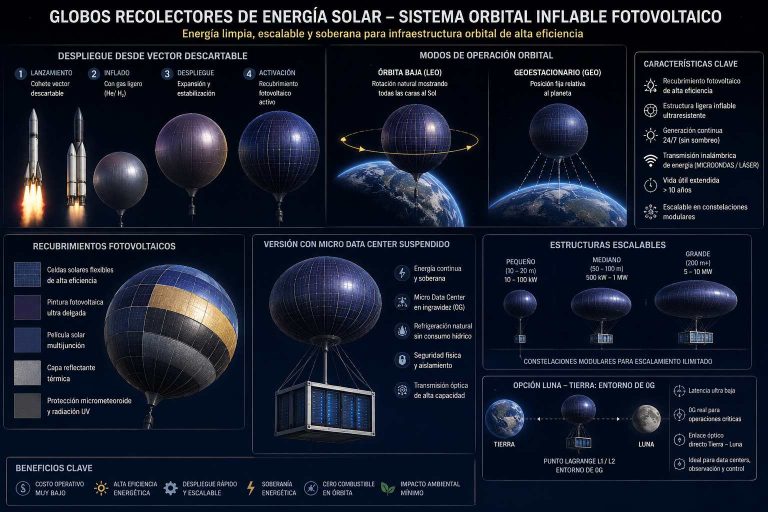
☀️ 3. A More Efficient Energy Alternative: Orbital Solar Energy
If the real problem is energy, the most logical solution is not to move computing itself, but rather to:
• Capture solar energy in geostationary orbit
• Transmit it to Earth via microwaves or laser
• Power efficient terrestrial data centers
👉 This avoids:
• Massive orbital saturation
• The complexity of computing under radiation
• Extreme thermal problems in space
🧠 4. A Superior Proposal: A Global Network of Digital Labs (SpaceArch)
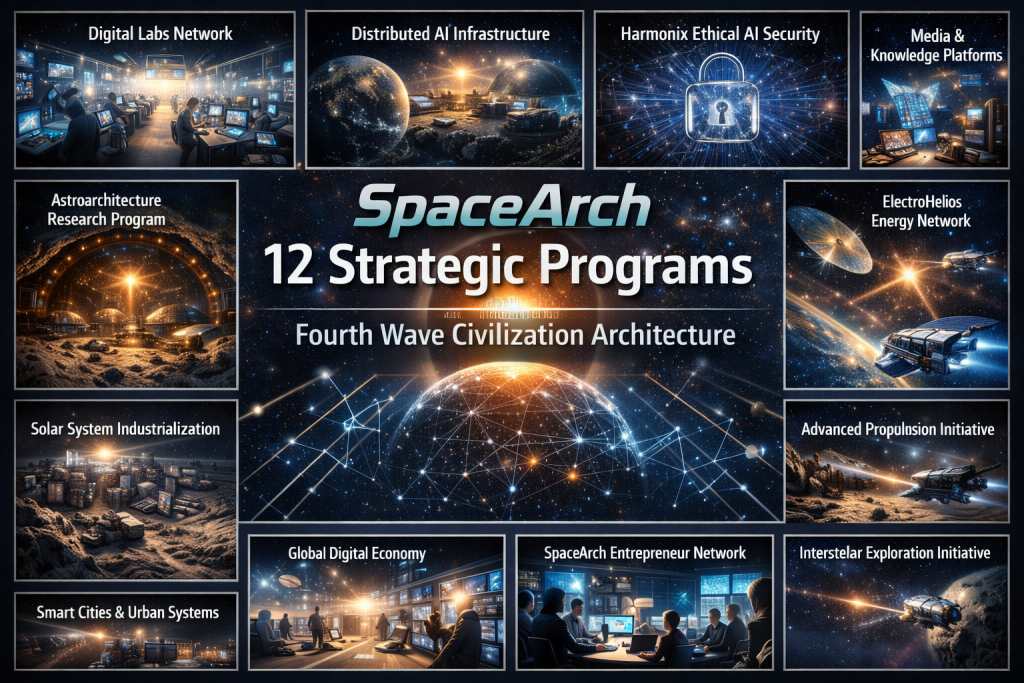
Instead of the orbital model, we propose:
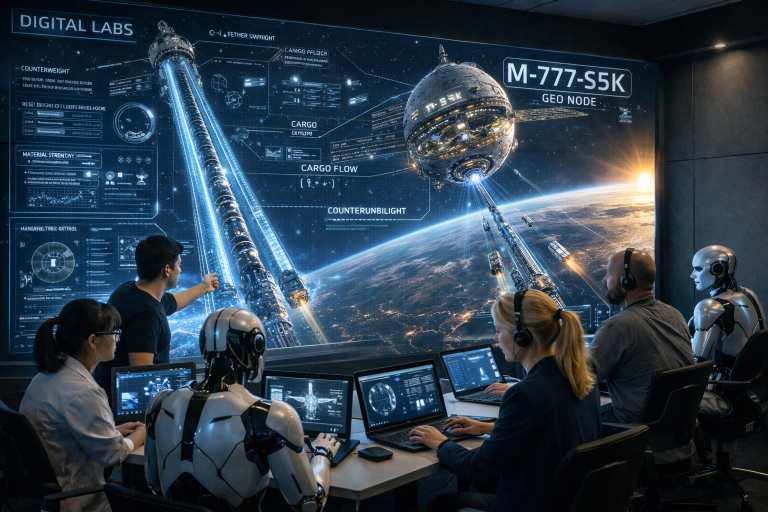
🔹 System: 10,000 globally distributed Digital Labs
Each unit would include:
• 20–30 m² facility
• 6 to 8 specialists (AI + technicians + scientists)
• Giant screen / immersive environment
• Micro data center / local AI server
• Cloud connection + global freelancer network
⚙️ 5. Structural Advantages of the Hybrid Model
✅ 1. Human + AI Integration (the key)
The orbital model removes the direct human factor.
Digital Labs strengthen and integrate it.
✅ 2. Real and Modular Scalability
• Deployed city by city
• Expands according to demand
• Does not require aerospace CAPEX
✅ 3. Immediate Economic Impact
• Creates skilled jobs
• Activates local economies
• Produces contract-based R&D&I
✅ 4. Distributed Energy Efficiency
• Optimized use of existing infrastructure
• Possibility of integration with local renewable energy
✅ 5. Unified Global Network
• Freelancers + physical teams
• Standardized processes
• Operational collective intelligence
🧩 6. Key Conceptual Difference
Orbital Model → SpaceArch Digital Labs
• Isolated hardware in orbit → Hybrid Human + AI system
• Extremely high CAPEX → Low-cost modular structure
• Orbital environmental risk → Controlled impact
• Difficult maintenance → Easy scalability
• Extreme centralization → Intelligent distribution
🚀 7. Strategic Conclusion
The paradigm is not “to move computing into space,” but rather:
👉 to optimize the relationship between energy, intelligence and territory
The future of computing will not be purely orbital. It will be:
🔥 HYBRID – DISTRIBUTED – HUMAN + AI
🧠 KEY PHRASE (for investors / press)
“We do not need millions of satellites thinking in space.
We need millions of minds empowered by AI working together on Earth.”
“While others seek to scale computing,
we are organizing the intelligence that uses it.”
Draft International Agreement to Decontaminate Outer Space
🌍 Open Reflection on Space Computing
The push by companies such as Blue Origin, SpaceX and Google toward orbital computing is undoubtedly a clear sign of where global demand for processing and energy is heading.
It is an interesting movement and, in many respects, one worth exploring.
At the same time, it may be useful to consider some complementary points:
• The increasing density of satellites in Low Earth Orbit raises long-term challenges in terms of orbital sustainability.
• The total environmental impact (manufacturing, launches, replacements) remains a relevant factor.
• The technical complexity of operating intensive infrastructure in space is still evolving.
From another perspective, if the main challenge is energy, alternatives could be explored such as:
👉 Capturing solar energy in geostationary orbit
👉 Transmitting it to Earth to power optimized infrastructure
And in parallel, distributed surface-based models that integrate:
• Specialized human teams
• Artificial intelligence
• Global collaboration networks
Not as a replacement, but as a possible complement within a broader ecosystem.
🧠 Central Idea
Perhaps the future will not depend on a single solution, but on the intelligent combination of multiple architectures:
• Orbital
• Terrestrial
• Energy-based
• Human + AI
🤝 Closing
These are complex and evolving processes.
The valuable thing is to keep the exploration of alternatives open.
🌍 Distributed Intelligence as Infrastructure
A Complementary Perspective on the Future of Computing
Recent initiatives by companies such as Blue Origin, SpaceX and Google reflect a clear reality:
👉 Global demand for computing is entering an exponential phase.
The exploration of orbital data centers represents one possible path, especially in terms of access to energy and scale.
At the same time, it may be useful to consider a complementary layer within this evolving ecosystem.
🧠 Beyond Computing: The Intelligence Layer
While much of today’s debate focuses on where processing takes place, a parallel question emerges:
👉 How is intelligence generated, structured and applied?
Computing power alone does not produce innovation. It requires:
• Interpretation
• Design
• Coordination
• Execution
This suggests the need for a distributed model that integrates:
🔹 Human expertise
🔹 Artificial intelligence
🔹 Modular physical infrastructure
⚙️ Digital Labs: A Distributed Hybrid Architecture
In this context, a model based on globally distributed Digital Labs offers a complementary approach.
🔹 Core Structure
• Compact units (20–30 m²)
• Specialized teams (6–8 people)
• Integrated AI systems
• Local micro data infrastructure
• Cloud connectivity + global freelancer networks
🌐 System Logic
Each node operates as:
👉 An innovation engine
👉 A contract-based R&D&I unit
👉 A processor of distributed intelligence
Instead of centralizing computing, the system:
• Distributes problem-solving capacity
• Integrates human and artificial cognition
• Scales organically across territories
⚖️ Complementarity of Models
Rather than one dominant solution, the future may be structured in multiple layers:
🌌 Orbital Infrastructure
• Large-scale computing
• Continuous access to solar energy
🌍 Distributed Terrestrial Systems
• Applied intelligence
• Engineering and design
• Localized execution
🔑 Key Insight
The evolution of computing will not be defined only by:
❌ How much we process
But by:
✅ How effectively we transform that processing into intelligence and results
🚀 Scalable Path
A network of:
🔥 10,000 Digital Labs worldwide
Could:
• Activate local talent ecosystems
• Reduce the risks of infrastructure concentration
• Accelerate innovation cycles
• Integrate freelancers and specialists into unified systems
All while maintaining:
• Lower capital requirements
• High adaptability
• Direct economic impact
🌱 Sustainability Consideration
Distributed terrestrial models can:
• Reduce dependence on massive launches
• Take advantage of existing urban infrastructure
• Integrate with local renewable energy
Complementing orbital approaches without increasing pressure on the space environment.
🧠 Final Reflection
The future of computing will not be defined by a single architecture, but by the intelligent integration of multiple layers:
Energy, computing and distributed intelligence.
🤝 Open Perspective
As these systems evolve, collaboration between:
• The aerospace sector
• Artificial intelligence
• Infrastructure
• Distributed networks
Will be key in defining the next stage of global development.
Roberto Guillermo Gomes
CEO — SpaceArch Solutions International LLC