






The Evolution of Digital Cities into an Intelligent Network of Interoperable AI-Native Cities
Introduction
Over the past three decades, the Internet has evolved from static websites to social networks, mobile platforms, cloud computing, and artificial intelligence. Yet most cities still organize their information through isolated websites, disconnected databases, and independent systems that rarely communicate with one another.
The emergence of Artificial Intelligence makes it possible to envision a fundamentally different model.
OmniCities™ proposes an architecture in which every city develops its own digital ecosystem while sharing a common technological framework that enables thousands of organizations, businesses, institutions, and citizens to interact intelligently—both within their own city and across an international network of AI-native cities.
The objective is not simply to digitize a city.
It is to build a global network of interoperable AI-Native Cities.
From Digital City to OmniCity
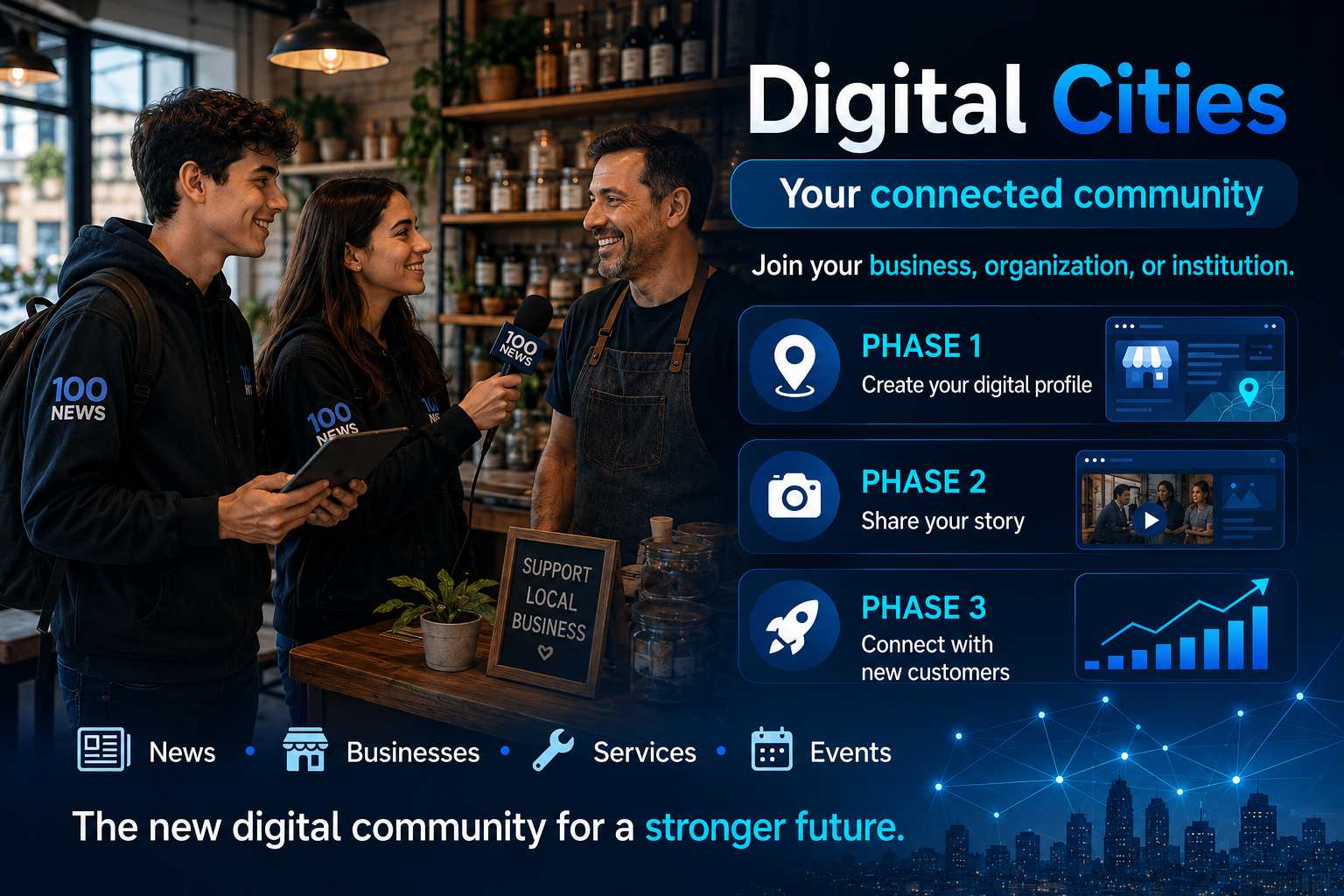
A traditional Digital City primarily organizes information.
City
↓
Directory
↓
Organizations
↓
Information
OmniCities introduces an entirely new dimension.
City
↓
Intelligent Digital Nodes
↓
AI-Native Architecture
↓
Interoperability
↓
Global Network
Each city evolves from an isolated website into an intelligent node within a worldwide ecosystem.
The Digital Node Concept
The fundamental building block is no longer the web page.
It is the Digital Node.
A Digital Node represents a living entity within the city’s ecosystem.
It may represent:
- Businesses
- Universities
- Professionals
- Hotels
- Restaurants
- Startups
- Research laboratories
- Museums
- Media organizations
- Government agencies
- Events
- Non-profit organizations
Every node maintains its own digital identity while becoming part of a larger intelligent network.
Modular Architecture
Each Digital Node is organized into two complementary information layers.
Layer One
Structured Information
- Name
- Category
- Contact information
- Address
- Maps
- Websites
- Images
- Videos
- Social networks
- Services
This structured layer can be automatically processed by Artificial Intelligence.
Layer Two
Intelligent Page
The second layer contains rich information created and maintained by the organization itself.
Examples include:
- Company history
- Mission
- Products
- Services
- News
- Articles
- Galleries
- Documents
- Multimedia
- Research
- Publications
Each organization remains fully responsible for its own digital identity and content.
Vertical Hubs
OmniCities organizes every city through specialized industry hubs.
Examples include:
- Education Hub
- Hospitality Hub
- Gourmet & Restaurants Hub
- Healthcare & Wellness Hub
- Professional Services Hub
- Business Hub
- Real Estate Hub
- Innovation Hub
- Startup Hub
- Tourism Hub
- Omnimedia Hub
- Government Services Hub
Each hub operates on the same technological engine while supporting its own specialized business logic.
A Layered Architecture
One of the greatest strengths of OmniCities is its modular growth model.
Infrastructure
↓
Node Engine
↓
Hub Engine
↓
Intelligent Pages
↓
Digital Services
↓
Artificial Intelligence
↓
Marketplace
↓
OmniCities Network
Each layer builds upon the previous one.
No reconstruction is required.
New capabilities are simply added as the ecosystem evolves.
AI-Native Interoperability
The true innovation begins when cities start communicating with one another.
Example:
City A
↓
City B
↓
City C
↓
City D
↓
City E
Communication no longer depends on manual hyperlinks.
Artificial Intelligence automatically discovers semantic relationships between Digital Nodes located anywhere in the network.
Educational Example
A university publishes a new Artificial Intelligence program.
The platform automatically recognizes that this information may also be relevant to:
- other universities
- startups
- technology companies
- incubators
- investors
- researchers
- innovation hubs
Information distribution becomes intelligent rather than manual.
Tourism Example
A restaurant introduces a new regional dining experience.
Artificial Intelligence automatically connects it with:
- hotels
- travel agencies
- nearby attractions
- cultural events
- tourism packages
- promotional campaigns
New business opportunities emerge continuously without permanent manual intervention.
Cross-Sector Optimization
Within an OmniCity, no Digital Node operates in isolation.
Improvements made by one sector benefit the entire ecosystem.
For example:
A university launches a new professional certification.
That program may immediately become valuable for:
- companies
- professionals
- coworking centers
- public institutions
- startups
- business associations
Knowledge flows naturally between different hubs.
Network Economy
As the number of Digital Nodes grows, the value of the ecosystem increases exponentially.
Not because more web pages exist,
but because more meaningful relationships become possible.
100 Digital Nodes
↓
1,000 Intelligent Relationships
↓
10,000 Collaborative Connections
↓
Millions of Potential Opportunities
Artificial Intelligence continuously discovers and strengthens these relationships.
Omnimedia Integration
Media organizations no longer operate as isolated platforms.
Every city can become part of an international Omnimedia network.
Content may be intelligently distributed according to:
- language
- topic
- audience
- location
- interests
- behavioral patterns
Information becomes contextual, multilingual, and globally accessible.
AI-Ready Cities
All information is stored in structured formats.
This enables:
- AI assistants
- Autonomous AI agents
- Search engines
- Enterprise copilots
- Business intelligence platforms
to understand the city automatically.
Instead of interpreting disorganized web pages,
the city is designed from the beginning to communicate naturally with Artificial Intelligence.
Scalability
OmniCities is designed as a globally replicable platform.
The architecture can be implemented in cities of any size, anywhere in the world.
Every deployment shares the same technological foundation while preserving its own local identity, culture, language, institutions, and economic priorities.
Distributed Governance
Every city maintains full autonomy.
Every organization retains ownership of its own information.
Interoperability does not require centralization.
It enables collaboration.
Each Digital Node remains independent while participating in a much larger international ecosystem.
The Fifth Wave
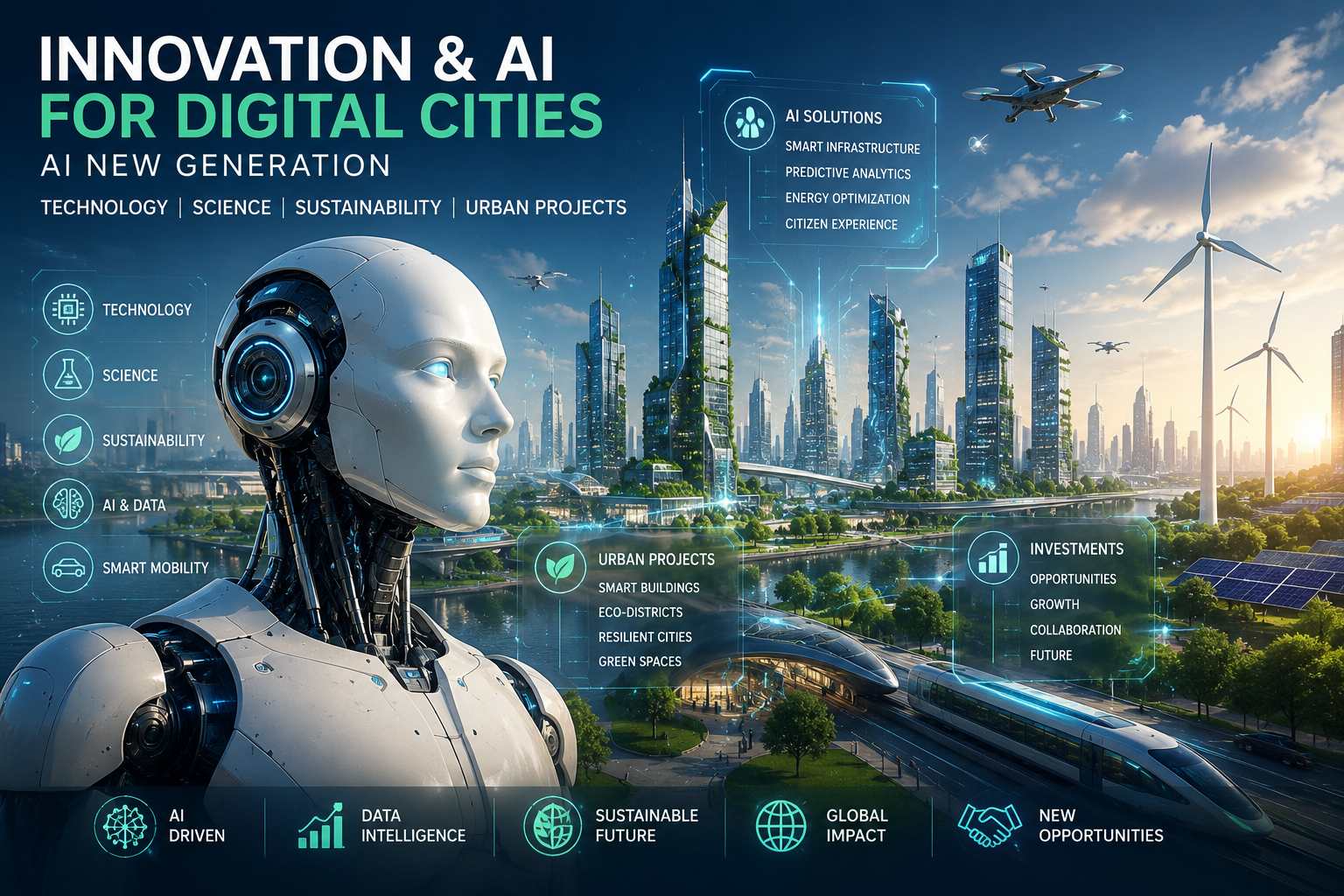
If previous generations of the Internet were defined by publishing, social media, mobile computing, and cloud services, the next generation is characterized by collaboration between people and Artificial Intelligence operating on structured information.
Within this new paradigm, OmniCities proposes a model where:
- cities become intelligent digital ecosystems;
- Digital Nodes represent AI-ready organizations;
- Vertical Hubs organize economic sectors;
- Artificial Intelligence continuously discovers relationships and opportunities;
- information flows intelligently between cities;
- knowledge becomes shared digital infrastructure.
The result is an interconnected network of cities capable of learning, collaborating, and evolving together.
Conclusion
OmniCities is not intended to replace existing websites.
Instead, it integrates them into a broader AI-native architecture where every organization owns its Digital Node, every city organizes its ecosystem through specialized Vertical Hubs, and every city can interoperate through a common language designed for Artificial Intelligence.
In practical terms, this means that businesses, universities, professionals, media organizations, hotels, restaurants, institutions, governments, and communities can preserve their local identity while participating in a global network of knowledge, innovation, and economic opportunity.
More than a new city portal, OmniCities™ represents the infrastructure for the AI-Native era—an environment where value is created not only by publishing information, but by connecting, understanding, and coordinating entire ecosystems through Artificial Intelligence.
Interoperability becomes the foundation upon which the next generation of Digital Cities can be built.